As the global food service industry accelerates its shift toward greener packaging, the compostable food tray market is witnessing a powerful wave of transformation. According to a recent market report, the compostable food trays sector is not only expanding rapidly, but also being shaped by both time-tested giants and nimble new entrants, all pushing boundaries through cutting-edge, eco-conscious technology.
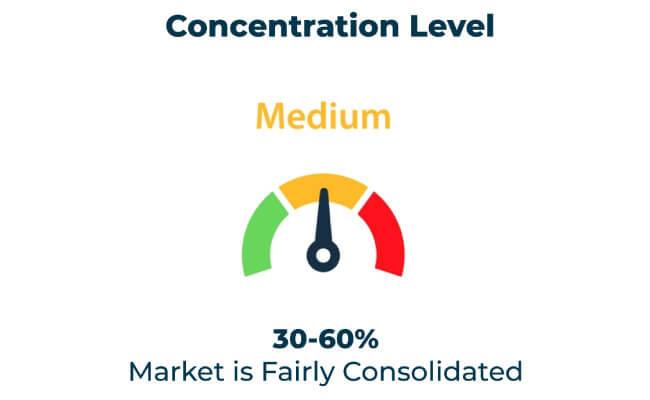
The scene is set: longtime packaging leaders like Smurfit Kappa, WestRock, and DS Smith are commanding a substantial portion of the market, leveraging their deep manufacturing expertise and global scale. These stalwarts are investing heavily in sustainable fiber-based tray production, fine-tuning their designs for strength, cost efficiency, and circularity. Their experience gives them a competitive edge — but they are not resting on their laurels.
Right alongside them, established mid-tier companies such as Mondi Group, International Paper, and Pratt Industries are making bold moves, targeting growth in regional markets. These firms are agile innovators, customizing their compostable trays for local customer needs. They are increasingly offering high-performance materials and designs that align with sustainability goals — for example, biodegradable, plant-fiber trays built to withstand tough food service environments.
Then come the challengers: smaller, regional players — such as UFP Technologies, Stora Enso, Packaging Corporation of America, and Visy — are breaking new ground. Though they occupy a smaller slice of global market share, collectively they demonstrate remarkable creativity. Their strength lies in flexibility: rapid innovation, close customer relationships, and a readiness to experiment with new technologies like smart-packaging integration or niche bio-materials.
What’s truly exciting is how both veteran and newer players are embracing next-generation technologies. Leading names are not just focusing on compostable fiber; they are exploring digital printing, IoT-enabled packaging, and traceability. Imagine a food tray that carries a QR code linked to composting instructions or end-of-life recycling information — or even RFID tags that track trays through the logistics chain. These innovations are helping companies reduce waste and engage customers meaningfully in the sustainability journey.
Many manufacturers are also pushing the envelope in materials science. Traditional compostable trays made from bagasse (sugarcane residue) remain dominant because of their strength and heat resilience. However, the industry is seeing rapid exploration of other bio-based materials — including wheat bran, bamboo fiber, and biodegradable coatings — that can give trays enhanced durability, moisture resistance, and even microwave-safe performance.
On the strategic front, companies are forging deeper partnerships to close the loop on their products. Leading tray manufacturers are working with municipal composting services, waste-management firms, and regulatory bodies to ensure their trays are properly collected, processed, and returned to the earth. This ecosystem-level thinking marks a shift: these businesses are not just producing compostable trays — they are helping to build the infrastructure needed to make circular packaging a reality.
One of the standout growth levers is the food service sector itself. Restaurants, cafés, catering companies, and even e-commerce food delivery providers are increasingly adopting compostable trays as they align their operations with consumer demand for eco-friendly solutions. For many food businesses, switching to compostable trays is no longer just a sustainability statement — it’s a competitive necessity.
Market projections reflect this energy. The compostable food tray market is anticipated to expand strongly over the coming years, driven by consumer awareness, tightening regulations on single-use plastics, and growing infrastructure for composting. Established manufacturers are scaling up production, while emerging players are leveraging innovation to capture niche or regional opportunities.
For the established players, the message is clear: sustain your leadership by being bold, creative, and green. For the newcomers and niche challengers: this is your moment to shine — innovate fast, stay agile, and partner hard. And for technology suppliers: the time is ripe to bring forward digital packaging solutions, smart traceability, and automated production systems that align with circular-economy goals.
“Compostable food trays are no longer a fringe niche,” said one industry CEO. “They are central to how the food service industry will evolve. The real opportunity lies not just in producing sustainable trays, but in imagining a future where packaging is a living part of a circular system — from plant to plate to compost.”
As demand for eco-sensitive packaging surges, both established giants and emerging stars in the compostable food tray market are stepping up. Together, they are driving an innovation-fueled shift — one that promises measurable environmental impact, smarter packaging, and a greener footprint for the world’s food industry.