The global protein purification resin market is entering a potent phase of growth and transformation, as established manufacturers and ambitious newcomers alike pledge investments in cutting-edge technologies, expanded production capacity, and global reach. According to the recent report Protein Purification Resin Market Share & Leading Providers, the market’s momentum is being driven by unprecedented demand for high-purity proteins across biopharmaceuticals, life-sciences research and industrial biotechnology.
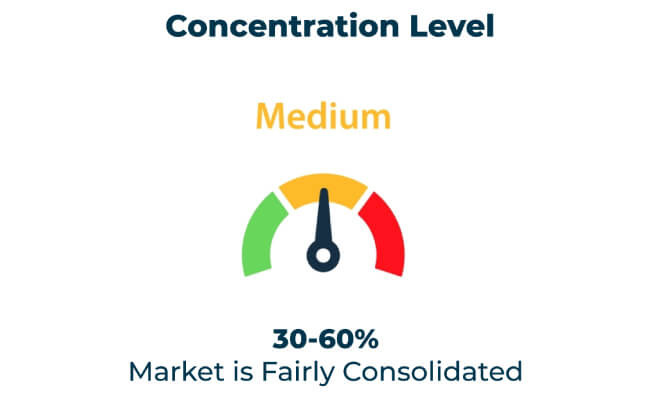
At the heart of this growth, long-standing market leaders are consolidating their dominance. Tier-1 companies — notably cited among them are industry veterans such as Cytiva, Merck KGaA and Thermo Fisher Scientific — currently capture roughly one-third of the global market. Meanwhile, Tier-2 players like Bio-Rad, Purolite and Tosoh Bioscience add depth, while Tier-3 regional specialist manufacturers — representing around 40% of market share — bring agility and niche focus.
That mix of long-standing incumbents and nimble challengers underscores the dual nature of the market today: stability and scale from established firms, creativity and specialization from newer entrants. For manufacturers seeking to expand their business footprint, this dynamic presents multiple pathways: invest in innovation, deepen geographic reach, or carve out niche applications.
Why Established Manufacturers Are Doubling Down
The incumbent players are not resting on their laurels. They are actively launching new resin chemistries, automation schemes and sustainable manufacturing practices. For example:
- Big-ticket investments in affinity chromatography resins and high-performance ligands are widening product portfolios to meet stricter biopharma purification standards.
- Sustainable and bio-based resin alternatives are gaining attention as regulatory pressure and corporate ESG commitments strengthen.
- Automation, including AI-enabled purification process optimization, is becoming a strategic differentiator, especially for high-throughput, large-scale operations.
These moves reflect an industry that is no longer just about producing resin beads — it’s about delivering integrated purification platforms, digital-enabled workflows and global regulatory compliance.
Opportunities for New and Emerging Players
At the same time, the market’s overall growth invites newer, smaller manufacturers to challenge the status quo. Growth in Asia-Pacific, Latin America and other emerging regions is forging demand for tailored solutions — smaller batches, regional production, cost-effective formats and application-specific resins. Emerging manufacturers can exploit these niches through:
- Custom ligand development for diagnostics, academic research and low-volume industrial biotech.
- Local manufacturing facilities to serve region-specific demand and reduce logistics costs or regulatory barriers.
- Partnerships with automation or digital-analytics suppliers to provide purification workflows rather than simply resin products.
By focusing on agility and specialization, emerging players can carve out meaningful market share even amid dominant incumbents.
Technology Trends Reshaping the Market
Three major technology vectors are reshaping how manufacturers think about protein purification resins:
- Sustainable Materials – Resin makers increasingly introduce bio-based or recyclable beads and matrices to meet sustainability goals and reduce lifecycle environmental impact.
- Automation & Digitalization – AI and smart monitoring systems are being embedded into purification equipment and resin workflows, enabling predictive maintenance, process optimization and tighter quality control.
- Customisation & Scalability – Rather than one-size-fits-all resins, manufacturers offer modular, application-tuned resin formats (affinity, ion-exchange, size-exclusion, hydrophobic interaction) that scale from bench-top research to commercial bioprocessing.
For businesses already operating in the resin manufacturing space, or those considering a pivot, these technology trends offer a clear roadmap to competitive advantage.
Manufacturers Set to Expand — Strategic Moves at a Glance
- The established players are expanding production lines and global supply networks to meet the booming biopharma demand, especially for monoclonal antibodies, viral vectors and advanced biologics.
- Mid-tier and specialty players are boosting R&D investments in ligand technology and cost-effective high-capacity resins for industrial enzyme purification and diagnostics applications.
- Regional manufacturers, particularly in high-growth zones such as Asia-Pacific, are scaling manufacturing and logistics to serve local academic institutions, contract research organisations and biotech start-ups.
Conclusion: Unlocking Growth for All Players
Whether large, established manufacturers or rising niche specialists, the message from the market is clear: invest in innovation, expand strategically, and build for the future. The global protein purification resin market is no longer simply a manufacturing domain — it’s a technology-led, global supply and solutions ecosystem. For companies with the vision to evolve, the next decade promises opportunity. For those willing to invest in next-gen resins, digital purification platforms and worldwide distribution, the timing could not be better.