The global security paper market is entering a compelling phase of growth and transformation, presenting a vibrant opportunity for both established manufacturers and new entrants to expand their footprint. According to recent analysis from a detailed market study by Future Market Insights on the “Security Paper Market Share & Competitive Positioning,” the industry is projected to reach significant milestones in the coming years.
The study highlights how key players such as Giesecke+Devrient, De La Rue, Fedrigoni, Security Paper Limited and China Banknote Printing and Minting Corporation are steering the sector through innovation, global partnerships and advanced anti-counterfeiting technologies. At the same time, emerging regional manufacturers are finding space to serve specialized segments with agility and cost efficiency. In this dynamic environment, manufacturers of all sizes are being called to adopt new technology, expand capacity and re-imagine their business models.
Strong market fundamentals drive expansion
With market value currently estimated in the multi-billion-dollar range and expected to grow at a compound annual growth rate (CAGR) of around 6.5% from 2025 through 2035, the security-paper sector offers strong tailwinds for companies willing to innovate and invest. Demand is being propelled by rising counterfeit threats, tighter government regulations, digitalization of secure documentation and increased issuance of high-value legal papers.
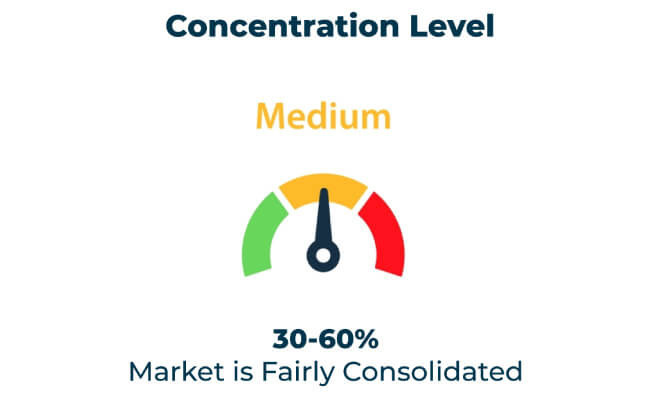
The major players hold approximately half of the total market share, demonstrating both their leadership and the clear potential for second-tier and niche players to capture a meaningful portion through differentiation and regional focus.
Technology as the frontier of competition
Key market drivers include integration of holograms, embedded fibre systems, colour-shift inks, fibre optics, RFID/NFC chips and biometric compatibility with secure documents. Leading manufacturers are already embedding these features in their substrate solutions, while new entrants are leveraging local production, cost-competitive offerings and simpler security systems to serve foundational use-cases.
Today’s market winners are those who view security paper not just as a commodity, but as a smart substrate—capable of connectivity, traceability and adaptation for document life-cycle management.
Opportunity for established manufacturers
Well-positioned incumbents have several strategic avenues open:
- Expand into adjacent applications beyond banknotes: passports, legal certificates, brand protection labels, government credentials and even packaging for high-value goods.
- Upscale R&D efforts toward next-gen features: biometric integration, sensor-enabled papers, sustainable biodegradable substrates.
- Deepen global partnerships: collaborate with governments, central banks and commercial enterprises to secure long-term contracts and co-develop solutions tailored to regional security requirements.
These strategies enable established players to solidify leadership and extract higher value from each gram of paper produced.
Room for new and regional players
At the same time, manufacturers who haven’t yet played on the global stage still have meaningful opportunity:
- Regional governments and institutions in Asia-Pacific, Latin America, Middle East and Africa are ramping up issuance of secure documents—creating demand for localized manufacturing and cost-effective options.
- Niche applications—educational certificates, micro-credential papers, limited-run secure labels—allow new suppliers to differentiate by speed, agility and tailored services.
- Adoption of sustainable production methods gives newcomers an edge: eco-friendly substrates, recycled security papers and lower-footprint supply chains resonate particularly in regions with strict environmental expectations.
By carving out one or more of these niches, new entrants can achieve sustainable growth while aiming for larger scale.
Market outlook and strategic recommendations
From the current vantage point, the market is forecast to reach a robust size as we approach 2035, driven by robust macro-trends, regulatory momentum and security technology advancement. For manufacturers—both established and new—the path forward is clear: innovation, diversification and strategic collaboration.
Specifically:
- Continuously enhance product offerings with integrated digital features and smart security elements.
- Diversify beyond traditional banknotes into certificates, brand-protection papers, identity documents and embedding new use-cases.
- Form alliances with finishing houses, central banks, government agencies and commercial clients to lock in supply relationships and co-create new value propositions.
- Embrace sustainable, cost-efficient production methodologies to meet the twin demands of security and environmental responsibility.
- Leverage data analytics and anti-counterfeiting intelligence to anticipate and respond to evolving threats—transforming security paper from static substrate into active protection layer.
In summary, the security paper market is no longer just about high-quality substrate—it’s about smart, adaptable and sustainable security solutions. Organizations that invest in the right technologies, identify new growth domains and build flexible supply chains will be the ones to seize leadership in this evolving market arena. Whether you’re an incumbent with decades of heritage or a dynamic regional manufacturer looking to scale, the future of security paper holds promise—and the time to act is now.