

As sustainability continues to drive transformation across industries, the market for eco-friendly inks is emerging as a dynamic growth arena. According to the latest findings from the report Eco-Friendly Inks Market Share & Industry Growth Outlook, the global market is expected to expand to approximately USD 8.9 billion by 2035, driven by a compound annual growth rate (CAGR) of around 5.8 %.
This surge presents a strategic inflection point for both established manufacturers and new entrants. Long-standing industry players are leveraging their scale, research capabilities and global distribution channels to deepen their footprint. At the same time, innovative newcomers are riding the wave of renewable-resource inks, water-based and UV-cured technologies to carve out differentiated niches—creating a rich ecosystem of opportunity and competition.
Established Players: Cementing Leadership and Driving Innovation
Major manufacturers such as DIC Corporation, Flint Group and Sun Chemical have already set benchmarks in the eco-ink space. These companies combine legacy strengths with new focus on sustainable ink technologies, enabling them to address both regulatory pressures and evolving customer expectations.
DIC Corporation, for example, has shifted its R&D into advanced water-based and UV-cured ink formulations. Flint Group is reinforcing its customer relationships globally while investing to broaden its bio-based ink portfolio. Sun Chemical continues to lead in supply chain strength and high-performance sustainable formulations.
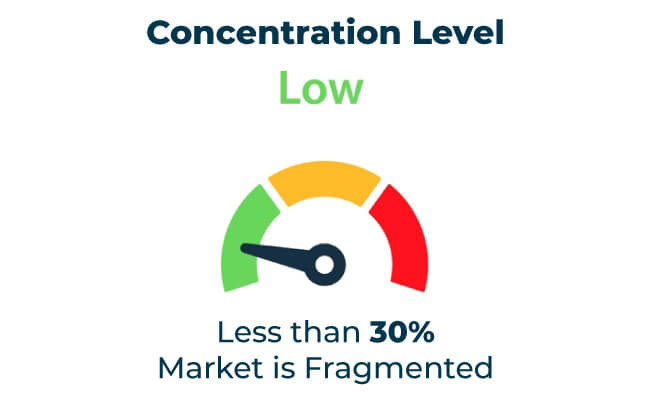
With the market still relatively unconsolidated (top 10 players share roughly 25 % of total market), these large firms have an opportunity: to expand into emerging geographies, scale innovations faster, and secure supply-chain resiliency while smaller firms innovate at pace.
Emerging Manufacturers: Entering the Arena with New Technologies
Meanwhile, a wave of new and nimble players is gaining momentum. These manufacturers are leveraging agility and technology differentiation—such as plant-based pigments, low-VOC formulations, recyclable ink systems and niche end-use targeting—to gain a foothold in a market hungry for green printing solutions.
For new entrants, the driving forces are clear: brand-led demand for sustainability, regulatory restrictions on traditional inks, growth in packaging and publishing applications, and rising awareness across Asia-Pacific, Europe and Latin America. Rather than simply following the established path, these players are challenging the status quo with value-added capabilities: faster drying UV-cured inks, bio-resins, and ink systems designed for recycling compatibility.
Technology Innovation is the Game-Changer
At the heart of the eco-friendly inks market lies innovation—in chemistry, manufacturing and application. The report highlights that water-based inks, UV-cured inks and bio-based inks are the three technological pillars driving transformation.
- Water-based inks offer minimal volatile organic compound (VOC) emissions, aligning with worker safety and regulatory goals.
- UV-cured inks deliver high durability and rapid drying, making them ideal for high-speed packaging lines.
- Bio-based inks, derived from renewable resources like vegetable oils and natural pigments, represent a paradigm shift toward circularity.
Together, these technologies are enabling manufacturers—both large and small—to deliver eco-friendly alternatives that meet both sustainability goals and performance expectations.
Market Opportunity & Regional Tailwinds
Regionally, North America is leading with ~35 % share thanks to strong VOC regulations and brand-led sustainability. Europe follows at ~30 %, where eco-labeling and recycling rules are well-established. Asia-Pacific is growing rapidly too (~25 %), driven by industrial expansion and rising awareness of green printing. Emerging markets in Africa, South America and Southeast Asia offer promising export and growth horizons for manufacturers ready to scale.
End-use segments such as packaging, publishing and textiles are all shifting toward greener ink solutions. Packaging dominates as the largest application segment, driven by demand for sustainable product displays and green brand alignment. Publishing and textiles follow, with niche growing opportunities in decorative printing and textile ink applications.
Why Now is the Time for Manufacturers to Expand
With global commitment to sustainability rising and printing demand shifting toward eco-friendly materials, ink manufacturers—whether established or new—have a clear runway to grow. The keys to success include:
- Investing in R&D and production capacity for greener formulations
- Ensuring compliance with global and regional regulations (low-VOC, recycled materials)
- Leveraging regional market penetrations and strategic partnerships
- Differentiating via technology—bio-based systems, recyclable inks, high-performance UV-cured blends
- Addressing supply-chain risks associated with renewable raw materials and scaling cost-effectively
For established manufacturers, the challenge is balancing scale and innovation—leveraging their strong brand and distribution while keeping pace with smaller agile competitors. For newer players, the opportunity lies in being lean, technology-focused and regionally responsive—offering niche solutions and eco-branding advantages.
Conclusion
The eco-friendly inks market is no longer niche—it is becoming mainstream, propelled by regulation, sustainability demands and technological advancement. For manufacturers with the vision and capability to evolve, the path ahead is ripe with opportunity. Whether you are a global legacy ink producer or a focused startup with a green-tech edge, there has never been a better moment to expand, innovate and lead.




