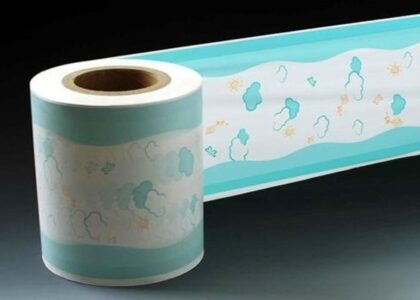
The freezer paper market is experiencing a dynamic upswing, with leading-tier producers and newer entrants alike seizing opportunities to expand, innovate and meet evolving customer demands. With sustainability, automation and customisation emerging as key drivers, both legacy players and fresh manufacturers are stepping up their game in a sector that serves everything from household food storage to industrial-scale meat processing.
The report “Freezer Paper Market Share & Competitive Overview” by Future Market Insights highlights that the top three manufacturers now account for roughly 38% of the global market. These industry-leaders are advancing the frontier of freezer-paper production, while a broad set of mid- and smaller-tier companies are carving niche positions.
Established Players Scaling New Heights
Dominant names in the space — for example, those global firms with large manufacturing footprints and end-to-end supply chains — are capitalising on their market leadership by investing in new technologies and expanding into adjacent geographies. Their scale gives them the muscle to drive high-volume production of wax-coated and polyethylene-lined freezer papers while also dedicating resources to next-generation, eco-friendly offerings.
These firms are embracing automation and advanced quality-control systems, and upgrading coatings for improved moisture, grease and barrier performance. This gives them an edge in supplying food-packaging giants and industrial processors whose demands are becoming more rigorous.
Their strategic expansions also focus on building geographically distributed networks—with strong penetration in North America and Asia-Pacific—as well as enhancing custom-printing capabilities to support private-label and retail branding strategies.
Emerging & Niche Manufacturers: Agile, Innovative, Growth-Oriented
Alongside the big players, a lively ecosystem of newer and regional manufacturers is gaining traction. These companies are targeting underserved segments: biodegradable freezer paper, custom-printed packaging, smart-label solutions, and niche industrial applications requiring specialised insulation or barrier performance.
Their agility allows them to respond quickly to trends—such as compostable materials, digital printing for branding differentiation, and flexible production runs for craft or premium meal-kit brands. These smaller players are also forming alliances with technology suppliers to deliver tailored, value-added solutions.
Technology & Innovation: The New Battleground
One of the defining themes across the freezer paper market is the growing integration of cutting-edge technologies. Automatic, AI-driven quality control systems are becoming standard, enabling manufacturers to improve yield, reduce defects and monitor consistency in real time. Sustainability efforts are also advancing rapidly: closed-loop recycling schemes, compostable coatings, and materials derived from renewable sources.
Customisation is another hot growth area. Manufacturers are offering digital-printing services for retail packaging, enabling meal-kit and direct-to-consumer brands to create branded freezer-paper wraps. At the high end, advanced insulation papers with high-barrier coatings are being developed for specialised food-processing, export shipping or premium frozen-food segments.
Looking ahead, smart-packaging applications such as NFC or RFID tags embedded in freezer paper are on the horizon. These innovations will support traceability, brand authenticity and logistics tracking—becoming differentiators in sourcing, supply-chain transparency and consumer engagement.
Strategic Implications for Manufacturers
For established players, the opportunity lies in leveraging their scale to further penetrate emerging markets and increase the share of higher-value sustainable and customised products. For newer entrants, the path to growth includes positioning around innovation, agility and niche differentiation rather than volume alone.
Technology suppliers have a vital role to play, too: providing modular production platforms, digital-printing capabilities, smart-coating systems and AI-based manufacturing analytics will be essential. Cooperation between packaging-material producers, machinery vendors and food-processing customers is increasingly shaping the competitive landscape.
Market Outlook & Business Expansion Opportunities
The overall freezer paper market is projected to grow at a steady rate through 2025 to 2035, driven by multiple tailwinds: rising consumer demand for frozen and processed foods, growth in e-commerce meal-kits, stricter regulation around packaging sustainability, and the need for moisture- and grease-resistant materials in both consumer and industrial applications.
For businesses eyeing expansion, the message is clear: invest now in sustainability, customisation and advanced manufacturing. Whether you’re a global veteran or a regional start-up, positioning your technology roadmap around these themes will unlock growth. The next wave of freezer-paper applications—from premium branded retail wraps to high-barrier industrial solutions—offers abundant opportunities.
About This Report
The referenced report provides an in-depth segmentation of the freezer paper market by product type (such as wax-coated, PE-lined, biodegradable, custom-printed, advanced insulation), by end-use (food packaging, retail & consumer use, industrial/commercial applications, sustainable & eco-friendly packaging, e-commerce & direct-to-consumer brands), and by tier-type vendor classification. It also offers a future roadmap covering automation, smart-packaging, regional growth dynamics and sustainability initiatives.