

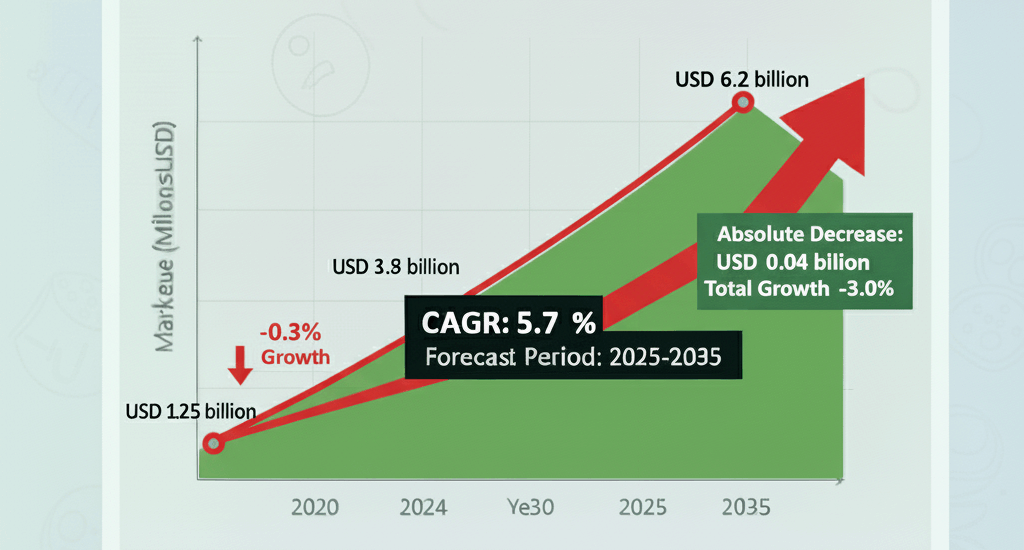
Future Market Insights (FMI), a leading market intelligence and consulting firm, today announced the release of its latest report, “Active Humidifier Devices Market Trends 2025-2035.” This in-depth analysis provides critical insights into the global market for active humidifier devices, which are essential for maintaining optimal humidity levels in respiratory support systems across medical, home care, and industrial settings. The report forecasts the market to decline slightly from USD 1.25 billion in 2025 to USD 1.21 billion by 2035, registering a compound annual growth rate (CAGR) of -0.3% from 2023 to 2035. Despite the modest contraction, the study highlights opportunities in smart technologies and emerging regions, underscoring the market’s resilience amid shifting preferences toward alternative respiratory therapies. This report equips stakeholders with actionable data to navigate challenges and capitalize on innovations in humidification technology, impacting healthcare providers, manufacturers, and investors worldwide.
Humidifier Devices Market Insights:
The Active Humidifier Devices Market is at a pivotal juncture, influenced by a blend of growth drivers, emerging trends, and persistent challenges. Key drivers include the high adoption of respiratory health and nose humidification technologies, the rising prevalence of chronic respiratory illnesses such as asthma, chronic obstructive pulmonary disease (COPD), and sleep apnea, and ongoing technological advancements in humidifier devices. These factors are particularly pronounced in critical care scenarios, including in-patient, neonatal, and home-care environments, where maintaining precise humidity levels is vital for patient comfort and preventing airway dryness during mechanical ventilation or oxygen therapy.
Trends indicate a shift toward more sophisticated solutions. From 2020 to 2024, the market saw steady growth driven by increased demand for air quality solutions in urban regions and health facilities, with a focus on ultrasonic, evaporative, and steam-based humidifiers. However, projections for 2025 to 2035 point to an evolution incorporating AI-powered humidity management, green humidification techniques, antimicrobial technologies, and IoT compatibility for enhanced user convenience and maintenance reminders. Sustainability is a core trend, with energy-efficient designs, integration with HVAC systems, and the use of sustainable materials gaining traction. Regionally, Asia-Pacific emerges as the fastest-growing area, fueled by rising pollution levels, respiratory disorders, and improving healthcare infrastructure in countries like China, India, and Japan. In contrast, mature markets like North America (holding nearly one-third of global usage) and Europe face headwinds from advanced non-humidified alternatives, leading to negative CAGRs in the United States (-0.3%), United Kingdom (-0.6%), European Union (-0.5%), and South Korea (-0.4%).
Challenges remain significant, including high costs, logistical complexities, and varying regulations across regions, which hinder market penetration and compliance with health and safety standards. Technological hurdles, such as energy consumption, user-friendliness, routine maintenance, filter changes, and microbial contamination risks, further complicate adoption. Despite these, opportunities abound in smart, energy-efficient, and connected devices featuring remote control and automatic humidity adjustments, appealing to tech-savvy consumers. The report also emphasizes expanding applications in healthcare, pharmaceuticals, electronics, data centers, and commercial spaces, where controlled humidity is crucial for air quality and operational efficiency.
The competitive landscape is moderately consolidated, with established players dominating through innovation and broad portfolios. Market segmentation reveals electronic humidifiers (heated/electronic and ultrasonic) leading due to their role in preventing mucosal injuries and infections, while bubble humidifiers gain traction for their cost-effectiveness in oxygen therapy. By age group, the adult segment commands the largest share, driven by geriatric populations and chronic conditions, though pediatric and neonatal segments are surging with specialized NICU systems for conditions like respiratory distress syndrome (RDS).
Humidifier Devices Market Update:
The Active Humidifier Devices Market has undergone notable transformations in recent years, adapting to post-pandemic realities and technological disruptions. From 2020 to 2024, the industry focused on adhering to stringent air quality standards, safety certifications, and local regulations, while witnessing a rise in ultrasonic and evaporative humidifiers amid growing residential, healthcare, and industrial adoption. Supply chains relied on conventional manufacturing, but high product costs and maintenance needs tempered expansion. Companies countered these by introducing low-cost models, eco-friendly technologies, and advanced filtration systems to address energy consumption and water waste.
Looking ahead to 2025-2035, the report projects a streamlined regulatory landscape with AI-based compliance monitoring and enhanced safety standards. Technology growth will expand into sensor-controlled, energy-efficient systems, with industry adoption shifting toward smart humidifiers integrated with air purification. Supply chains are evolving toward sustainable materials, modular designs, and local sourcing, fostering competition from startups and specialized AI-powered solutions. Growth drivers will include eco-friendly investments, smart home integration, and healthcare applications, with large-scale implementation of renewable energy-integrated and self-cleaning technologies. Digital integration will advance through predictive maintenance, blockchain-based tracking, and personalized air quality management, marking a transition from simple comfort devices to adaptive, multi-functional systems. This update reflects the market’s pivot toward sustainability and innovation, even as overall growth moderates due to alternatives like non-humidified ventilation.
Humidifier Devices Market Applications:
Businesses across sectors stand to benefit immensely from the report’s findings. In healthcare, hospitals, ambulatory surgical centers, and sleep centers can leverage insights on invasive and non-invasive ventilation applications (e.g., nCPAP and high-flow oxygen therapy) to optimize patient outcomes, reduce infection risks, and enhance efficiency in ICUs and NICUs. Manufacturers in pharmaceuticals and electronics can apply humidity control strategies to maintain product integrity and operational reliability in controlled environments like data centers. For home care providers, the emphasis on portable, smart devices supports expanding services for aging populations and chronic disease management, improving patient comfort and adherence to therapies.
Investors and policymakers can use regional forecasts to identify high-potential areas, such as Asia-Pacific’s rapid infrastructure growth or Latin America’s rising healthcare expenditures, to allocate resources effectively. Overall, the report empowers stakeholders to mitigate challenges like microbial risks through antimicrobial innovations and capitalize on opportunities in smart ecosystems, driving cost savings, regulatory compliance, and market expansion.
Humidifier Devices Market Key Players:
The market is led by a cadre of innovative companies, with estimated shares as follows: Fisher & Paykel Healthcare (20-25%), renowned for medical-grade humidification systems; Philips Respironics (15-20%), specializing in CPAP and sleep therapy solutions; ResMed (12-16%), focusing on smart integrated devices; Vapotherm (8-12%), excelling in high-flow nasal therapy; and Teleflex Incorporated (5-9%), offering airway management solutions. Other notable players, holding 30-40% combined, include 3B Medical, Drive DeVilbiss Healthcare, Pari Medical, WellOxygen, and Apex Medical Corp, alongside profiled firms like VINCENT MEDICAL HOLDINGS LIMITED, Armstrong Medical, Breas Medical AB, BMC Medical Co., Ltd, and Hamilton Medical AG.
Full Market Report available for delivery. For purchase or customization, please request here: https://www.futuremarketinsights.com/checkout/13929
Request for Discount: https://www.futuremarketinsights.com/reports/sample/rep-gb-13929
Humidifier Devices Recent Developments in the Market:
Recent years have seen dynamic advancements, with companies introducing devices that reduce particulate matter to enhance humification therapy in hospitals and homes. In response to 2020-2024 challenges, firms like Philips and ResMed rolled out low-cost, green models with improved filtration. Looking forward, anticipated launches include AI-driven systems from Fisher & Paykel and Vapotherm, featuring IoT for predictive maintenance and antimicrobial coatings to combat contamination. Industry mergers, such as those integrating humidifiers with HVAC, and investments in sustainable initiatives by startups like WellOxygen, signal a push toward eco-friendly, personalized solutions. These developments align with global trends in respiratory care, positioning the market for targeted growth despite overall decline.
Explore More Related Studies Published by FMI Research:
Pediatric Home Healthcare Market- https://www.futuremarketinsights.com/reports/pediatric-home-healthcare-market
Surgical Clips Market- https://www.futuremarketinsights.com/reports/surgical-clips-market
Multi-therapy Infusion Pumps Market- https://www.futuremarketinsights.com/reports/multi-therapy-infusion-pumps-market
About Future Market Insights (FMI)
Future Market Insights, Inc. (ESOMAR certified, recipient of the Stevie Award, and a member of the Greater New York Chamber of Commerce) offers profound insights into the driving factors that are boosting demand in the market. FMI stands as the leading global provider of market intelligence, advisory services, consulting, and events for the Packaging, Food and Beverage, Consumer Technology, Healthcare, Industrial, and Chemicals markets. With a vast team of over 400 analysts worldwide, FMI provides global, regional, and local expertise on diverse domains and industry trends across more than 110 countries.
Contact Us:
Future Market Insights Inc.
Christiana Corporate, 200 Continental Drive,
Suite 401, Newark, Delaware – 19713, USA
T: +1-347-918-3531
For Sales Enquiries: sales@futuremarketinsights.com
Website: https://www.futuremarketinsights.com
LinkedIn| Twitter| Blogs | YouTube




