

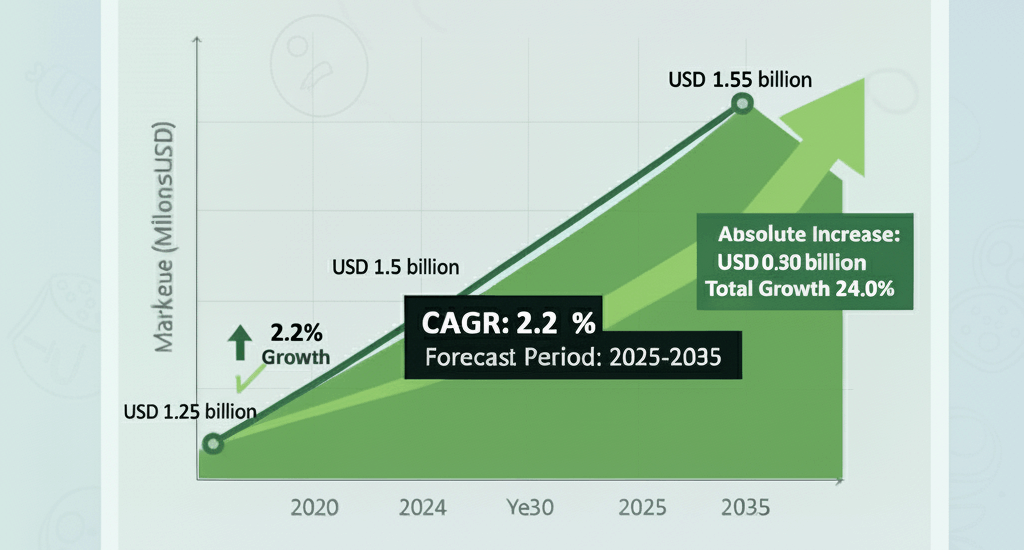
Future Market Insights (FMI), a leading provider of market intelligence and consulting services, today announced the publication of its latest comprehensive report, “Acetamide MEA Market Growth and Forecast, 2025-2035.” This in-depth analysis reveals a steady expansion trajectory for the global Acetamide MEA market, valued at USD 58.6 billion in 2025 and forecasted to grow to USD 72.8 billion by 2035 at a compound annual growth rate (CAGR) of 2.2%. The report underscores Acetamide MEA’s pivotal role as a high-performance conditioning agent, humectant, and surfactant in personal care, cosmetics, and pharmaceutical sectors, highlighting how evolving consumer preferences for mild, hydrating, and sustainable products are driving market momentum. With insights into regional trends, segmentation, and competitive dynamics, this report equips stakeholders with actionable intelligence to navigate opportunities in a rapidly evolving landscape, potentially influencing product innovation and strategic investments across industries.
Acetamide MEA Market Insights:
The Acetamide MEA market is poised for consistent growth, fueled by escalating demand in the personal care and cosmetics industries, where it serves as an essential ingredient for moisture retention and texture enhancement in products like shampoos, conditioners, lotions, and facial creams. Key growth drivers include rising consumer awareness of ingredient transparency, a shift toward sulphate-free and paraben-free formulations, and increasing disposable incomes in emerging economies, particularly in Asia-Pacific. The report projects a 2.2% CAGR, reflecting sustained consumption amid innovations in R&D and new product launches that emphasize multifunctional, skin-friendly agents.
However, challenges persist, including stringent regulatory compliance from bodies like the U.S. Food and Drug Administration (FDA) and the European Chemicals Agency (ECHA), which mandate safety standards and address concerns over potential impurities such as nitrosamine formation in ethanolamine-based compounds. Competition from alternative humectants like glycerine and hyaluronic acid, along with fluctuating raw material costs and environmental concerns in production processes, could temper growth. On the opportunity front, the clean beauty trend presents significant potential, with Acetamide MEA’s natural-derived properties making it ideal for hypoallergenic, biodegradable formulations in anti-aging and premium skincare lines. The competitive landscape is fragmented, with major players holding 50-60% market share through focus on high-purity, sustainable offerings. Smaller entities contribute through customized, industry-specific solutions, fostering innovation in bio-based alternatives and green chemistry.
Acetamide MEA Market Update:
The Acetamide MEA sector has undergone notable shifts from 2020 to 2024, marked by moderate growth driven by heightened adoption in skincare and haircare amid consumer demands for transparency and mild moisturizing agents. During this period, the industry grappled with regulatory pressures on cosmetic safety and ingredient purity, leading to advancements in high-purity formulations and reduced chemical waste in production. Supply chains remained reliant on synthetic processes, while competition intensified from substitutes, yet rising demand for hydration agents in cosmetics propelled overall expansion.
Looking ahead to 2025-2035, the report anticipates transformative trends, including stricter regulations on ethanolamine compounds and a surge in clean-label ingredients. Technological advancements will introduce bio-based and eco-friendly alternatives, shifting sourcing toward sustainable, plant-derived methods. Industry adoption is expected to expand into anti-aging, dermatological, and customized skincare applications, with green chemistry practices enhancing biodegradability and energy efficiency. Integration of AI-driven monitoring for formulation optimization and real-time efficacy analysis will revolutionize R&D, enabling synergistic effects with botanical extracts for improved penetration and stability. Sustainability initiatives, such as biotech synthesis, will align with global eco-cosmetics preferences, positioning the market for resilient growth despite ongoing challenges.
Acetamide MEA Market Applications:
The report’s findings offer substantial value across diverse sectors, enabling businesses to leverage Acetamide MEA’s versatile properties for enhanced product performance and market positioning. In the personal care and cosmetics industry, manufacturers can utilize insights on its humectant and conditioning capabilities to develop innovative, sulphate-free shampoos, conditioners, and lotions that cater to sensitive skin and hydration needs—potentially capturing over 65% of hydration-targeted formulations. Pharmaceutical companies benefit from its role in topical creams and lotions for sustained hydration and skin protection, aiding compliance with safety norms while expanding into dermatological applications.
Industrial sectors, including textiles, lubricants, and chemical processing, can apply Acetamide MEA as a surfactant and emulsifier to improve water solubility, anti-static properties, and thermal stability, optimizing efficiency in manufacturing. For instance, around 50% of its industrial usage focuses on surfactant-based applications, offering opportunities for eco-friendly cleaning solutions and anti-corrosion agents. Businesses in emerging markets like Asia-Pacific can capitalize on urbanization-driven demand to invest in R&D for multifunctional products, while premium brands in North America and Europe can align with sustainability trends for competitive differentiation. Overall, the report empowers strategic decision-making, from supply chain optimization to product customization, helping companies mitigate risks, seize growth avenues, and achieve regulatory alignment for long-term profitability.
Acetamide MEA Market Key Players:
The Acetamide MEA market is dominated by a cadre of innovative leaders committed to sustainability and performance enhancement. BASF SE commands 15-20% market share with its focus on biodegradable, skin-friendly formulations for haircare and pharmaceuticals. Clariant AG (12-16%) excels in mild surfactant blends that deliver superior hydration in skincare applications. Lubrizol Corporation (10-14%) provides texture-modifying solutions to boost sensory appeal in cosmetics. Evonik Industries (8-12%) emphasizes high-purity, eco-friendly options for premium dermatological uses, while Croda International Plc (5-9%) offers plant-derived emulsifiers for conditioning in beauty products. Collectively, other players like Stepan Company, Ashland Global, Innospec Inc., Solvay SA, and Vantage Specialty Chemicals hold 40-50% share, specializing in customized emollients, sustainable surfactants, and high-purity industrial applications.
Full Market Report available for delivery. For purchase or customization, please request here: https://www.futuremarketinsights.com/checkout/10349
Request for Discount: https://www.futuremarketinsights.com/reports/sample/rep-gb-10349
Acetamide MEA Recent Developments in the Market:
Recent years have seen dynamic advancements in the Acetamide MEA market, aligning with broader industry pushes toward automation and sustainability. In 2024, reports highlighted accelerated adoption of automated production systems, with advances in sensor technology enabling precise monitoring and efficiency gains in manufacturing processes. For instance, integrated systems have streamlined high-purity Acetamide MEA synthesis, reducing waste and supporting green chemistry initiatives. Key players like BASF and Evonik have invested in bio-based alternatives, launching eco-friendly variants that comply with evolving FDA and ECHA regulations on nitrosamine risks.
In early 2025, the market witnessed expansions in Asia-Pacific, where companies like Clariant introduced multifunctional blends for K-beauty innovations, capitalizing on surging demand for hydrating sheet masks and serums in South Korea and Japan. A notable development includes Lubrizol’s collaboration on AI-optimized formulations, enhancing stability and absorption in anti-aging products. Amid a projected 3.9-4.47% CAGR in various analyses, mergers and R&D investments have intensified, such as Croda’s focus on plant-derived sources to meet clean beauty standards. These evolutions underscore the market’s resilience, with ongoing regulatory adaptations and technological integrations poised to drive further innovation through 2035.
Explore More Related Studies Published by FMI Research:
Ortho Phthalic Aldehyde Market- https://www.futuremarketinsights.com/reports/ortho-phthalic-aldehyde-market
N-Ethyl-2-Pyrrolidone Market- https://www.futuremarketinsights.com/reports/n-ethyl-2-pyrrolidone-market
Medical Coatings Market- https://www.futuremarketinsights.com/reports/medical-coatings-market
About Future Market Insights (FMI)
Future Market Insights, Inc. (ESOMAR certified, recipient of the Stevie Award, and a member of the Greater New York Chamber of Commerce) offers profound insights into the driving factors that are boosting demand in the market. FMI stands as the leading global provider of market intelligence, advisory services, consulting, and events for the Packaging, Food and Beverage, Consumer Technology, Healthcare, Industrial, and Chemicals markets. With a vast team of over 400 analysts worldwide, FMI provides global, regional, and local expertise on diverse domains and industry trends across more than 110 countries.
Contact Us:
Future Market Insights Inc.
Christiana Corporate, 200 Continental Drive,
Suite 401, Newark, Delaware – 19713, USA
T: +1-347-918-3531
For Sales Enquiries: sales@futuremarketinsights.com
Website: https://www.futuremarketinsights.com
LinkedIn| Twitter| Blogs | YouTube




