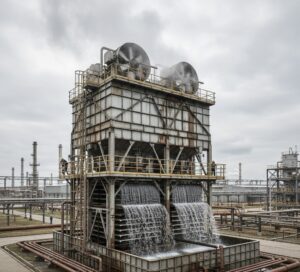
The Industrial Evaporative Condenser market is on the cusp of significant transformation and expansion, poised to surge from a valuation of USD 232.2 million in 2025 to an impressive USD 400.4 million by 2035. This robust growth trajectory, marked by a steady compound annual growth rate (CAGR) of 5.6%, signals a near 1.72X increase in market size — a clear testament to the widespread adoption of evaporative condensers across diverse industrial cooling applications globally.
Market Overview: Growth Anchored in Volume and Innovation
Over the next decade, the market’s growth will be driven by two primary forces: volume expansion and cutting-edge technological advancements. From 2025 to 2030, demand will be volume-centric, fueled by surging adoption across HVAC, refrigeration, and process cooling systems. Industrial growth in sectors such as chemicals, food & beverage, and power generation is catalyzing this surge, with facility expansions and modernization initiatives playing key roles, particularly in North America and Europe.
Post-2030, the growth narrative evolves. While volume remains important, increasing emphasis on premium products and technological innovations will dominate. Emerging markets in Asia-Pacific, the Middle East, and Latin America will spearhead installation activities, driven by rapid industrialization and infrastructure investments. Concurrently, manufacturers are expected to leverage advanced features like corrosion-resistant coatings, modular designs, and smart monitoring to capture value, enabling premium pricing models.
Market Highlights: Key Segments and Trends
To better understand this evolving market, here are the Key Segments of the Industrial Evaporative Condenser Market Report:
- Configuration Types:
- Counterflow Systems (52%): Dominating the market with their efficient heat transfer and thermal performance, ideal for traditional and established industrial applications.
- Combined Crossflow Systems (31%): Preferred in multi-stage and complex cooling operations requiring enhanced cooling performance.
- Specialty Cooling Configurations (17%): Tailored for custom and high-performance industrial needs.
- Application Segments:
- Chemical Processing (26%): The largest application segment, driven by energy efficiency requirements and modernization efforts.
- Pharmaceutical Manufacturing (24%): Demands precision cooling adhering to stringent GMP standards.
- Electric Power Generation (20%): Requires high-capacity cooling systems for large-scale power plants.
- Others: Heat treatment, food & beverage, and specialty industries with unique cooling needs.
- Regional Growth Leaders:
- East Asia (China, Japan, South Korea): Leading adoption due to expansive industrialization and manufacturing growth.
- North America and Western Europe: Steady growth powered by infrastructure modernization and tightening environmental regulations.
- Emerging Markets (India, Middle East, Latin America): Rapid industrial development accelerating demand.
Innovation and Technology: The New Frontier for Market Players
The market isn’t just growing in size—it’s evolving technologically. Established manufacturers like SPX Cooling Technologies, Baltimore Aircoil Company, Johnson Controls, and evAPCO are spearheading innovation by integrating smart monitoring systems, IoT-enabled predictive maintenance, and advanced material coatings that extend equipment life and improve performance.
These companies are not only expanding their product portfolios but also redefining how condensers operate. Compact and high-efficiency designs are opening doors in urban and space-constrained industrial settings, while energy and water conservation technologies align with global sustainability goals, addressing the environmental regulations reshaping the industry.
Market Opportunities for Manufacturers and Stakeholders
For both established players and new entrants eager to expand, the market offers fertile ground for growth:
- Design for Thermal Efficiency: Moving beyond basic cooling capacity to holistic thermal management, integrating heat exchangers, control systems, water treatment, and performance monitoring.
- Complete Cooling Solutions: Offering turnkey packages tailored to specific industry needs enhances value for end-users and strengthens supplier differentiation.
- Digital Integration: Real-time monitoring, SCADA compatibility, and predictive maintenance services provide competitive edges and drive customer loyalty.
- Value-Based Pricing Models: Transparent pricing combined with subscription-based service tiers for monitoring and maintenance can open new revenue streams.
- Customization & Specialty Applications: Tailored solutions for pharmaceutical, chemical, and power generation sectors address unique cooling requirements, presenting niche growth avenues.
Market Challenges and Restraints
Despite the promising outlook, the market does face some hurdles:
- High Capital Costs: Especially challenging for smaller facilities, potentially slowing adoption rates.
- Competition from Alternative Technologies: Air-cooled and hybrid systems remain competitive, especially in regions or applications where water use is restricted or cost is a primary concern.
- Complex Installation & Regulatory Landscape: Navigating stringent environmental regulations and complex integration can slow deployment, especially in developed markets.
Regional Insights: How Different Markets Are Shaping the Future
- China and India lead the charge in growth, driven by large-scale industrialization, with China growing at 7.5% CAGR and India at 7.0%. These markets prioritize cost-effective and scalable solutions.
- Germany and Brazil are steady performers, focusing on premium efficiency systems and value-oriented solutions, respectively.
- The United States and Western Europe prioritize technology integration, sustainability compliance, and modernization, maintaining consistent growth trajectories.
Market Outlook and Strategic Imperatives
The industrial evaporative condenser market is evolving rapidly, and stakeholders must align strategies with emerging trends:
- Focus on Thermal Efficiency: Engineering condensers that deliver optimal cooling with minimal resource use.
- Adopt Smart Industrial Integration: Enhance product offerings with real-time data, predictive maintenance, and system interoperability.
- Innovate for Sustainability: Develop water-saving and energy-efficient technologies that meet tightening environmental standards.
- Expand in Emerging Markets: Leverage local partnerships and cost-effective production to capitalize on high-growth regions.
- Offer Comprehensive Services: Beyond hardware, provide full lifecycle support including installation, maintenance, and monitoring to ensure customer satisfaction.
This Report Now at Just $5000 | Limited-Time Discount Offer! https://www.futuremarketinsights.com/reports/sample/rep-gb-27368
Checkout Now to Access Industry Insights: https://www.futuremarketinsights.com/checkout/27368
About Future Market Insights (FMI)
Future Market Insights, Inc. (ESOMAR certified, recipient of the Stevie Award, and a member of the Greater New York Chamber of Commerce) offers profound insights into the driving factors that are boosting demand in the market. FMI stands as the leading global provider of market intelligence, advisory services, consulting, and events for the Packaging, Food and Beverage, Consumer Technology, Healthcare, Industrial, and Chemicals markets. With a vast team of over 400 analysts worldwide, FMI provides global, regional, and local expertise on diverse domains and industry trends across more than 110 countries.
Contact Us:
Future Market Insights Inc.
Christiana Corporate, 200 Continental Drive,
Suite 401, Newark, Delaware – 19713, USA
T: +1-347-918-3531
For Sales Enquiries: sales@futuremarketinsights.com
Website: https://www.futuremarketinsights.com
LinkedIn| Twitter| Blogs | YouTube