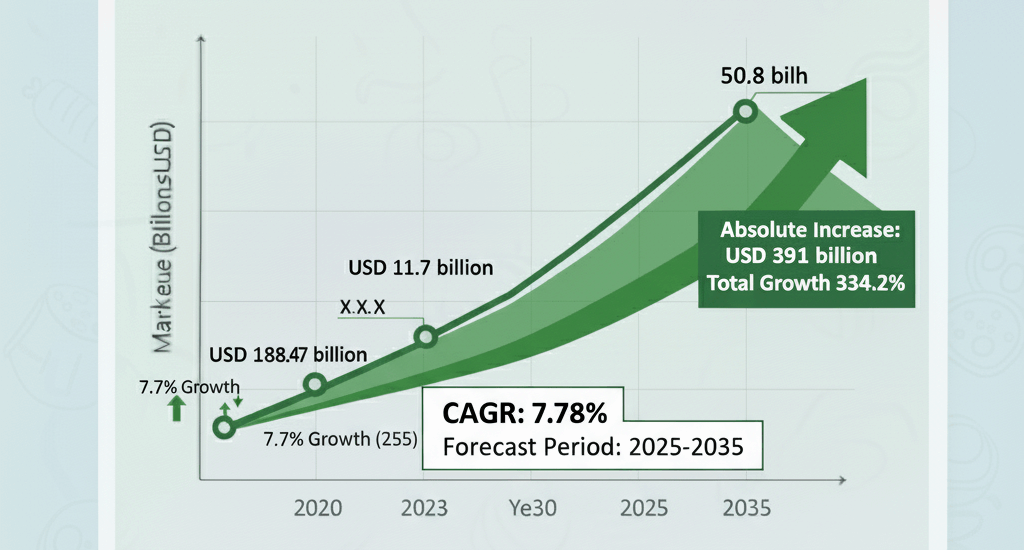
Future Market Insights (FMI), a leading provider of market intelligence and consulting services, today announced the publication of its latest comprehensive report, “Industrial Stackers Market Size, Trends & Forecast 2025-2035.” The market was worth almost USD 11.7 billion in 2023 and stands to surpass USD 15.2 billion by 2025. The market is forecasted to further increase up to USD 50.8 billion by 2035, with a CAGR of 7.7%, alongside continued industrial automation and warehouse management solutions development. The report underscores how industrial automation, sustainability initiatives, and e-commerce expansion are reshaping the landscape, positioning stackers as indispensable tools for operational efficiency and cost reduction. This timely report arrives as industries worldwide grapple with labor shortages, supply chain complexities, and the push toward greener technologies. By providing actionable insights into market dynamics, segmentation, and regional forecasts, FMI’s analysis empowers businesses to navigate challenges and capitalize on emerging opportunities in a post-pandemic economy increasingly reliant on smart warehouse solutions.
Industrial Stackers Market Insights: Trends, Drivers, Challenges, and Opportunities:
The industrial stackers market is poised for transformative growth, fueled by a confluence of technological advancements and economic shifts. Key trends highlighted in the report include the integration of Artificial Intelligence (AI) and Internet of Things (IoT) for real-time monitoring, the rise of autonomous navigation and predictive maintenance, and a shift toward electric and hydrogen-powered stackers for sustainability. From 2020 to 2024, the market demonstrated resilience, rebounding from COVID-19 disruptions that valued it at USD 9.2 billion in 2020 to USD 11.7 billion in 2023, thanks to accelerated digital transformation and automation to address labor gaps.
High-impact drivers include AI/IoT integration, labor shortages accelerating robotization, demand for multi-functional high-load capacity stackers, and expansion of multi-tier warehouse systems. Medium-impact factors encompass growth in cold storage and pharmaceutical logistics, innovations in lightweight compact designs, hybrid-powered models, and rental/leasing preferences. These elements are expected to propel double-digit regional growth, particularly as companies modernize logistics infrastructure.
However, the report identifies significant restraints, such as high-impact challenges like battery performance issues in electric stackers, raw material price fluctuations, and dependency on after-sales services. Medium-level hurdles include cybersecurity risks for connected devices, space constraints in urban warehouses, regulatory barriers in cross-border trade, and lack of global standardization. Low resistance from traditional industries offers room for gradual adoption.
Opportunities abound in emerging markets, where investments in smart infrastructure and e-commerce are surging. The competitive landscape is intensifying, with Tier 1 players investing in R&D for AI-driven fleet management and electrification to reduce carbon emissions and enhance productivity. FMI’s market attractiveness analysis and competition deep dive reveal electric stackers leading with high growth potential due to energy optimization and sustainability, while semi-electric models appeal to cost-sensitive mid-sized enterprises.
Industrial Stackers Market Update: Evolving Dynamics and Global Shifts:
In a detailed industry update, the report chronicles the market’s evolution from pandemic-induced setbacks to a future dominated by Industry 4.0. Post-2020, supply chain disruptions highlighted the need for resilient material handling, spurring a 2021 recovery to USD 10.1 billion as automation mitigated labor shortages. By 2022-2023, electric and semi-automated stackers gained traction amid sustainability mandates, pushing valuations higher.
Looking ahead, 2025-2035 projections emphasize autopilot systems, AI-optimized smart warehouses, and increased rental models to lower upfront costs. Regional updates show China leading with heavy investments in manufacturing and e-commerce, while the U.S. focuses on IoT-enabled efficiency in expansive warehouses. Europe, particularly Germany and the UK, is advancing through Industry 4.0 and post-Brexit local production. Asia-Pacific nations like South Korea, Japan, and India are accelerating adoption via green tech incentives and urbanization. Globally, the market’s shift toward battery-powered and hybrid solutions aligns with environmental regulations, though import dependencies and high costs pose ongoing challenges in regions like Canada.
Recent broader industry news reinforces these trends: The related reach stacker segment, a key subset, is projected to grow from USD 2.9 billion in 2024 to register a 5.4% CAGR through 2034, driven by port infrastructure expansion and electrification. Similarly, heavy stackers are anticipated to expand at 14.4% CAGR from 2025-2032, reflecting rapid industrialization. These updates signal a cohesive push toward automated, eco-friendly material handling across industrial ecosystems.
Industrial Stackers Market Applications: Benefits Across Sectors:
FMI’s report elucidates how diverse industries can leverage these insights for strategic gains. In logistics and retail/wholesale, stackers streamline inventory and meet e-commerce demands, reducing bottlenecks and enhancing delivery speeds. The food and beverages sector benefits from hygiene-compliant, cold-storage-compatible designs for perishable handling, improving supply chain reliability.
Automotive manufacturers integrate stackers into assembly lines for seamless material movement, boosting factory floor efficiency. Pharmaceuticals, construction, and electronics gain from automation trends, minimizing errors and labor costs in high-precision environments. Businesses adopting electric or semi-electric models can achieve sustainability goals, while manual/hydraulic options suit smaller operations with limited lifts.
Overall, the findings enable companies to invest in multi-functional stackers for productivity gains, navigate regulatory landscapes, and explore rental models for flexibility, ultimately driving cost savings and competitive edges in global supply chains.
Industrial Stackers Key Players Shaping the Market:
The competitive landscape features dominant Tier 1 entities like Toyota Material Handling, KION Group AG, Hyster-Yale Materials Handling, Inc., Jungheinrich AG, and Crown Equipment Corporation, alongside Mitsubishi Logisnext Co., Ltd., Hyundai Construction Equipment, Raymond Corporation, Clark Material Handling Company, EP Equipment, Komatsu Ltd., Doosan Industrial Vehicle, Hangcha Group Co., Ltd., Noblelift Intelligent Equipment Co., Ltd., and Godrej Material Handling. These leaders are prioritizing global expansion, acquisitions in emerging markets like India and Southeast Asia, and innovations in AI, IoT, and electrification.
Emerging innovators such as Pattern Labs (autonomous mobility systems) and BMPower (hydrogen fuel cells adaptable to stackers) are disrupting with lightweight, green alternatives.
Full Market Report available for delivery. For purchase or customization, please request here: https://www.futuremarketinsights.com/checkout/17808
Request for Discount: https://www.futuremarketinsights.com/reports/sample/rep-gb-17808
Industrial Stackers Recent Developments in the Market:
Innovation continues to accelerate. In 2024, Toyota Material Handling introduced hydrogen fuel cell stackers for extended sustainability, while Jungheinrich AG expanded lithium-ion offerings, KION Group launched AI-based fleet management, and Crown Equipment broadened automation portfolios.
In 2025, the market has seen further momentum: The electric reach stacker segment is projected to grow at 12% CAGR through 2033, reaching USD 500 million, amid port automation trends. Narrow aisle stackers are gaining traction for space-efficient warehousing, driven by e-commerce. Additionally, the U.S. stacker market is forecasted at 4.3% CAGR through 2033, bolstered by industrial electrification. Global stacker revenues are expected to hit USD 3.11 billion by 2030, emphasizing smart technologies for Industry 4.0. These advancements highlight a market ripe for digitalization and eco-innovation.
Explore More Related Studies Published by FMI Research:
Large Diameter Steel Pipes Market: Projected to rise from USD 13,341.4 million in 2025 to USD 17,245.4 million by 2035, reflecting a CAGR of 2.6%, backed by oil & gas infrastructure expansion and water network development.
Laser Light Cables Market: Expected to grow sharply from USD 991.3 million in 2025 to USD 5,458.1 million by 2035, with a CAGR of 18.6%, driven by advancements in fiber optics and high-power laser applications in medical, defense, and telecom sectors.
Airborne Warning and Control System (AWACS) Market: Valued at USD 5,209.7 million in 2025, projected to reach USD 11,888.1 million by 2035, expanding at a CAGR of 8.6%, supported by defense modernization, geopolitical tensions, and growing investment in airborne surveillance systems.
About Future Market Insights (FMI)
Future Market Insights, Inc. (ESOMAR certified, recipient of the Stevie Award, and a member of the Greater New York Chamber of Commerce) offers profound insights into the driving factors that are boosting demand in the market. FMI stands as the leading global provider of market intelligence, advisory services, consulting, and events for the Packaging, Food and Beverage, Consumer Technology, Healthcare, Industrial, and Chemicals markets. With a vast team of over 400 analysts worldwide, FMI provides global, regional, and local expertise on diverse domains and industry trends across more than 110 countries.
Contact Us:
Future Market Insights Inc.
Christiana Corporate, 200 Continental Drive,
Suite 401, Newark, Delaware – 19713, USA
T: +1-347-918-3531
For Sales Enquiries: sales@futuremarketinsights.com
Website: https://www.futuremarketinsights.com
LinkedIn| Twitter| Blogs | YouTube