

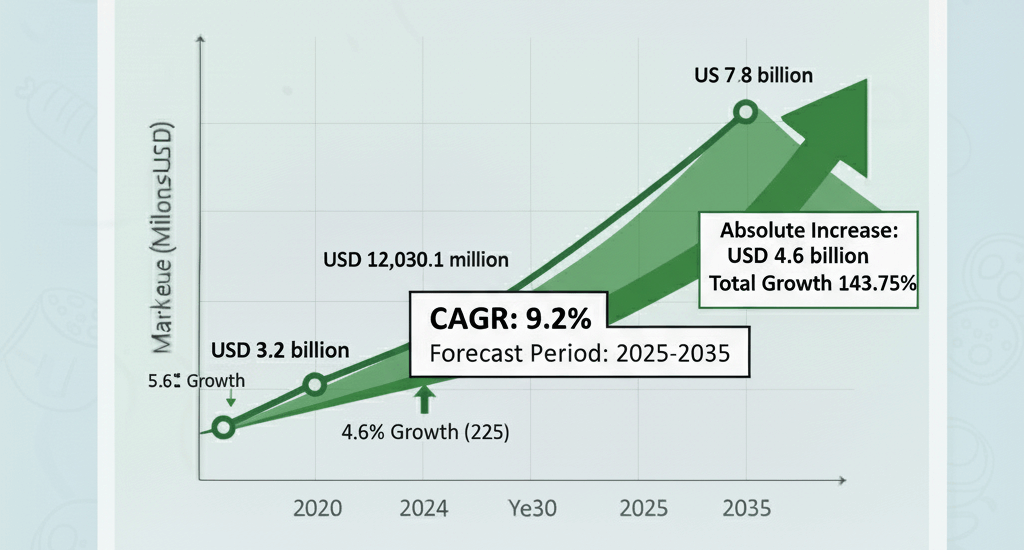
Future Market Insights (FMI), a premier provider of market intelligence and consulting services, has published its latest in-depth report titled The ASEAN organic cosmetics market is expected to experience substantial growth from 2025 to 2035, driven by increasing consumer awareness of natural and chemical-free beauty products. The market is anticipated to grow from USD 3.2 billion in 2025 to USD 7.8 billion by 2035, reflecting a compound annual growth rate (CAGR) of 9.2% over the forecast period.The report highlights the surging demand for natural, chemical-free beauty solutions amid growing eco-consciousness, regulatory pressures on synthetic ingredients, and the digital transformation of retail channels. As consumers across Southeast Asia pivot toward sustainable and cruelty-free products, this market is poised to reshape the regional beauty industry, offering lucrative opportunities for brands and investors alike.
ASEAN Organic Cosmetics Market Insights: Trends, Growth Drivers, Challenges, Opportunities, and Competitive Landscape:
The ASEAN organic cosmetics market is entering a transformative phase, fueled by evolving consumer preferences and innovative product developments. Key trends include the dominance of the skincare segment, which leads with organic moisturizers, serums, and sunscreens incorporating botanical extracts like aloe vera, turmeric, and green tea. Haircare is gaining momentum through natural ingredients such as coconut oil and hibiscus, while makeup and fragrances are shifting to toxin-free, plant-based formulations. E-commerce emerges as the fastest-growing distribution channel, with platforms like Shopee, Lazada, and Sephora Online accelerating access and personalization via AI-driven recommendations and subscription models.
Growth drivers encompass heightened awareness of harmful chemicals, rising disposable incomes in emerging markets like Vietnam and the Philippines, and government initiatives promoting organic certifications. Thailand, Indonesia, and Malaysia remain powerhouses, accounting for the bulk of demand due to beauty-conscious populations and halal-certified preferences in Muslim-majority regions. However, challenges persist, including high production costs from organic raw material sourcing and certification processes, as well as limited local availability leading to import dependencies.
Opportunities abound in digital innovation and sustainability. The report underscores the potential of e-commerce growth, influencer partnerships, and eco-friendly packaging to capture millennial and Gen Z consumers. The competitive landscape is fragmented yet vibrant, with a mix of global giants and local players vying for share through ethical sourcing and vegan lines. Market share analysis reveals Innisfree holding 12-16%, The Body Shop at 10-14%, and Burt’s Bees at 8-12%, while “other companies” command 45-55%, indicating room for niche entrants.
ASEAN Organic Cosmetics Market Update: Evolving Dynamics and Shifts in the Market:
Recent years have marked significant evolution in the ASEAN organic cosmetics industry, particularly from 2020 to 2024, setting the stage for accelerated growth. During this period, brands prioritized ingredient innovation by integrating plant-based elements like turmeric, moringa, and coconut oil, blending traditional Southeast Asian remedies with modern probiotics and adaptogens for enhanced skin health. Sustainability took center stage, with transitions to biodegradable packaging, refill stations, and FSC-certified materials reducing plastic waste.
Technological advancements revolutionized consumer engagement, including AR try-ons, AI skin assessments, and microencapsulation for better product efficacy. Global expansion efforts saw ASEAN brands penetrating markets in China, Japan, and Australia, leveraging e-commerce giants like Shopee and Lazada. Customization became a hallmark, with bespoke skincare sets and online quizzes tailoring products to individual needs. Influencer and social media marketing exploded, with collaborations on TikTok and Instagram Reels driving viral trends toward clean beauty and minimalist routines.
Looking ahead to 2025-2035, the industry is shifting toward AI-driven personalization, biotech innovations like lab-grown botanicals, and circular economy models with compostable packaging and blockchain traceability. IoT-enabled devices for real-time diagnostics and nano-encapsulation will enhance formulations, while metaverse consultations and NFT-linked exclusives redefine marketing. These updates reflect a market adapting to biohacking trends, hybrid skincare-cosmetics, and hyper-personalized solutions, positioning ASEAN as a global leader in sustainable beauty.
ASEAN Organic Cosmetics Market Applications: Leveraging Insights for Business Success:
The FMI report’s findings offer actionable value across diverse sectors. Cosmetic manufacturers can optimize product development by focusing on high-demand segments like organic skincare and haircare, incorporating local ingredients to reduce costs and appeal to regional preferences. Retailers, including departmental stores, franchise outlets, and e-commerce platforms, can enhance inventory strategies with data on per capita spending—such as Indonesia’s USD 2.35 leading to a USD 654.71 million market—and boost sales through personalized recommendations.
Investors and venture capitalists will find the CAGR projections and country-wise outlooks invaluable for identifying high-growth areas, like Indonesia’s 8.0% CAGR or Vietnam’s 7.6%. Policymakers and regulatory bodies can use the analysis to strengthen organic certification frameworks and support local farming, addressing challenges like raw material scarcity. Beauty salons and direct sales channels benefit from insights into consumer behaviors, such as the 65% preference for chemical-free products revealed in the survey of 250 respondents. Overall, businesses can harness these insights to foster innovation, expand market penetration, and align with sustainability goals, ultimately driving profitability in a competitive landscape.
Key Players in the ASEAN Organic Cosmetics Market:
The report profiles leading companies shaping the market, including:
- Innisfree (12-16% market share): Renowned for Jeju Island-sourced natural ingredients and sustainability initiatives like recycling programs.
- The Body Shop (10-14%): Focuses on ethically sourced, cruelty-free products with community trade and vegan options.
- Burt’s Bees (8-12%): Emphasizes natural formulations, recyclable packaging, and bee conservation.
- Human Nature (6-10%): Offers affordable, locally sourced products with fair trade commitments in the Philippines.
- Hada Labo (5-9%): Specializes in minimalist hydration-focused skincare without additives.
Other notable players include L’Oréal, Estée Lauder, Weleda, Inika Organic, Sukin, Neal’s Yard Remedies, Dr. Organic, Tata Harper, Melvita, Juice Beauty Inc., RMS Beauty Company, Groupe L’OCCITANE, KORRES Group, and more. These entities are expanding through strategic partnerships, product diversification, and digital strategies.
Full Market Report available for delivery. For purchase or customization, please request here: https://www.futuremarketinsights.com/checkout/29
Request for Discount: https://www.futuremarketinsights.com/reports/sample/rep-gb-as-29
ASEAN Organic Cosmetics Recent Developments in the Market:
In 2024-2025, the ASEAN organic cosmetics market has seen notable advancements. According to recent industry reports, brands like The Body Shop and Innisfree expanded their halal-certified lines in Indonesia and Malaysia, capitalizing on the rising demand for ethical products amid a projected 20% organic market share globally by 2025. Sustainable innovations surged, with companies adopting biotech-derived actives and AI personalization, as highlighted in APAC skincare trends. In Singapore, the organic sector grew to USD 15.6 billion in 2024, driven by e-commerce booms on platforms like Lazada. Vietnam witnessed local startups launching coconut-based lines, influenced by Korean beauty trends, while Thailand’s herbal skincare market benefited from tourism recovery. Globally aligned, the sustainable beauty market hit USD 190.7 billion in 2024, with ASEAN players like Human Nature introducing refillable packaging to reduce carbon footprints. These developments underscore the sector’s resilience and innovation focus.
Explore More Related Studies Published by FMI Research:
Bladder Liners Market: Valued at USD 1.46 billion in 2025, the market will reach USD 2.64 billion by 2035, growing at a CAGR of 6.2%, driven by rising demand for incontinence care, geriatric population growth, and hygiene tech advancements.
Combat Boots Market: Expected to rise from USD 1,957.5 million in 2025 to USD 2,761.2 million by 2035, at a CAGR of 3.5%, fueled by increasing defense budgets, tactical footwear demand, and material innovations.
Contact Lenses Market: Forecasted to expand from USD 11.5 billion in 2025 to USD 18.9 billion by 2035, at a CAGR of 5.4%, supported by demand for vision correction, colored lenses, and advanced lens materials.
About Future Market Insights (FMI)
Future Market Insights, Inc. (ESOMAR certified, recipient of the Stevie Award, and a member of the Greater New York Chamber of Commerce) offers profound insights into the driving factors that are boosting demand in the market. FMI stands as the leading global provider of market intelligence, advisory services, consulting, and events for the Packaging, Food and Beverage, Consumer Technology, Healthcare, Industrial, and Chemicals markets. With a vast team of over 400 analysts worldwide, FMI provides global, regional, and local expertise on diverse domains and industry trends across more than 110 countries.
Contact Us:
Future Market Insights Inc.
Christiana Corporate, 200 Continental Drive,
Suite 401, Newark, Delaware – 19713, USA
T: +1-347-918-3531
For Sales Enquiries: sales@futuremarketinsights.com
Website: https://www.futuremarketinsights.com
LinkedIn| Twitter| Blogs | YouTube




