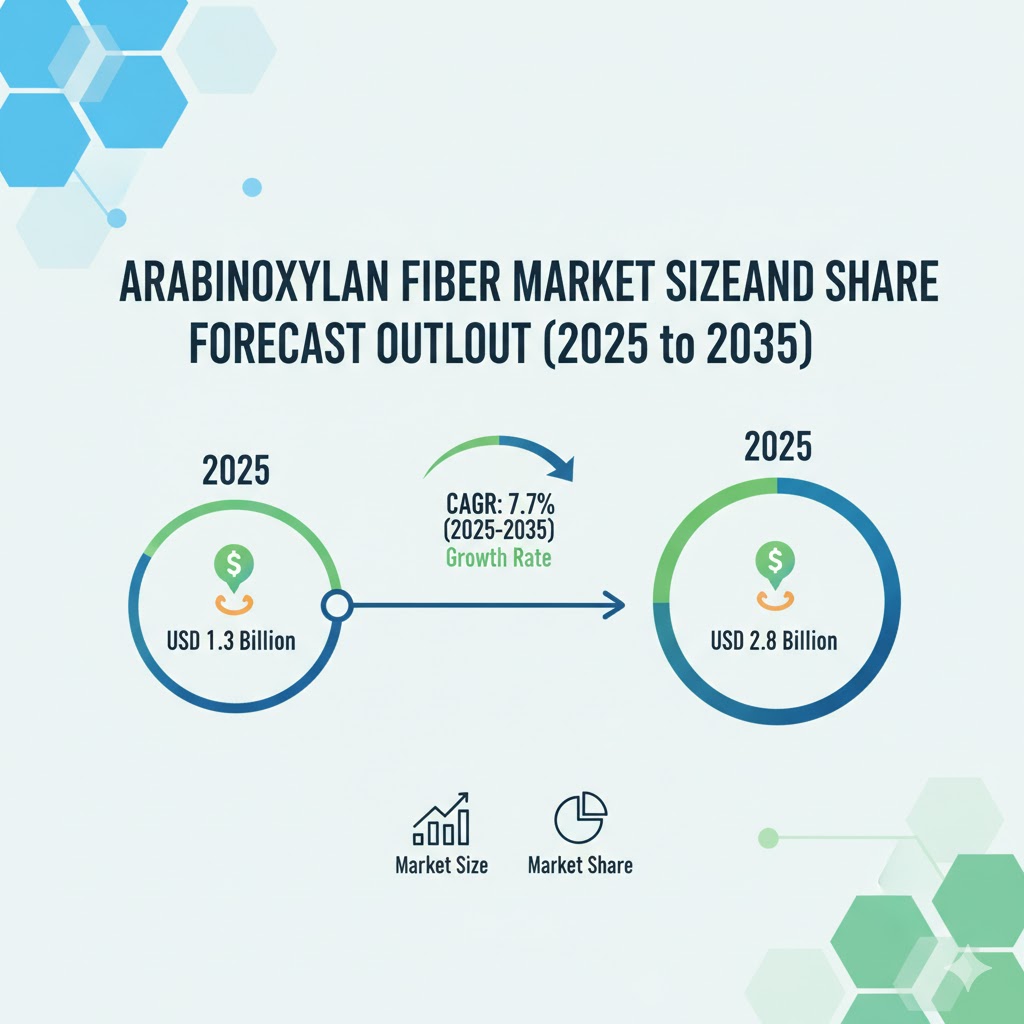
The global arabinoxylan fiber market is entering a decade of strong expansion, estimated at USD 1.3 billion in 2025 and projected to reach USD 2.8 billion by 2035, growing at a CAGR of 7.7%. This surge is primarily fueled by the increasing consumer shift toward plant-based, functional, and clean-label ingredients.
Arabinoxylan, a complex dietary fiber derived from cereal grains such as wheat, oats, corn, and barley, is finding growing applications in both food and pharmaceutical industries. Its unique structure, rich in arabinose residues and ferulic acid groups, supports digestive health and overall wellness, making it a sought-after ingredient for functional foods, supplements, and nutraceuticals worldwide.
As awareness about gut health, prebiotics, and sustainable nutrition continues to spread, arabinoxylan fiber is becoming a preferred choice among manufacturers seeking to innovate in the natural health and wellness space.
Export-Import Dynamics: Asia and Europe Lead the Trade
China and Germany remain the global leaders in arabinoxylan fiber exports, driven by their long-standing expertise in ingredient manufacturing for food and pharmaceutical sectors. In 2023, China exported over USD 60 million worth of arabinoxylan fiber, followed closely by Germany at USD 50 million.
Meanwhile, the United States and Japan are emerging as major importers, with increasing domestic demand for fiber-enriched and functional food products. In 2024, Japan’s imports reached USD 35 million, reflecting its growing emphasis on healthy dietary practices and digestive wellness.
India, too, is becoming an important player, both as an exporter and consumer, driven by its expanding bakery and functional food industries. With consumer demand for fiber-rich foods on the rise, global trade in arabinoxylan fiber is expected to grow significantly over the next decade, bridging supply gaps between manufacturing hubs and emerging health-conscious markets.
Key Market Drivers: From Plant-Based Ingredients to Functional Nutrition
Rising Demand for Natural and Clean-Label Ingredients
The global shift toward natural and plant-based nutrition is a major driver of arabinoxylan fiber adoption. Consumers are increasingly rejecting synthetic additives in favor of natural fibers that enhance both nutritional and sensory qualities of foods. Manufacturers are integrating arabinoxylan into bakery products, beverages, and supplements to meet this demand for clean-label, health-promoting products.
Expanding Applications in the Food Industry
The versatility of arabinoxylan fiber has made it a valuable ingredient across bakery, snacks, and dairy applications. It enhances texture, water retention, and nutritional profiles in products such as bread, cookies, cereals, and energy bars. Its ability to increase fiber content without altering taste or texture makes it a favorite among formulators creating high-fiber, functional food lines.
Focus on Gut Health and Prebiotic Benefits
The global prebiotics movement is another key growth catalyst. Arabinoxylan fibers act as prebiotic agents, fostering the growth of beneficial gut bacteria and improving digestive balance. As gut health becomes central to consumer wellness goals, more brands are incorporating arabinoxylan fibers into functional foods and beverages that support overall metabolic health.
Challenges: High Production Costs Remain a Barrier
Despite its promising potential, the arabinoxylan fiber market faces constraints related to high extraction and processing costs. Producing pure arabinoxylan fiber requires advanced equipment and labor-intensive processes, which can inflate costs—especially when compared to cheaper synthetic or alternative dietary fibers.
These expenses may hinder mass-market adoption in developing economies, where affordability remains a key purchasing factor. However, as new extraction technologies and eco-efficient production systems emerge, the cost gap is expected to narrow over time.
Access Expert Analysis & Forecasts – Buy Now Before Prices Rise! https://www.futuremarketinsights.com/checkout/19984
Explore trends before investing — request a sample report today! https://www.futuremarketinsights.com/reports/sample/rep-gb-19984
Market Trends: Sustainability and Consumer-Centric Innovation
Green and Circular Production Practices
Sustainability is reshaping the arabinoxylan fiber industry. Manufacturers are increasingly adopting eco-friendly sourcing methods, using agricultural by-products such as wheat bran and corn husk to minimize waste. These practices not only reduce environmental impact but also appeal to the growing segment of eco-conscious consumers.
Growing Popularity of Functional Beverages
The integration of arabinoxylan into powdered beverages and health drinks is gaining traction. Powdered forms allow for better solubility and dosage precision, making them ideal for supplement and beverage formulations. This form is also increasingly used in sports nutrition, smoothies, and fiber-fortified drinks, catering to consumers seeking convenient health solutions.
Customization and New Product Development
Manufacturers are leveraging food science innovation and fiber technology to create customized arabinoxylan blends with enhanced functionalities—such as improved solubility, texture, or flavor stability. This trend is especially visible among startups and mid-sized firms aiming to capture niche markets in wellness and dietary supplements.
Competitive Landscape: Established Leaders and Emerging Innovators
The arabinoxylan fiber market features a mix of global ingredient giants and innovative startups. Established players like Tate & Lyle, Cargill, and DuPont dominate through their extensive R&D capabilities and sustainable sourcing initiatives.
These companies are enhancing fiber extraction efficiency and investing in new applications that span food, beverage, and nutraceutical sectors. DuPont, for example, has strengthened its fiber portfolio through strategic acquisitions of firms specializing in advanced plant-based technologies.
Meanwhile, startups such as Pure Fiber and FiberTech Innovations are disrupting the market by focusing on eco-friendly production methods and greener extraction technologies. Their efforts align with rising consumer demand for minimally processed, high-quality dietary fibers.
Other key players—Acetar Bio-Tech, BioActor BV, Comet Biorefining, HL Agro, JRS, Daiwa Pharmaceutical, Megazyme, and Kowa India Pvt. Ltd.—are expanding their global footprint through partnerships and technological advancement.
About Future Market Insights (FMI)
Future Market Insights, Inc. (ESOMAR certified, recipient of the Stevie Award, and a member of the Greater New York Chamber of Commerce) offers profound insights into the driving factors that are boosting demand in the market. FMI stands as the leading global provider of market intelligence, advisory services, consulting, and events for the Packaging, Food and Beverage, Consumer Technology, Healthcare, Industrial, and Chemicals markets. With a vast team of over 400 analysts worldwide, FMI provides global, regional, and local expertise on diverse domains and industry trends across more than 110 countries.
Contact Us:
Future Market Insights Inc.
Christiana Corporate, 200 Continental Drive,
Suite 401, Newark, Delaware – 19713, USA
T: +1-347-918-3531
For Sales Enquiries: sales@futuremarketinsights.com
Website: https://www.futuremarketinsights.com
LinkedIn| Twitter| Blogs | YouTube