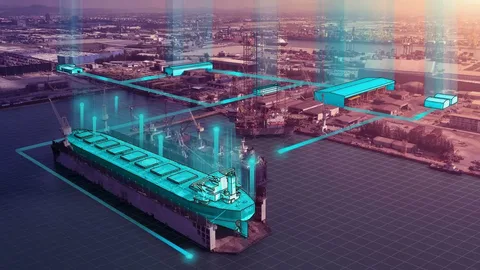
The digital shipyard market is poised for rapid growth, with an impressive compound annual growth rate (CAGR) of 15%, expected to expand from USD 2.4 billion in 2025 to USD 9.8 billion by 2035. The increasing need for automation and digital transformation within the maritime industry largely drives this market’s expansion. As shipbuilding processes become more complex and require higher precision, shipyards are increasingly adopting digital solutions to improve efficiency, reduce operational costs, and streamline their workflow. The growth of this market is a direct result of shipyards embracing new technologies to maintain competitiveness and meet growing demand for more advanced, cost-effective vessels.
The global digital shipyard market is experiencing robust growth as the maritime industry embraces digital transformation to enhance operational efficiency, safety, and sustainability. A digital shipyard leverages technologies such as artificial intelligence (AI), the Internet of Things (IoT), digital twin, robotics, and augmented reality (AR) to modernize ship design, construction, and maintenance processes. As shipbuilders, defense organizations, and commercial fleet operators seek to streamline operations and reduce costs, the adoption of digital shipyard solutions is rapidly expanding worldwide.
Rising Adoption of Industry 4.0 in Maritime Sector
The transition toward Industry 4.0 principles has significantly influenced the shipbuilding industry. Digital shipyards enable real-time data integration and advanced simulation across design, production, and lifecycle management stages. By using digital twins—virtual replicas of ships and shipyard operations—engineers can predict maintenance needs, optimize resource utilization, and reduce downtime. This results in improved decision-making, reduced rework, and enhanced productivity across the entire maritime value chain.
Technological Innovation Driving Market Expansion
Technological innovations are propelling the digital shipyard market toward new heights. The integration of 3D printing, AI-based predictive analytics, and IoT-enabled monitoring systems allows shipbuilders to achieve greater precision, faster turnaround times, and improved safety standards. Furthermore, the adoption of cloud computing and cybersecurity solutions ensures seamless data exchange while protecting critical maritime infrastructure.
Sustainability and Green Shipbuilding Initiatives
Growing environmental concerns and global decarbonization goals are encouraging shipbuilders to adopt digital technologies that support eco-friendly ship design and energy-efficient operations. Digital shipyards help track and reduce carbon emissions, optimize fuel consumption, and monitor environmental compliance in real-time. With global initiatives pushing for sustainable maritime transport, digitalization is becoming a core strategy for achieving net-zero emissions in shipbuilding.
Defense and Commercial Applications
Digital shipyard solutions are widely adopted across both defense and commercial shipbuilding sectors. In naval defense, these technologies streamline complex maintenance schedules, improve asset readiness, and enhance fleet management efficiency. In the commercial segment, shipping companies use digital shipyard platforms for cargo vessel design, predictive maintenance, and supply chain optimization, driving overall operational excellence.
Regional Insights
Europe currently leads the global digital shipyard market, supported by the presence of major shipbuilding nations such as Germany, France, and the Netherlands, and strong investments in maritime innovation. Asia-Pacific, led by China, South Korea, and Japan, is expected to witness the fastest growth due to the region’s large-scale shipbuilding activities and growing focus on automation. North America is also emerging as a key player with technological advancements and government-backed initiatives promoting smart maritime infrastructure.
Future Outlook
The digital shipyard market is expected to continue its strong growth through 2035, driven by increasing digital integration, AI-based predictive analytics, and sustainability efforts. Companies investing in digital twin technology, smart manufacturing, and automated inspection systems are expected to gain a competitive advantage as the maritime industry undergoes a major digital transformation.
Key Benefits of Digital Shipyard Solutions:
- Enhances shipbuilding accuracy and efficiency
- Enables predictive maintenance and reduced downtime
- Supports sustainable and green ship design initiatives
- Improves fleet management and lifecycle optimization
- Reduces operational costs and material waste
Get Instant Access for Only $5000 | Don’t Miss This Exclusive Offer!
https://www.futuremarketinsights.com/reports/sample/rep-gb-25907
Checkout Now to Access Industry Insights:
https://www.futuremarketinsights.com/checkout/25907
About Future Market Insights (FMI)
Future Market Insights, Inc. (ESOMAR certified, recipient of the Stevie Award, and a member of the Greater New York Chamber of Commerce) offers profound insights into the driving factors that are boosting demand in the market. FMI stands as the leading global provider of market intelligence, advisory services, consulting, and events for the Packaging, Food and Beverage, Consumer Technology, Healthcare, Industrial, and Chemicals markets. With a vast team of 400 analysts worldwide, FMI provides global, regional, and local expertise on diverse domains and industry trends across more than 110 countries.
Contact Us:
Future Market Insights Inc.
Christiana Corporate, 200 Continental Drive,
Suite 401, Newark, Delaware – 19713, USA
T: +1-845-579-5705
For Sales Enquiries: sales@futuremarketinsights.com
Website: https://www.futuremarketinsights.com
LinkedIn| Twitter| Blogs | YouTube