The global Conditioning Hair Treatments Market is entering an era of unprecedented growth, projected to expand from USD 8,702.1 million in 2025 to USD 18,502.5 million by 2035, marking a 193% increase over the decade. With a CAGR of 7.8%, the market is poised for transformative growth driven by a confluence of professional salon innovations, high-performance ingredients, and digital personalization technologies.
This expansion is more than numerical. It reflects an evolving consumer mindset that prioritizes hair repair, nutrition, and preventive care. From keratin-rich repair creams to deep-conditioning masks and AI-driven scalp diagnostics, the market is witnessing a dynamic shift in how consumers engage with hair care solutions, both in professional and at-home settings.
Key Growth Drivers: Repair, Nourishment, and Digital Innovation
The demand for conditioning treatments is propelled by increasing hair damage caused by chemical treatments, heat styling, and environmental pollutants. Consumers are increasingly gravitating toward protein-based formulations, keratin-infused masks, and amino acid blends, all designed to restore strength, smoothness, and shine. Urban markets, in particular, are witnessing a surge in premium product adoption, reflecting a willingness to invest in long-lasting hair health.
Digital technology is reshaping the market landscape. AI-driven scalp analyzers, cloud-based customization platforms, and app-linked diagnostic tools enable brands to deliver personalized solutions tailored to individual hair types and concerns. This hybrid approach, blending professional salon expertise with at-home care, is creating recurring revenue streams and enhancing customer loyalty.
Market Segmentation: Products, Ingredients, and Hair Concerns
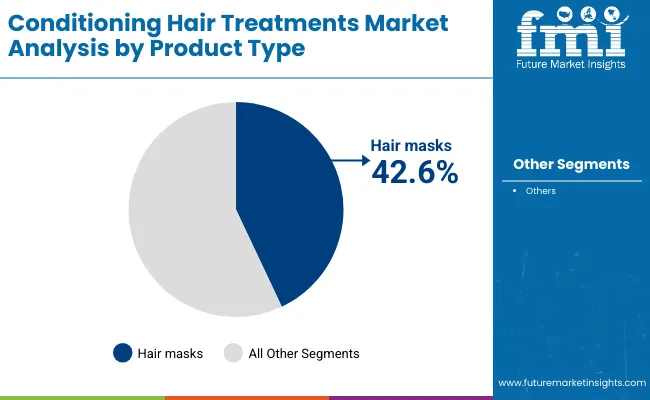
The Conditioning Hair Treatments Market encompasses a range of product types, including deep conditioners, leave-in treatments, hair masks, and protein repair creams. Among these, hair masks dominate with 42.6% market share in 2025, reflecting consumer preference for intensive repair and nourishment routines. Their efficacy in treating dryness, frizz, and color damage has cemented their role as the cornerstone of both salon and at-home care.
Keratin remains the most sought-after ingredient, holding 39.1% of the market. Its ability to rebuild the hair structure, reduce frizz, and maintain smoothness has made it indispensable in premium and professional-grade formulations. Other key ingredients, including argan oil, silicones, and amino acids, complement keratin’s restorative benefits, driving innovation and differentiation across product portfolios.
From a hair concern perspective, dry and damaged hair leads the market with 46.3% share, underscoring the heightened consumer focus on repair-oriented solutions. Other segments include color-treated hair, frizz control, and split-end repair, all benefiting from advanced conditioning formulations and salon-exclusive treatments.
Regional Insights: Asia-Pacific Drives Growth
The Conditioning Hair Treatments Market is geographically diverse, with Asia-Pacific emerging as the fastest-growing region. India and China are spearheading this growth with projected CAGRs of 14.8% and 13.2%, respectively. Rapid urbanization, rising disposable incomes, and expanding salon infrastructure are fueling demand for high-performance keratin and amino acid treatments.
In Japan, K-beauty and J-beauty trends are influencing premium product adoption, emphasizing ingredient transparency, natural actives, and performance efficacy. Europe, led by the UK (8.6% CAGR) and Germany (6.4% CAGR), maintains steady growth with a focus on sulfate-free, vegan, and eco-certified conditioners, reflecting sustainability and clean-beauty trends. North America shows moderate growth at 5.5% CAGR, driven by subscription models, digital retailing, and personalized at-home treatments.
Leading Players and Emerging Manufacturers
The market landscape is moderately fragmented, balancing global beauty conglomerates with innovative newcomers. L’Oréal Professionnel, Pantene, Moroccanoil, Kerastase, Olaplex, Tresemmé, Wella Professionals, Redken, Schwarzkopf, and Matrix dominate premium and salon-exclusive segments, leveraging salon partnerships, professional-grade formulations, and ingredient innovation.
Emerging players are capitalizing on digital-first approaches, including AI-driven hair diagnostics, app-based personalization, and subscription services. Brands specializing in AR/VR consultation tools and cloud-connected treatment platforms are gaining traction, positioning themselves as hybrid ecosystem providers that combine physical products with recurring digital services.
Technology Integration: AI and Personalized Care
A defining trend is the integration of AI and software into conditioning treatments. Brands are deploying AI scalp analyzers, mobile apps, and cloud data platforms to recommend personalized regimens, track progress, and optimize ingredient combinations. By 2035, software and service components are expected to constitute over 35% of total market value, reflecting a shift from traditional hardware-focused growth to data-driven care ecosystems.
Long-range and mid-range analytical tools, coupled with ingredient innovations such as amino acid blends and advanced silicones, are enabling deeper penetration of professional salons and home-use markets. These tools support recurring revenue models, enhance consumer engagement, and strengthen brand loyalty.
Country-Specific Outlook
United States: The market is projected to reach USD 2,907.4 million by 2035, supported by urban consumers’ preference for premium, keratin-rich products and hybrid salon-home care routines.
United Kingdom: Growth at 8.6% CAGR is driven by clean-beauty trends, professional salon expansion, and subscription-based personalized solutions.
India: Rapid market expansion at 14.8% CAGR reflects urbanization, growing disposable income, and rising awareness of hair health.
China: With 13.2% CAGR, demand is fueled by premium product adoption, professional salon infrastructure, and domestic-international brand collaborations.
Germany: CAGR of 6.4% is supported by mature salon networks, sustainable formulations, and professional keratin treatments.
Japan: Premiumization and K-beauty influence drive a 10.7% CAGR, emphasizing ingredient-focused formulations and advanced repair solutions.
Purchase this Report for USD 5,000 Only | Get an Exclusive Discount Instantly! https://www.futuremarketinsights.com/checkout/27104
Everything You Need—within Your Budget. Request a Special Price Now! https://www.futuremarketinsights.com/reports/sample/rep-gb-27104
Drivers, Restraints, and Trends
Growth is primarily driven by increasing consumer focus on repairing damaged hair, deep-conditioning treatments, and premium salon-grade solutions. E-commerce expansion and professional salon networks amplify accessibility, while subscription and hybrid care models encourage repeat purchases.
Challenges include high pricing, ingredient sensitivity concerns, and regional regulatory variations, particularly in premium and protein-based formulations. Despite these hurdles, AI-driven diagnostics and cloud-based personalization platforms are redefining consumer experience, offering tailored care and reinforcing brand loyalty.
Emerging trends include multi-functional treatments integrating repair, hydration, and frizz control, hybrid salon-home ecosystems, and clean-label, sustainable formulations. Brands integrating these elements are expected to maintain competitive advantage through the next decade.
Recent Developments
In 2024, L’Oréal Professionnel launched its Metal DX deep-conditioning line, integrating glycoamine-based technology to neutralize metal buildup and prevent hair breakage. Olaplex introduced a broad-spectrum chelating treatment targeting chlorine, hard water, and heavy metals. These innovations highlight the market’s emphasis on science-backed, premium formulations catering to chemically treated and color-processed hair.
Editor’s Note:
This release is based exclusively on verified and factual market content derived from industry analysis by Future Market Insights. No AI-generated statistics or speculative data have been introduced. This press release highlights significant shifts in the Market, which is experiencing a pivotal change driven by consumer demand for healthier, more transparent products.