The global tetrahydrofuran-2,4-dione market is poised for steady expansion, with market value projected to rise from USD 13.9 million in 2025 to USD 22.0 million by 2035, marking a compound annual growth rate (CAGR) of 4.7%. This growth reflects a significant absolute increase of USD 8.1 million during the forecast period, supported by heightened demand for high-purity chemical intermediates in pharmaceutical synthesis, organic chemistry research, and advanced drug discovery programs.
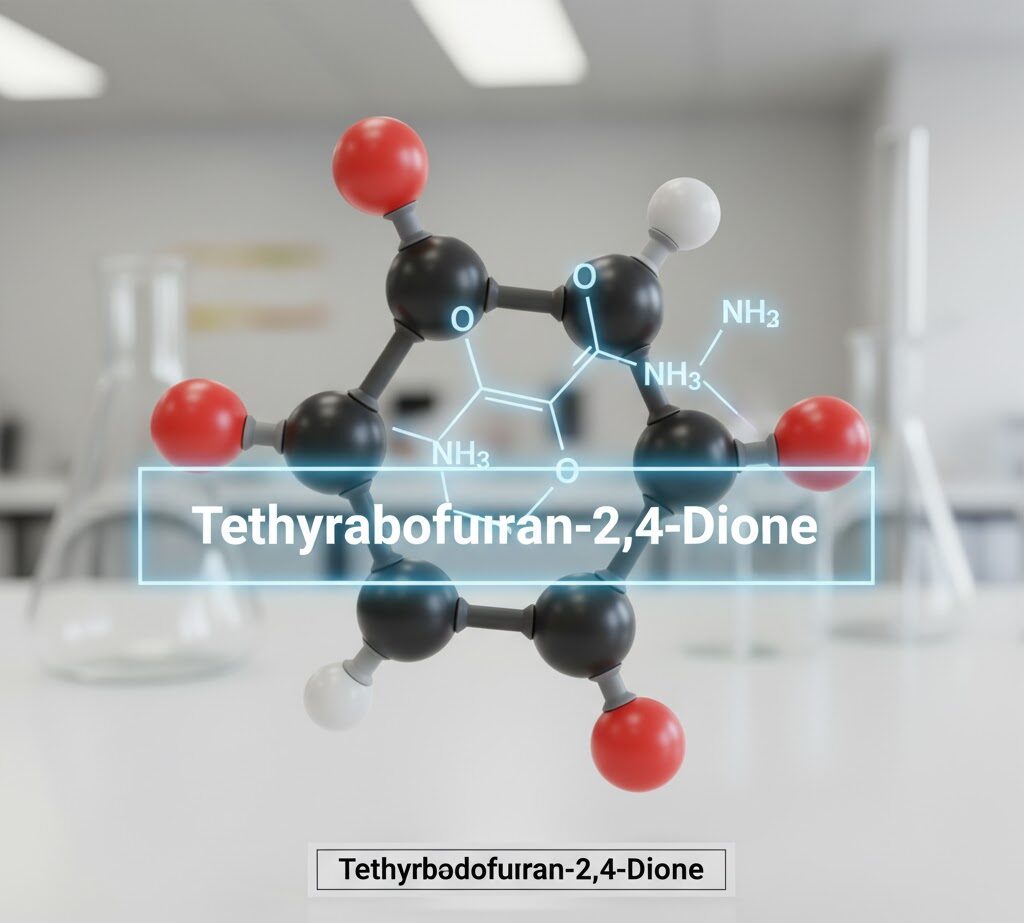
Tetrahydrofuran-2,4-dione (also known as glutaric anhydride) plays a crucial role as a cyclic anhydride building block in organic synthesis. Its chemical versatility allows it to serve as a key intermediate in developing active pharmaceutical ingredients (APIs), fine chemicals, and polymer modifications. The increasing global focus on precision medicine, oncology, and CNS (central nervous system) therapeutics continues to drive the compound’s demand.
Quick Stats for Tetrahydrofuran-2,4-Dione Market
- Market Value (2025): USD 13.9 million
- Forecast Value (2035): USD 22.0 million
- Forecast CAGR (2025–2035): 4.7%
- Leading Purity Grade: Purity ≥99% (60% market share)
- Key Growth Regions: Asia Pacific, North America, Europe
- Top Players: Caihe Biotech, Tianmen Hengchang Chemical, Fangde New Materials, Jlight Chemicals Company
Market Outlook: Sustained Growth Through Advanced Synthesis
Between 2025 and 2030, the tetrahydrofuran-2,4-dione market is expected to expand by USD 3.6 million, driven by rising pharmaceutical intermediate demand and innovations in synthesis and purification technologies. The next five years (2030–2035) will see a further USD 4.5 million increase, fueled by custom synthesis applications, high-purity standards, and new collaborations between chemical manufacturers and pharmaceutical firms.
The period ahead will be defined by technological advancement, regulatory alignment, and capacity expansion among leading suppliers. New entrants are focusing on green chemistry routes and automated purification systems to improve product quality and reduce environmental impact, while established manufacturers continue to invest in pharmaceutical-grade compliance.
Why the Market is Growing
Growth in the tetrahydrofuran-2,4-dione market stems from its expanding role in pharmaceutical and biotechnology research. Pharmaceutical companies rely on this compound for developing complex molecules, while research institutions require high-purity intermediates to maintain reproducible experimental outcomes.
The Asia Pacific region, led by China (CAGR 6.3%) and India (CAGR 5.9%), remains the primary growth driver due to large-scale pharmaceutical manufacturing. In contrast, North America and Europe focus on academic research, drug discovery programs, and custom synthesis for high-value applications.
However, production scalability and pharmaceutical-grade purification costs remain key challenges, requiring heavy investment in cleanroom facilities, analytical validation systems, and regulatory documentation.
Key Market Segments
By Purity Grade
- Purity ≥99%: Expected to account for 60% of the market by 2025.
- Driven by pharmaceutical-grade demand.
- Requires advanced purification (chromatography, crystallization).
- Cleanroom production ensures ICH and GMP compliance.
- Pharmaceutical Grade: Gaining traction in API manufacturing and biotechnology synthesis.
By Application
- Organic Synthesis (75% market share): Dominates due to its role in complex molecule creation for drug discovery, academic research, and fine chemical production.
- Pharmaceutical Intermediates: Growing steadily as drug manufacturers seek reliable and reproducible chemical building blocks.
- Research Applications: Supported by academic and institutional demand for high-purity materials in synthesis studies.
Regional Market Insights
- China: Leads with 6.3% CAGR, bolstered by government-supported pharmaceutical infrastructure and modernized chemical manufacturing.
- India: Expanding rapidly due to its pharmaceutical research base and cost-efficient production in Mumbai, Hyderabad, and Bangalore.
- Germany: Anchors Europe with strong pharmaceutical R&D and EU regulatory expertise, growing at 5.4% CAGR.
- United States: Centers around research applications and biotechnology innovation, driven by clusters in Boston, San Francisco, and Research Triangle Park.
- Brazil: Developing domestic production capacity through import substitution programs, growing 4.9%.
- United Kingdom & Japan: Maintain steady, research-driven growth supported by academic-industry partnerships.
Competitive Landscape
The tetrahydrofuran-2,4-dione market features global players, combining established giants and emerging innovators.
- Market Leaders:
- Guangzhou Sunton Biotechnology, Tokyo Chemical Industry Co., Ltd. (TCI Chemicals), and HBCChem, Inc. leverage pharmaceutical-grade manufacturing, regulatory certifications, and technical expertise.
- Emerging Players:
- Caihe Biotech, Tianmen Hengchang Chemical, Fangde New Materials, and Jlight Chemicals Company are investing in capacity expansion and new purification technologies to penetrate premium pharmaceutical segments.
- Challengers:
- Aladdin Scientific, Alfa Chemistry, Simson Pharma Limited, Shandong SanYoung Industry Co., Ltd., Ark Pharm, Inc., and SynQuest Laboratories focus on custom synthesis, regional markets, and flexible production capabilities.
Competition emphasizes quality differentiation over price, with manufacturers prioritizing regulatory documentation, batch-to-batch consistency, and customer-specific support. The industry is gradually consolidating, with smaller players partnering with pharmaceutical firms to strengthen their market footprint.
Key Industry Trends
- Technological Innovation:
Adoption of continuous flow synthesis and automated purification systems to ensure high purity and reduced production costs. - R&D Collaboration:
Growing partnerships between chemical producers and pharmaceutical developers to co-develop synthesis methodologies and compliance systems. - Sustainability:
Emphasis on green chemistry, waste minimization, and energy-efficient purification techniques. - Regulatory Alignment:
Global standardization of pharmaceutical-grade quality certifications to streamline cross-border trade. - Market Consolidation:
Strategic mergers and collaborations to increase manufacturing scale and reduce production costs.
Government and Industry Support
Governments worldwide are urged to promote specialty chemical innovation through:
- Tax incentives and grants for domestic production.
- Quality infrastructure investment for national testing and certification labs.
- Regulatory harmonization across major markets to simplify compliance for exporters.
Industry bodies can further drive progress through:
- Standardized analytical methods for purity validation.
- Technical training programs for chemical safety and synthesis optimization.
- Supply chain best practices ensuring product stability during storage and transport.
Outlook for 2035: A Competitive, Technology-Driven Market
By 2035, the tetrahydrofuran-2,4-dione market will have evolved into a more technologically advanced and globally integrated ecosystem. Continuous improvements in pharmaceutical-grade production, automation, and green synthesis will open new opportunities for both established manufacturers and emerging chemical innovators.
Companies that invest in quality assurance, purification excellence, and strategic collaborations will gain a competitive edge, while governments supporting R&D and regulatory efficiency will accelerate domestic specialty chemical capabilities.
The road to 2035 will define a new era for high-purity chemical intermediates, where innovation and collaboration shape the foundation of global pharmaceutical progress.
Key Companies Covered:
Caihe Biotech | Tianmen Hengchang Chemical | Fangde New Materials | Jlight Chemicals Company | Guangzhou Sunton Biotechnology | Tokyo Chemical Industry Co., Ltd. (TCI Chemicals) | HBCChem, Inc. | Aladdin Scientific | Alfa Chemistry | Simson Pharma Limited | Shandong SanYoung Industry Co., Ltd. | Ark Pharm, Inc. | SynQuest Laboratories
This Report Now at Just $5000 | Limited-Time Discount Offer! https://www.futuremarketinsights.com/reports/sample/rep-gb-26813
Checkout Now to Access Industry Insights: https://www.futuremarketinsights.com/checkout/26813
About Future Market Insights (FMI)
Future Market Insights, Inc. (ESOMAR certified, recipient of the Stevie Award, and a member of the Greater New York Chamber of Commerce) offers profound insights into the driving factors that are boosting demand in the market. FMI stands as the leading global provider of market intelligence, advisory services, consulting, and events for the Packaging, Food and Beverage, Consumer Technology, Healthcare, Industrial, and Chemicals markets. With a vast team of over 400 analysts worldwide, FMI provides global, regional, and local expertise on diverse domains and industry trends across more than 110 countries.
Contact Us:
Future Market Insights Inc.
Christiana Corporate, 200 Continental Drive,
Suite 401, Newark, Delaware – 19713, USA
T: +1-347-918-3531
For Sales Enquiries: sales@futuremarketinsights.com
Website: https://www.futuremarketinsights.com
LinkedIn| Twitter| Blogs | YouTube