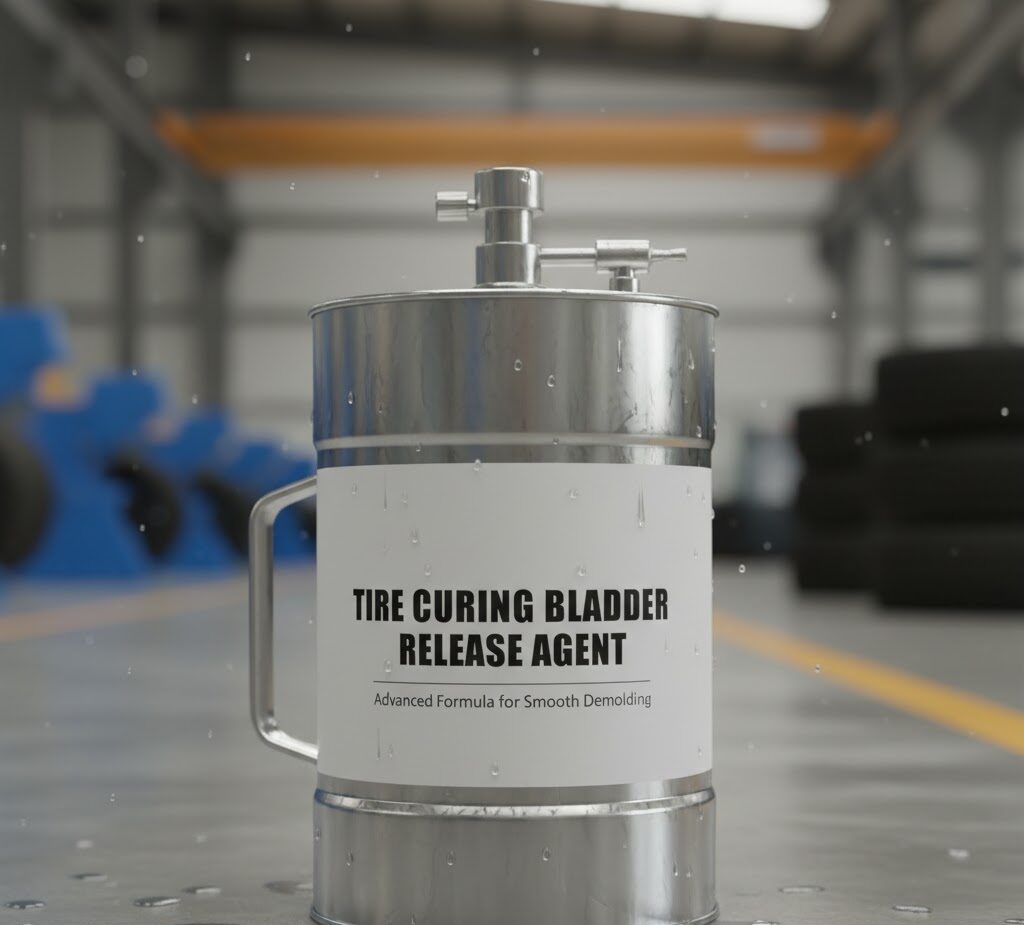
The global Tire Curing Bladder Release Agent Market is entering a decisive growth phase. New research forecasts the market to rise from USD 185.3 billion in 2025 to USD 374.9 billion by 2035, at a 7.3% CAGR. This press release summarizes the report’s key findings, highlights both established and emerging manufacturers that are expanding their footprints, and outlines the technology trends reshaping tire manufacturing chemicals.
Quick Facts
- Market (2025): USD 185.3 billion
- Forecast (2035): USD 374.9 billion
- CAGR (2025–2035): 7.3%
- Leading Chemical Type: Cobalt Naphthenate
- Top Growth Regions: Asia Pacific, North America, Europe
- Notable Players: Umicore, DIC, Milliken, Manchem, Coremaxcorp, plus regional innovators.
Key Headlines
- Sustained decade-long expansion: Market value nearly doubles between 2025 and 2035, driven by advanced formulations and automation in tire production.
- Two-phase growth pattern:
- 2025–2030: Market climbs to ~USD 263.6 billion — rapid adoption of cobalt-based systems.
- 2030–2035: Market accelerates to USD 374.9 billion — specialization, integration, and mass-market penetration of advanced chemistries.
- Cobalt Naphthenate dominance: Holds roughly 35.2% market share because of thermal stability, separation efficiency, and ease of integration.
- Passenger car tires lead demand: Account for ~68.4% of the application mix; commercial and specialty tires follow.
- Asia-Pacific leadership: China and India account for significant shares (China 9.9%, India 9.1%), driven by manufacturing scale and local chemical capacity.
Why the Market Is Growing
Manufacturing efficiency: Release agents deliver near-immediate bladder separation, reducing defects and downtime.
- Modernization of tire plants: Automated dosing and quality control systems make advanced chemistries standard equipment.
- Rising vehicle production: Global automotive expansion, especially in Asia, fuels demand for consistent, high-performance curing agents.
- R&D and product innovation: Companies are improving thermal stability, application automation, and compatibility with modern curing systems.
Headwinds: raw material price volatility (notably cobalt sourcing), regulatory pressures, and chemical compatibility challenges in extreme environments.
Technology & Competitive Highlights
Established leaders (Umicore, DIC, Milliken) are scaling production, integrating application services, and investing in R&D to maintain premium positioning and global contracts.
- Technology innovators (Manchem, Coremaxcorp, Shanghai Sansi Additives) are advancing specialized formulations and faster development cycles — attractive to tire makers seeking performance and flexibility.
- Regional specialists (Zhenjiang Matt Chemical New Materials, Yixing Kaou Chemicals, Jiangyin Sanliang Chemicals) focus on cost-effective localized solutions for domestic OEMs and commercial tire plants.
- Emerging strategies: combining formulation development with automated application systems, process-monitoring platforms, and customer technical services to reduce switching costs and strengthen long-term partnerships.
Key Segments of the Market Report
- Chemical Type: Cobalt Naphthenate; Cobalt Stearate; Cobalt Borate; Cobalt Caprylate; Others.
- Application: Passenger Car Tires; Commercial Vehicle Tires; Others (specialty & industrial).
- Region: North America; Europe; Asia Pacific; Latin America; Middle East & Africa — with country-level focus on China, India, Germany, Brazil, USA, UK, Japan, and 25+ countries.
Country & Regional Insights
- China: Market leader — strong government-backed auto programs, large local production, and export-focused solutions.
- India: Rapid modernization in Mumbai, Chennai, Delhi; increasing domestic chemical partnerships and tech transfer.
- Germany & Europe: Technology and compliance leadership; premium segments prioritizing integration and EU regulatory alignment.
- USA & Japan: High-tech adoption — precision dosing, platform integration, and robust contractor channels.
- Brazil & Latin America: Cost-sensitive yet modernizing; local partnerships and import strategies shaping adoption.
What This Means for Manufacturers & Investors
Established manufacturers should accelerate capacity expansions, offer integrated application services, and deepen regional support in China and India.
- New entrants & innovators can differentiate by delivering specialized chemistries, automated dosing systems, and strong on-site service models.
- Investors should favor players combining formulation IP with application hardware/software and regional production footprints to mitigate supply-chain risk.
- Policy-makers & industry bodies can catalyze growth through standards for chemical performance, R&D grants for safer alternatives, and skills training for application specialists
This Report Now at Just $5000 | Limited-Time Discount Offer! https://www.futuremarketinsights.com/reports/sample/rep-gb-26815
Checkout Now to Access Industry Insights: https://www.futuremarketinsights.com/checkout/26815
About Future Market Insights (FMI)
Future Market Insights, Inc. (ESOMAR certified, recipient of the Stevie Award, and a member of the Greater New York Chamber of Commerce) offers profound insights into the driving factors that are boosting demand in the market. FMI stands as the leading global provider of market intelligence, advisory services, consulting, and events for the Packaging, Food and Beverage, Consumer Technology, Healthcare, Industrial, and Chemicals markets. With a vast team of over 400 analysts worldwide, FMI provides global, regional, and local expertise on diverse domains and industry trends across more than 110 countries.
Contact Us:
Future Market Insights Inc.
Christiana Corporate, 200 Continental Drive,
Suite 401, Newark, Delaware – 19713, USA
T: +1-347-918-3531
For Sales Enquiries: sales@futuremarketinsights.com
Website: https://www.futuremarketinsights.com
LinkedIn| Twitter| Blogs | YouTube