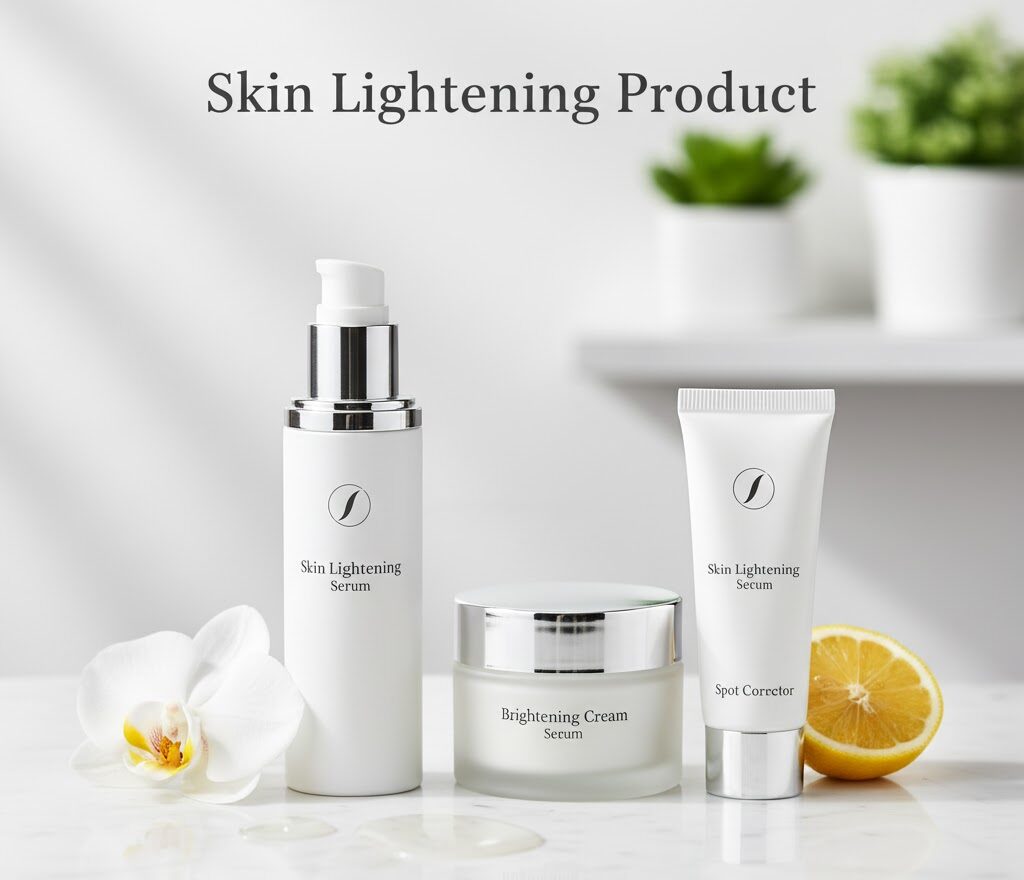
According to the latest industry outlook, the global Skin Lightening Product Market is set for strong expansion, growing from USD 21.6 billion in 2025 to USD 44.5 billion by 2035, at a CAGR of 7.5%. The market’s evolution reflects a powerful combination of technological innovation, digital transformation, and organic skincare demand, redefining beauty enhancement across global cosmetics and personal care sectors.
Quick Market Snapshot
- Market Value (2025): USD 21.6 Billion
- Market Forecast (2035): USD 44.5 Billion
- CAGR (2025–2035): 7.5%
- Leading Product Type: Lotions and Creams
- Top Growth Regions: Asia Pacific, North America, Western Europe
- Major Players: L’Oréal S.A., Unilever PLC, Beiersdorf AG, Procter & Gamble, Kiehl’s
Key Market Dynamics
- Market Value Analysis
The skin lightening product market shows strong dual-phase expansion.
- 2025–2030: USD 9.4B growth driven by formulation advancements, automated beauty systems, and wider accessibility.
- 2030–2035: USD 13.5B expansion led by organic technologies, digital platform integration, and mainstream adoption in emerging economies.
Established brands like L’Oréal S.A. and Unilever PLC continue investing in formulation R&D and smart beauty systems, while new entrants and regional manufacturers in India, China, and South Korea are developing cost-effective, eco-friendly skincare lines for local and export markets.
Why the Market is Growing
- Consumer Awareness Surge – Consumers are increasingly prioritizing appearance enhancement through safe, efficient skincare products that deliver visible results without costly treatments.
- Beauty Industry Modernization – Cosmetic facilities worldwide are integrating advanced skin tone control systems to align with evolving beauty standards and efficiency goals.
- Digital Integration – E-commerce and social commerce channels are simplifying product access while promoting data-driven personalization in skincare.
However, regulatory challenges and regional compliance variations remain critical considerations, especially concerning ingredient safety and skin sensitivity compatibility.
Opportunity Pathways for Manufacturers
The market opens up multiple growth pathways for both established players and new entrants:
- A. Lotions & Creams Leadership – Strengthen moisturizing systems with advanced formulations and beauty platform integration (USD 4.5–5.5B opportunity).
- B. Asia Pacific Expansion – Localize production in India & China, leveraging cultural preferences and regional partnerships (USD 3.5–4.5B).
- C. Women’s Market Dominance – Offer performance-optimized skincare aligned with evolving beauty expectations (USD 3.0–4.0B).
- D. Organic & Natural Lines – Scale eco-friendly skincare catering to clean beauty demand (USD 2.5–3.2B).
- E. E-commerce Innovation – Utilize direct-to-consumer and social commerce strategies (USD 2.0–2.6B).
- F. Premium & Luxury Skincare – Develop luxury-grade formulations for affluent consumers (USD 1.8–2.3B).
- G. Hybrid Skincare Solutions – Create multifunctional products combining brightening, hydration, and anti-aging benefits (USD 1.4–1.8B).
Key Market Segments
By Product Type:
- Lotions and Creams (36% market share)
- Foam Skin Lightening
- Gels, Serums & Toners
- Scrubs & Others
By End User:
- Women (77% market share): Driving major demand in personal care and beauty optimization.
- Men (23% market share): Increasing adoption in grooming and professional skincare.
By Nature: Herbal, Synthetic, Organic
By Price Range: Economic (USD 10–50), Mid-Range (USD 50–200), Premium (USD 200+)
By Sales Channel: Pharmacies, Hypermarkets, Specialty & Beauty Stores, E-Retailers
By Region: North America, Europe, Asia Pacific, Latin America, Middle East & Africa
Regional Highlights
- India (7.4% CAGR): Fastest-growing market led by cultural emphasis on beauty, domestic manufacturing, and rising urbanization.
- China (7.0% CAGR): Strong adoption driven by cosmetic modernization and domestic technology development.
- Germany (6.5% CAGR): Mature market with well-established skincare infrastructure.
- United Kingdom (6.3% CAGR): Leading in beauty technology integration and premium skincare innovation.
- United States (5.8% CAGR): Diverse demand fueled by personal care modernization and affordability focus.
- South Korea (6.4% CAGR): Innovation leader, driving premium formulations and K-beauty trends.
Europe’s Beauty Market Outlook
The European market is projected to grow from USD 6.2B in 2025 to USD 12.8B in 2035.
- Germany leads with 28.4% market share.
- United Kingdom follows with 22.1%.
- France (18.9%), Italy (14.7%), and Spain (9.2%) represent core markets.
- Nordic and BENELUX regions are emerging with steady growth through cosmetic modernization initiatives.
Competitive Landscape: Leaders and Innovators
The market features a mix of global giants and emerging innovators, with around 25–30 active players controlling 60–65% of global share.
- Market Leaders: L’Oréal S.A., Unilever PLC, Beiersdorf AG – leveraging advanced R&D, beauty automation, and integrated skincare systems.
- Technology Innovators: Procter & Gamble, Shiseido, Estée Lauder – focusing on smart formulation systems and digital beauty platforms.
- Regional Specialists: VLCC Health Care, Lotus Herbals, Himalaya Global Holdings – emphasizing herbal and natural formulations in emerging economies.
Competition is shifting from price-based rivalry to performance-driven differentiation, where advanced formulation, product reliability, and eco-conscious innovation define market success.
Future Outlook: Toward Intelligent and Sustainable Beauty
As the skin lightening product market transitions into an era of intelligent skincare, manufacturers are investing in AI-based formulation analysis, sustainable ingredient sourcing, and personalized beauty systems. Emerging companies are partnering with established brands to co-develop smart lotions, organic creams, and hybrid formulations that combine brightening, hydration, and anti-aging benefits.
By 2035, the market’s evolution will reflect not only beauty transformation but also a broader commitment to sustainability, inclusivity, and scientific skincare innovation.
Key Players Featured in the Report:
L’Oréal S.A. | Unilever PLC | Beiersdorf AG | Procter & Gamble Company | Shiseido Company | Estée Lauder Companies Inc. | VLCC Health Care Limited | Lotus Herbals Pvt. Ltd. | Clarins Group | Himalaya Global Holdings Limited
This Report Now at Just $2000 | Limited-Time Discount Offer! https://www.futuremarketinsights.com/reports/sample/rep-gb-642
Checkout Now to Access Industry Insights: https://www.futuremarketinsights.com/checkout/642
About Future Market Insights (FMI)
Future Market Insights, Inc. (ESOMAR certified, recipient of the Stevie Award, and a member of the Greater New York Chamber of Commerce) offers profound insights into the driving factors that are boosting demand in the market. FMI stands as the leading global provider of market intelligence, advisory services, consulting, and events for the Packaging, Food and Beverage, Consumer Technology, Healthcare, Industrial, and Chemicals markets. With a vast team of over 400 analysts worldwide, FMI provides global, regional, and local expertise on diverse domains and industry trends across more than 110 countries.
Contact Us:
Future Market Insights Inc.
Christiana Corporate, 200 Continental Drive,
Suite 401, Newark, Delaware – 19713, USA
T: +1-347-918-3531
For Sales Enquiries: sales@futuremarketinsights.com
Website: https://www.futuremarketinsights.com
LinkedIn| Twitter| Blogs | YouTube