The Automotive Brake Fluid Market is estimated to be valued at USD 1.4 billion in 2025 and is projected to reach USD 2.3 billion by 2035, registering a compound annual growth rate (CAGR) of 4.9% over the forecast period.
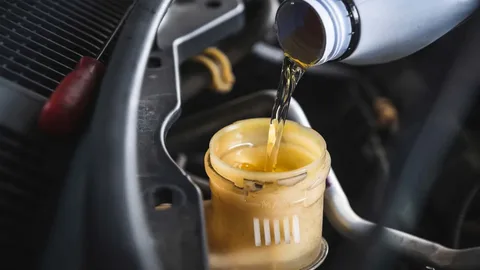
The Global Automotive Brake Fluid Market is experiencing strong growth as automakers and aftermarket suppliers respond to rising vehicle production, stringent safety regulations, and the adoption of advanced braking technologies. Brake fluid—a critical component in hydraulic braking systems—ensures proper force transmission from the brake pedal to the braking mechanism, enabling effective stopping power, vehicle control, and safety across passenger cars, commercial vehicles, and electric vehicles (EVs).
With the increasing popularity of advanced driver-assistance systems (ADAS) and hybrid/electric vehicles, the demand for high-performance, long-life, and thermally stable brake fluids is rising, positioning the market for sustained growth through 2035.
Market Overview
Automotive brake fluid is a hydraulic medium designed to transfer pressure in braking systems, while also providing lubrication, corrosion resistance, and thermal stability under varying conditions. Types of brake fluids include DOT 3, DOT 4, DOT 5, and DOT 5.1, catering to different vehicle requirements.
The market is expanding as regulatory bodies and automakers mandate higher-quality fluids capable of withstanding elevated temperatures, reducing wear, and enhancing braking efficiency. The rise of EVs and regenerative braking systems has further influenced fluid specifications, prompting manufacturers to develop synthetic and silicone-based formulations with superior thermal and chemical performance.
Market Dynamics
- Increasing Vehicle Production and Fleet Expansion
Rising automotive production globally, particularly in Asia-Pacific and North America, drives demand for both OEM and aftermarket brake fluids. Regular fluid maintenance and replacement are critical for vehicle safety and longevity. - Advanced Braking Technologies
Hybrid and electric vehicles, along with vehicles equipped with ABS, ESC, and regenerative braking systems, require high-performance brake fluids with stable viscosity, high boiling points, and chemical compatibility to ensure optimal operation. - Regulatory Standards and Safety Compliance
Governments and automotive associations are enforcing strict safety and quality standards, pushing manufacturers to produce DOT-certified brake fluids that comply with international norms. - Aftermarket Growth and Maintenance Awareness
Increasing awareness about vehicle maintenance, longer vehicle lifecycles, and the rising number of service centers contribute to strong aftermarket demand for brake fluids.
Key Applications
- Passenger Cars: Enhancing braking efficiency, safety, and vehicle performance.
- Commercial Vehicles: Ensuring reliable braking in heavy-duty trucks and buses under high loads.
- Electric & Hybrid Vehicles: Supporting regenerative and hydraulic braking systems.
- Aftermarket Maintenance: Replacement and top-up services for existing fleets.
Regional Insights
- Asia-Pacific: Leading market due to rapid automotive production in China, India, and Japan, and growing EV adoption.
- Europe: Strong demand driven by stringent vehicle safety regulations, advanced braking technologies, and premium vehicle production.
- North America: Growth supported by fleet expansion, OEM requirements, and aftermarket maintenance demand.
- Latin America & MEA: Steady growth fueled by increasing vehicle ownership and maintenance awareness.
Competitive Landscape
Major players in the global automotive brake fluid market include Castrol Ltd., Robert Bosch GmbH, Fuchs Petrolub SE, ATE Brake Systems, ZF Friedrichshafen AG, and Valvoline Inc. Companies are focusing on high-performance product development, global distribution expansion, and compliance with international safety standards to strengthen their market position.
Future Outlook
The Automotive Brake Fluid Market is projected to grow steadily through 2035, driven by increasing vehicle production, adoption of advanced braking systems, and heightened safety awareness. Innovations in high-temperature resistant, eco-friendly, and long-life formulations will further shape the market.
As the automotive industry embraces electric mobility, autonomous driving, and connected vehicle ecosystems, brake fluids will continue to play a pivotal role in ensuring safety, performance, and regulatory compliance—cementing their importance in both OEM and aftermarket segments.
Get Instant Access for Only $5000 | Don’t Miss This Exclusive Offer!
https://www.futuremarketinsights.com/reports/sample/rep-gb-2856
Checkout Now to Access Industry Insights:
https://www.futuremarketinsights.com/checkout/2856
About Future Market Insights (FMI)
Future Market Insights, Inc. (ESOMAR certified, recipient of the Stevie Award, and a member of the Greater New York Chamber of Commerce) offers profound insights into the driving factors that are boosting demand in the market. FMI stands as the leading global provider of market intelligence, advisory services, consulting, and events for the Packaging, Food and Beverage, Consumer Technology, Healthcare, Industrial, and Chemicals markets. With a vast team of 400 analysts worldwide, FMI provides global, regional, and local expertise on diverse domains and industry trends across more than 110 countries.
Contact Us:
Future Market Insights Inc.
Christiana Corporate, 200 Continental Drive,
Suite 401, Newark, Delaware – 19713, USA
T: +1-845-579-5705
For Sales Enquiries: sales@futuremarketinsights.com
Website: https://www.futuremarketinsights.com
LinkedIn| Twitter| Blogs | YouTube