The holographic transfer film market reaches USD 1,878.9 million in 2025 and is expected to grow to USD 2,917.9 million by 2035, with a CAGR of 4.5%. From 2021 to 2022, the market increases from USD 1,507.8 million to USD 1,575.6 million, reflecting a steady YoY growth driven by rising demand in packaging, security, and decorative applications. Between 2022 and 2024, the market continues to progress from USD 1,646.5 million to USD 1,798.0 million, fueled by the increased use of holographic films in anti-counterfeit measures and brand protection across industries like cosmetics, pharmaceuticals, and consumer goods.
The global Holographic Transfer Film Market is witnessing remarkable expansion, driven by the rising demand for enhanced brand protection, anti-counterfeiting measures, and visually appealing packaging designs. As industries across packaging, textiles, printing, and labeling increasingly adopt holographic technologies to strengthen brand identity and ensure product authenticity, manufacturers are focusing on innovation, customization, and sustainability to meet evolving market needs.
Market Overview
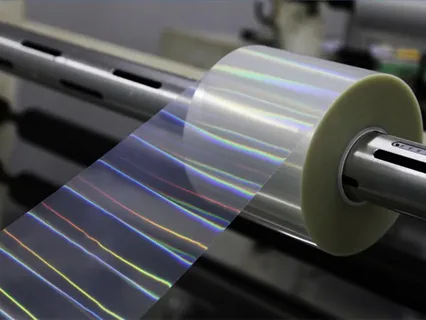
Holographic transfer films have emerged as a vital component in modern packaging and decorative solutions due to their ability to offer both functional security and eye-catching visual effects. These films are applied through heat and pressure, transferring intricate holographic patterns onto various substrates such as paper, plastics, and textiles.
The market’s growth is primarily supported by the increasing prevalence of counterfeiting in industries like consumer goods, pharmaceuticals, and luxury products. Brands are seeking advanced ways to protect their products while creating a premium look that resonates with consumers. Holographic transfer films meet both objectives by combining authenticity assurance with aesthetic sophistication.
Additionally, advancements in digital holography and micro-embossing technologies have enabled manufacturers to produce high-definition holographic designs at lower costs, broadening their applications across multiple sectors.
Key Market Drivers
The growing global focus on anti-counterfeiting and brand protection is a major driver of the holographic transfer film market. Governments and corporations are implementing stricter regulations and authentication protocols to prevent imitation of branded goods. As a result, demand for tamper-proof holographic seals, labels, and packaging solutions is steadily rising.
Another significant factor contributing to market growth is the increased emphasis on premium and sustainable packaging. As consumers seek products that convey quality and uniqueness, brands are leveraging holographic transfer films to enhance shelf appeal while maintaining eco-friendly packaging standards.
Technological innovation is also playing a pivotal role. The integration of digital and nanostructured holography is enabling enhanced precision, higher reflectivity, and more dynamic visual effects. These advancements are expanding the market’s reach beyond packaging to textiles, automotive interiors, and consumer electronics.
Emerging Trends
Sustainability has become a defining trend in the holographic transfer film industry. Manufacturers are increasingly focusing on the development of recyclable and biodegradable films, aligning with global efforts to reduce plastic waste. Water-based coatings and solvent-free adhesives are being incorporated to make holographic films more environmentally compatible without compromising performance or aesthetics.
The market is also experiencing a surge in demand for customized holographic designs that reflect brand identity and thematic concepts. The ability to personalize holographic effects for seasonal packaging, limited-edition products, or event-specific campaigns is transforming how brands communicate value through packaging.
In addition, the adoption of holographic transfer films in fashion and textiles is growing rapidly. Designers are experimenting with holographic elements to create futuristic and reflective apparel, footwear, and accessories, further diversifying the material’s end-use potential.
Regional Insights
The Asia-Pacific region currently dominates the global holographic transfer film market, with China, India, and Japan emerging as major manufacturing hubs. The rapid growth of the packaging, printing, and textile industries in these countries, coupled with expanding export markets, has fueled the adoption of holographic films for both aesthetic and security purposes.
North America and Europe remain key markets, driven by technological advancements and stringent regulations on product authentication. The presence of leading holographic film producers and packaging innovators ensures continuous product innovation in these regions.
Meanwhile, emerging economies in the Middle East, Africa, and Latin America are adopting holographic transfer technologies to enhance domestic manufacturing capabilities and reduce counterfeit goods in the marketplace.
Competitive Landscape
The Holographic Transfer Film Market is highly competitive and innovation-driven. Leading players are investing in R&D to create films with superior optical effects, improved durability, and easy application methods. Partnerships between packaging companies and holographic technology developers are becoming increasingly common as brands seek to balance aesthetics with functionality.
Manufacturers are also exploring collaborations with government agencies for the production of security holograms used in identity documents, currency, and tax labels. These initiatives highlight the growing strategic importance of holography in both commercial and regulatory domains.
Smaller and emerging players are carving out niches by offering cost-effective, customized holographic film solutions for SMEs and regional brands seeking distinctive packaging designs.
Future Outlook
The future of the holographic transfer film market lies in the convergence of sustainability, technology, and creativity. As consumers become more visually driven and eco-conscious, brands will continue to leverage holographic effects to enhance packaging appeal while minimizing environmental impact.
Continuous innovation in nanotechnology, digital holography, and material science will further enhance the performance and versatility of holographic films. The next generation of films will likely feature smart attributes such as interactive surfaces, dynamic color changes, and embedded data capabilities, bridging the gap between physical and digital branding experiences.
With industries increasingly prioritizing authenticity, sustainability, and aesthetics, the global holographic transfer film market is poised for robust growth. The combination of advanced design, environmental responsibility, and enhanced product protection ensures that holographic films will remain at the forefront of the modern packaging and decorative materials industry.
Get Instant Access for Only $5000 | Don’t Miss This Exclusive Offer!
https://www.futuremarketinsights.com/reports/sample/rep-gb-26359
Checkout Now to Access Industry Insights:
https://www.futuremarketinsights.com/checkout/26359
About Future Market Insights (FMI)
Future Market Insights, Inc. (ESOMAR certified, recipient of the Stevie Award, and a member of the Greater New York Chamber of Commerce) offers profound insights into the driving factors that are boosting demand in the market. FMI stands as the leading global provider of market intelligence, advisory services, consulting, and events for the Packaging, Food and Beverage, Consumer Technology, Healthcare, Industrial, and Chemicals markets. With a vast team of 400 analysts worldwide, FMI provides global, regional, and local expertise on diverse domains and industry trends across more than 110 countries.
Contact Us:
Future Market Insights Inc.
Christiana Corporate, 200 Continental Drive,
Suite 401, Newark, Delaware – 19713, USA
T: +1-845-579-5705
For Sales Enquiries: sales@futuremarketinsights.com
Website: https://www.futuremarketinsights.com
LinkedIn| Twitter| Blogs | YouTube