The labeling and coding equipment market, valued at USD 4.4 billion in 2025 and projected to reach USD 6.2 billion by 2035 with a CAGR of 3.6%, demonstrates a gradual yet consistent expansion across the forecast period. The cost structure within this market is largely influenced by machinery manufacturing, software integration, and installation services, with machinery production accounting for the largest share due to the high precision and technology-intensive nature of labeling and coding equipment.
The Global Labeling and Coding Equipment Market is witnessing strong growth as industries worldwide adopt automation, digital traceability, and sustainable packaging practices. With labeling and coding now central to modern manufacturing, logistics, and compliance operations, demand for efficient, high-speed, and intelligent systems continues to surge across sectors such as food & beverage, pharmaceuticals, personal care, and industrial goods.
Automation and Industry 4.0 Drive Market Growth
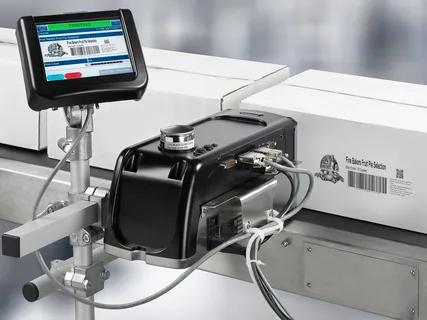
The ongoing wave of Industry 4.0 and factory automation is transforming how manufacturers handle product identification and traceability. Advanced labeling and coding equipment, integrated with IoT sensors, machine vision, and cloud connectivity, enables real-time monitoring and error-free printing — reducing downtime and enhancing operational efficiency.
Compliance and Traceability Requirements Fuel Demand
Stringent government regulations and international standards regarding labeling, serialization, and product traceability are driving market expansion. Industries like pharmaceuticals, food & beverage, and cosmetics rely heavily on accurate labeling and coding to meet compliance mandates such as batch tracking, expiry labeling, and safety information disclosure.
Growing Preference for Sustainable and Digital Printing Solutions
The global shift toward eco-friendly and recyclable packaging materials is prompting manufacturers to adopt advanced labeling technologies that minimize waste and support sustainable operations. Moreover, the rise of digital and inkjet printing systems allows for high-resolution, flexible, and cost-effective coding across multiple packaging substrates — from glass and metal to flexible films and cartons.
Food and Beverage Sector Leads Adoption
The food and beverage industry remains the largest consumer of labeling and coding equipment, with applications ranging from date coding, barcode printing, and nutritional labeling to promotional and brand-specific printing. As e-commerce and ready-to-eat food consumption grow, manufacturers are increasingly investing in high-speed and automated systems to handle large-scale production with precision.
Pharmaceutical and Healthcare Applications on the Rise
The pharmaceutical sector is witnessing increased adoption of sophisticated coding and labeling technologies to ensure authenticity, prevent counterfeiting, and comply with serialization laws such as the U.S. FDA’s Drug Supply Chain Security Act (DSCSA) and the EU Falsified Medicines Directive. Laser coders, thermal transfer printers, and inkjet systems are being widely deployed for unit-dose packaging and vial labeling.
Regional Insights and Market Dynamics
North America and Europe dominate the global market, supported by advanced automation, strict labeling standards, and strong industrial infrastructure.
The Asia-Pacific region is emerging as a key growth hub, driven by rapid industrialization, expanding FMCG sectors, and increased investments in smart packaging systems in China, India, and Japan.
Leading market players such as Domino Printing Sciences, Videojet Technologies, Markem-Imaje, Linx Printing Technologies, and Weber Packaging Solutions are focusing on innovation, sustainability, and integrated automation to strengthen their global presence.
Future Outlook
The Labeling and Coding Equipment Market is set to grow steadily, propelled by smart manufacturing trends, digitalization, and the evolution of packaging design. The integration of AI-driven maintenance systems, cloud analytics, and robotics is expected to redefine production line efficiency, while growing emphasis on brand authenticity and consumer transparency will sustain long-term market demand.
In conclusion, labeling and coding equipment have evolved from simple identification tools into strategic enablers of compliance, traceability, and brand integrity. As industries continue to modernize their operations, the market stands at the forefront of innovation—bridging efficiency, sustainability, and digital transformation in the global packaging ecosystem.
Get Instant Access for Only $5000 | Don’t Miss This Exclusive Offer!
https://www.futuremarketinsights.com/reports/sample/rep-gb-25467
Checkout Now to Access Industry Insights:
https://www.futuremarketinsights.com/checkout/25467
About Future Market Insights (FMI)
Future Market Insights, Inc. (ESOMAR certified, recipient of the Stevie Award, and a member of the Greater New York Chamber of Commerce) offers profound insights into the driving factors that are boosting demand in the market. FMI stands as the leading global provider of market intelligence, advisory services, consulting, and events for the Packaging, Food and Beverage, Consumer Technology, Healthcare, Industrial, and Chemicals markets. With a vast team of 400 analysts worldwide, FMI provides global, regional, and local expertise on diverse domains and industry trends across more than 110 countries.
Contact Us:
Future Market Insights Inc.
Christiana Corporate, 200 Continental Drive,
Suite 401, Newark, Delaware – 19713, USA
T: +1-845-579-5705
For Sales Enquiries: sales@futuremarketinsights.com
Website: https://www.futuremarketinsights.com
LinkedIn| Twitter| Blogs | YouTube