

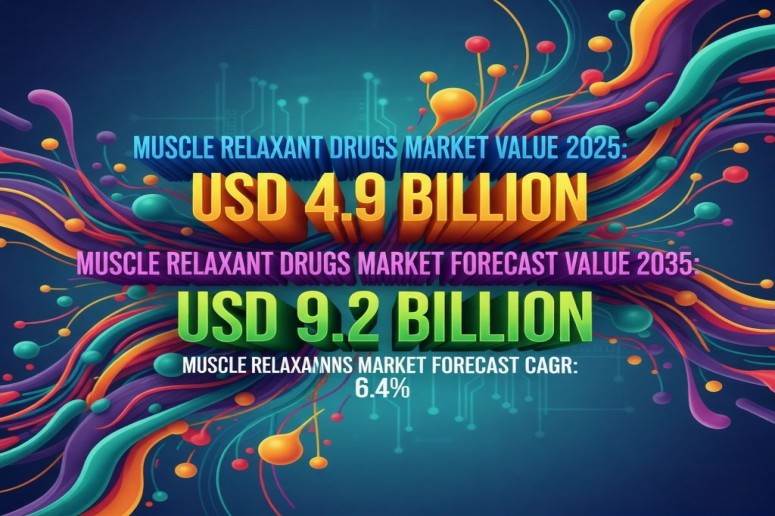
The global Muscle Relaxant Drugs Market is poised for significant growth over the next decade, underscoring expanding opportunities for both established pharmaceutical leaders and emerging biotech innovators. Valued at USD 4.9 billion in 2025, the market is projected to reach USD 9.2 billion by 2035, reflecting a compound annual growth rate (CAGR) of 6.4% during the forecast period.
This expansion is largely driven by the growing global prevalence of musculoskeletal disorders, chronic pain syndromes, and age-related neuromuscular conditions. The increasing incidence of arthritis, fibromyalgia, and back pain compounded by sedentary lifestyles has heightened the demand for effective and safe muscle relaxant therapies across diverse patient populations.
Market Dynamics: Growth Anchored in Innovation and Demographics
The aging global population continues to be a key driver for the muscle relaxant drugs market. With declining muscle mass and increased susceptibility to musculoskeletal injuries, older adults are emerging as a dominant user segment. Concurrently, the rise in orthopedic surgeries and trauma cases is fueling the adoption of both peripherally acting muscle relaxants and centrally acting formulations in acute and long-term care.
Muscle relaxant drugs have evolved far beyond their traditional roles in anesthesia and acute pain management. Today, they are integral to comprehensive pain management strategies that address complex conditions such as cerebral palsy, multiple sclerosis, and fibromyalgia. Moreover, the integration of muscle relaxants into multimodal therapeutic frameworks is enabling better patient outcomes, particularly in post-operative and chronic pain settings.
Regulatory agencies are also playing a pivotal role by accelerating approvals for next-generation formulations that offer improved efficacy, reduced side effects, and greater patient compliance. These advancements are attracting new entrants to the market and motivating established pharmaceutical companies to invest in next-generation drug delivery systems and targeted therapies.
Segmental Insights: Leading Product and Formulation Trends
By Product Type:
The Peripherally Acting Muscle Relaxants segment is projected to account for 35.8% of total market share in 2025, maintaining its leadership throughout the forecast period. These agents, widely used in surgical and intensive care environments, act directly on skeletal muscles to achieve relaxation without affecting the central nervous system. This minimizes neurological side effects and improves patient safety profiles—an important consideration in modern surgical practice.
Their extensive use in anesthesia and critical care has made peripherally acting relaxants indispensable for procedures that require muscle paralysis, such as intubation and orthopedic surgeries. As healthcare systems expand surgical capabilities and prioritize patient comfort, this product category is expected to maintain robust demand worldwide.
By Formulation:
The Solid Oral Formulations segment will dominate with an estimated 55.2% share in 2025. Tablets and capsules remain the most accessible and preferred dosage forms due to their ease of administration, cost-effectiveness, and stable pharmacokinetic profiles. These advantages have made oral formulations the mainstay of chronic care for conditions such as back pain, arthritis, and muscle stiffness.
Continuous innovations—including extended-release tablets designed for prolonged therapeutic effects—are enhancing adherence and improving clinical outcomes. As outpatient treatments rise globally, oral formulations will remain the backbone of retail pharmacy sales and long-term therapy regimens.
By Retail Sales Channel:
The Hospital Pharmacy segment is set to command 38.9% of global revenue share in 2025. Hospitals remain central to the supply and administration of muscle relaxants, especially for surgical and post-operative applications. With a growing number of orthopedic procedures and trauma admissions, hospital pharmacies are increasingly relied upon for ensuring timely availability and compliance with stringent quality controls.
Furthermore, hospital-based pharmacists play an active role in dosage optimization, reducing the risk of adverse drug interactions, and supporting personalized medicine approaches. As healthcare infrastructure strengthens in both developed and emerging economies, this segment will continue to expand its market dominance.
Regional Outlook: Global Growth with Regional Differentiation
The Muscle Relaxant Drugs Market shows strong regional variation, driven by differing healthcare expenditures, aging demographics, and adoption rates of advanced therapeutics.
- China leads with an impressive CAGR of 8.6%, underscoring rapid healthcare modernization and an expanding patient base.
- India follows with 8.0% CAGR, supported by improved healthcare accessibility and the proliferation of generic formulations.
- Germany and France exhibit steady growth at 7.4% and 6.7% respectively, driven by robust pharmaceutical R&D ecosystems and high healthcare spending.
- The United States remains the largest single market, projected to grow from USD 1.8 billion in 2025 to USD 3.1 billion by 2035, expanding at a 5.4% CAGR.
- Brazil, while posting a slower growth rate of 4.8%, continues to reflect rising demand in Latin America, fueled by increasing awareness and expanding treatment infrastructure.
Market Leaders and Emerging Innovators
The competitive landscape of the muscle relaxant drugs market features a blend of established pharmaceutical giants and emerging biotech firms that are innovating in drug design, delivery mechanisms, and therapeutic efficacy.
Key players shaping this industry include:
Amneal Pharmaceuticals LLC, Ipsen Biopharmaceuticals, Inc., Merz Pharmaceuticals LLC, Mylan (Viatris), Sanofi, Pfizer Inc., Novartis AG, Eva Pharmaceuticals Industries Ltd., Vertical Pharmaceuticals, Sun Pharmaceutical Industries Ltd., SteriMax Inc., Par Pharmaceutical, Abbott Laboratories, and F. Hoffmann-La Roche AG.
These companies are actively expanding their portfolios through research collaborations, mergers, and acquisitions to strengthen their global footprint. Notably, established manufacturers like Pfizer and Sanofi are leveraging strong R&D pipelines to develop improved formulations with better safety profiles, while emerging players such as Vertical Pharmaceuticals and SteriMax Inc. are investing in specialized niche therapies and hospital partnerships.
Get this Report at $5,000 Only | Exclusive Discount Inside!
https://www.futuremarketinsights.com/reports/sample/rep-gb-2836
Checkout Now to Access Data Insights:
https://www.futuremarketinsights.com/checkout/2836
About Future Market Insights (FMI)
Future Market Insights, Inc. (ESOMAR certified, recipient of the Stevie Award, and a member of the Greater New York Chamber of Commerce) offers profound insights into the driving factors that are boosting demand in the market. FMI stands as the leading global provider of market intelligence, advisory services, consulting, and events for the Packaging, Food and Beverage, Consumer Technology, Healthcare, Industrial, and Chemicals markets. With a vast team of over 400 analysts worldwide, FMI provides global, regional, and local expertise on diverse domains and industry trends across more than 110 countries.
Contact Us:
Future Market Insights Inc.
Christiana Corporate, 200 Continental Drive,
Suite 401, Newark, Delaware – 19713, USA
T: +1-347-918-3531
For Sales Enquiries: sales@futuremarketinsights.com
Website: https://www.futuremarketinsights.com
LinkedIn| Twitter| Blogs | YouTube




