The global bicycle electronic drivetrain market is on a steady path of expansion, projected to grow from USD 1.2 billion in 2025 to USD 1.8 billion by 2035, registering a CAGR of 3.8% during the forecast period. This growth reflects the increasing integration of electronic shifting systems in bicycles — a transformation led by both established industry giants and emerging innovators striving to redefine precision, convenience, and performance in cycling technology.
As the cycling world continues to evolve, electronic drivetrains have emerged as a defining feature in high-performance bicycles, blending engineering excellence with digital intelligence. Initially, the market’s value between 2025 and 2030 will be largely attributed to the adoption of basic electronic shifting systems, integrated into mid-range and commuter bicycles. However, as technology advances, the segment will witness accelerated growth from 2030 to 2035, led by multi-speed wireless systems and integrated power-assist synchronization tailored for e-bikes and professional racing models.
Technological Evolution Driving Market Transformation
The transition from mechanical to electronic drivetrains marks one of the most significant advancements in cycling mechanics. Leading manufacturers such as Shimano, SRAM, Bosch, Giant, and Campagnolo are pioneering systems that deliver unmatched accuracy, reliability, and user control. By incorporating wireless communication, smart diagnostics, and AI-assisted shifting, these companies are propelling bicycles into a new era of digital performance.
Supporting this shift are emerging players like Bafang, MAGURA, Rotor Bike Components, TranzX, and Fazua GmbH, who are introducing lightweight, modular, and cost-efficient solutions to attract new segments, including urban commuters and fitness-oriented riders. Their focus on accessible innovation ensures that electronic drivetrains are no longer limited to professional athletes but are increasingly available to the everyday cyclist seeking a smoother and more efficient ride.
This dynamic environment has created fertile ground for investors, component suppliers, and startups aiming to enter the market. Partnerships between drivetrain manufacturers and battery, sensor, and software companies are driving innovations in energy efficiency and user experience, shaping a competitive yet collaborative ecosystem.
Market Structure and Segmental Insights
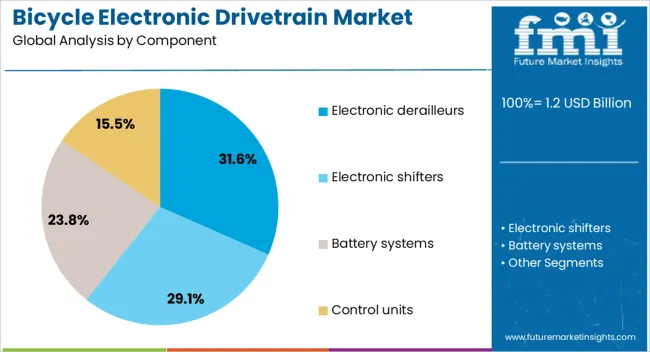
By component, the market is primarily dominated by electronic derailleurs, holding a commanding 31.6% share in 2025. These components are at the heart of the drivetrain’s precision, allowing riders to shift gears seamlessly with minimal mechanical intervention. Advancements in wireless technology, reduced maintenance requirements, and extended battery life continue to make derailleurs a preferred choice for both professionals and enthusiasts.
Within application segments, road bikes lead the market with a 38.2% share. Electronic drivetrains have become indispensable in road racing and endurance cycling due to their ability to deliver instant, reliable gear shifts under varying conditions. Professional racing teams and amateur cyclists alike are increasingly investing in electronic systems that enhance efficiency during climbs, sprints, and long-distance events.
By end use, professional cyclists dominate the segment with 42.7%, demonstrating how high-performance technologies initially developed for elite athletes are shaping broader consumer expectations. Manufacturers cater to this segment through advanced features such as custom-tuned firmware, integration with performance-tracking tools, and durability testing under race conditions.
Regional Market Outlook
The global landscape for bicycle electronic drivetrains is geographically diverse, with China, India, Germany, the United Kingdom, and the United States emerging as the top growth markets.
China, growing at a robust 5.1% CAGR, leads the market, benefiting from large-scale manufacturing and the government’s emphasis on sustainable urban mobility. Domestic firms, in collaboration with technology partners, are producing modular drivetrains tailored for both urban commuting and competitive cycling.
India, at 4.8% CAGR, reflects a rising trend toward fitness-oriented lifestyles and e-bike adoption. Local manufacturers like Hero Electric and Lectro India, in partnership with global brands such as Shimano, are expanding access to affordable, efficient electronic drivetrains designed for Indian roads and climates.
Germany and the United Kingdom represent Europe’s technological and design hubs, advancing drivetrain performance through innovation in IoT connectivity, modular assembly, and battery optimization. In the United States, growing urban cycling initiatives and the popularity of recreational riding are fostering steady adoption, supported by Bosch eBike Systems and SRAM’s cutting-edge engineering.
Key Growth Drivers and Market Dynamics
The rise of e-bikes stands as the most influential driver of the bicycle electronic drivetrain market. As cities worldwide embrace electric mobility, electronically controlled gear systems are becoming essential for optimizing power delivery and improving riding comfort. Urban commuters now demand bicycles that not only conserve energy but also adapt automatically to terrain and speed — a demand that electronic drivetrains fulfill effortlessly.
Moreover, competitive cycling events and endurance sports have fueled the need for fast, accurate, and responsive shifting mechanisms. Professional riders rely on these systems for marginal gains, while amateur cyclists aspire to replicate that performance through advanced consumer models.
Technological innovation remains at the core of market expansion. Developments in predictive shifting algorithms, integrated sensors, and smart battery management systems have enhanced the reliability and longevity of drivetrain components. The use of corrosion-resistant materials, AI-based diagnostics, and wireless upgrades demonstrates how modern cycling is evolving into a seamless blend of mechanics and software.
Aftermarket expansion has also reinforced the industry’s growth, with authorized service centers, mobile repair units, and upgrade kits enabling greater consumer trust. As awareness grows and product ecosystems mature, the market is expected to benefit from recurring sales in maintenance and upgrades.
Competitive Landscape and Strategic Developments
The market’s competitive framework is characterized by a balance between established brands and new entrants focusing on disruptive technologies. Shimano and SRAM dominate premium segments through integrated systems that blend performance and durability, while Bosch continues to drive innovation through e-bike integration and smart energy solutions.
On the other hand, Bafang, MAGURA, and Rotor Bike Components are carving out market space through customization and modular drivetrain offerings, particularly for urban and trekking e-bikes. TranzX targets regional markets with affordable yet high-performing solutions, while Fazua GmbH emphasizes lightweight drivetrains for hybrid and sport e-bikes.
Marketing strategies across these players emphasize precision engineering, low maintenance, and digital compatibility. Technical brochures and brand campaigns highlight the benefits of wireless control, optimized torque sensors, and smartphone connectivity, aiming to attract a diverse consumer base — from professional cyclists to urban commuters.
Purchase this Report for USD 5,000 Only | Get an Exclusive Discount Instantly! https://www.futuremarketinsights.com/checkout/26036
Everything You Need—within Your Budget. Request a Special Price Now! https://www.futuremarketinsights.com/reports/sample/rep-gb-26036
About Future Market Insights (FMI)
Future Market Insights, Inc. (ESOMAR certified, recipient of the Stevie Award, and a member of the Greater New York Chamber of Commerce) offers profound insights into the driving factors that are boosting demand in the market. FMI stands as the leading global provider of market intelligence, advisory services, consulting, and events for the Packaging, Food and Beverage, Consumer Technology, Healthcare, Industrial, and Chemicals markets. With a vast team of over 400 analysts worldwide, FMI provides global, regional, and local expertise on diverse domains and industry trends across more than 110 countries.
Contact Us:
Future Market Insights Inc.
Christiana Corporate, 200 Continental Drive,
Suite 401, Newark, Delaware – 19713, USA
T: +1-347-918-3531
For Sales Enquiries: sales@futuremarketinsights.com
Website: https://www.futuremarketinsights.com
LinkedIn| Twitter| Blogs | YouTube