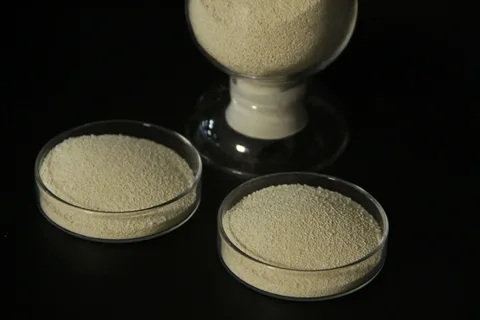
Global L-Lysine Hydrochloride (HCL) market is estimated to be worth USD 272.8 million by 2025 and is projected to reach USD 414.4 million by 2035, reflecting a CAGR of 4.3% over the assessment period 2025 to 2035.
The L-lysine hydrochloride market is witnessing sustained expansion as industries across animal nutrition, pharmaceuticals, and food supplements recognize its vital role in supporting protein synthesis and overall health. L-lysine hydrochloride, an essential amino acid derivative, is widely used to enhance feed efficiency, improve animal growth performance, and strengthen immune response, making it an indispensable component in livestock and poultry industries.
Additionally, its role as a dietary supplement for humans, aiding muscle maintenance and supporting various physiological functions, has driven increased production and consumption globally. Technological advancements in fermentation and synthesis processes have enhanced product purity, yield, and cost-efficiency, enabling broader industrial adoption.
Key Market Drivers and Sector-wise Applications
The animal nutrition segment is a leading driver of the L-lysine hydrochloride market, fueled by expanding meat and dairy production worldwide. L-lysine supplementation optimizes feed formulations by balancing amino acid profiles, reducing nitrogen excretion, and improving growth rates in farm animals. Increasing consumer preference for high-quality animal proteins and regulatory mandates on sustainable farming practices boost demand for efficient feed additives such as L-lysine hydrochloride.
In pharmaceuticals, L-lysine hydrochloride is used in formulations addressing cold sores, immune system support, and catabolic conditions, contributing to its growing importance in therapeutic applications. Increasing awareness of amino acid deficiency and personalized nutrition supplements supports its integration in health products.
The food and beverage sector utilizes L-lysine hydrochloride as a fortifier in dairy alternatives, infant nutrition, and functional foods, further propelling market expansion.
Regional Market Overview and Consumption Trends
North America and Europe dominate the market due to their advanced agriculture, healthcare infrastructure, and active research in animal nutrition and amino acid therapeutics. Strong regulatory frameworks and increasing investments in sustainable farming encourage consistent use of feed additives, including L-lysine hydrochloride.
The Asia-Pacific region is among the fastest-growing markets, driven by rapid growth in livestock farming, rising healthcare awareness, and expanding functional food industries in countries like China, India, Japan, and South Korea. Improving supply chains and government initiatives supporting agricultural modernization foster market growth.
Latin America and MEA regions are progressively increasing adoption due to expanding farming activities and rising nutritional supplement awareness, presenting additional avenues for growth.
Innovations in microbial fermentation, improved strains, and downstream processing have significantly enhanced the production efficiency and quality of L-lysine hydrochloride. Green manufacturing approaches and bioengineered microorganisms contribute to more sustainable and eco-friendly processes.
Advancements in product formulation now allow better solubility, bioavailability, and stability, catering to diverse application needs in feed, pharmaceutical, and food sectors. These improvements also facilitate easier integration into premixes, capsules, beverages, and animal feed blends.
Robust quality control measures and compliance with international standards ensure safety and efficacy, bolstering customer confidence and regulatory adherence.
Challenges and Market Opportunities
Market challenges include raw material price fluctuations, process optimization complexities, and stringent regulatory requirements for amino acid products. The need to balance production costs with high quality influences supply chain dynamics and market pricing.
Expanding into emerging applications such as aquaculture nutrition, sports supplements, and medical foods provides lucrative opportunities. Increasing interest in personalized nutrition and preventive healthcare also fuels demand for L-lysine hydrochloride enriched products.
Collaborative innovation among enzyme producers, feed manufacturers, and pharmaceutical formulators will be essential to unlock new application areas and drive competitive advantage.
Competitive Landscape and Strategic Collaborations
The L-lysine hydrochloride market consists of global biotech firms, specialized amino acid producers, and regional manufacturers focusing on cost-effective, high-quality outputs. Established companies differentiate by extensive R&D investments, scale of production, certifications, and broad distribution networks.
Strategic partnerships with pharmaceutical companies, feed producers, and food formulators enable tailored solutions and faster market adoption. Collaborations with research bodies and sustainability organizations support the development of greener production pathways and enhance market credibility.
Smaller manufacturers focus on localized production and niche applications, leveraging agility and customer intimacy to penetrate emerging markets. Industry consolidation and technology licensing agreements further shape the competitive landscape.
Outlook: Essential Ingredient for a Healthier Future
Looking ahead, the L-lysine hydrochloride market is poised for steady growth as demand for high-quality animal proteins, functional foods, and therapeutic supplements escalates globally. The expanding focus on sustainable agriculture and precision nutrition will elevate the importance of amino acid supplementation, particularly L-lysine hydrochloride.
Innovations in production efficiency, formulation, and regulatory compliance will drive market accessibility and product diversification. Manufacturers committed to quality, sustainability, and collaboration will lead the way in harnessing the full potential of this critical amino acid derivative.
As consumers increasingly prioritize nutrition and wellness, L-lysine hydrochloride will remain a cornerstone ingredient, supporting the growth and resilience of multiple complementary industries worldwide.
Get Instant Access for Only $3500 | Don’t Miss This Exclusive Offer!
https://www.futuremarketinsights.com/reports/sample/rep-gb-2669
Checkout Now to Access Industry Insights:
https://www.futuremarketinsights.com/checkout/2669
About Future Market Insights (FMI)
Future Market Insights, Inc. (ESOMAR certified, recipient of the Stevie Award, and a member of the Greater New York Chamber of Commerce) offers profound insights into the driving factors that are boosting demand in the market. FMI stands as the leading global provider of market intelligence, advisory services, consulting, and events for the Packaging, Food and Beverage, Consumer Technology, Healthcare, Industrial, and Chemicals markets. With a vast team of 400 analysts worldwide, FMI provides global, regional, and local expertise on diverse domains and industry trends across more than 110 countries.
Contact Us:
Future Market Insights Inc.
Christiana Corporate, 200 Continental Drive,
Suite 401, Newark, Delaware – 19713, USA
T: +1-845-579-5705
For Sales Enquiries: sales@futuremarketinsights.com
Website: https://www.futuremarketinsights.com
LinkedIn| Twitter| Blogs | YouTube