

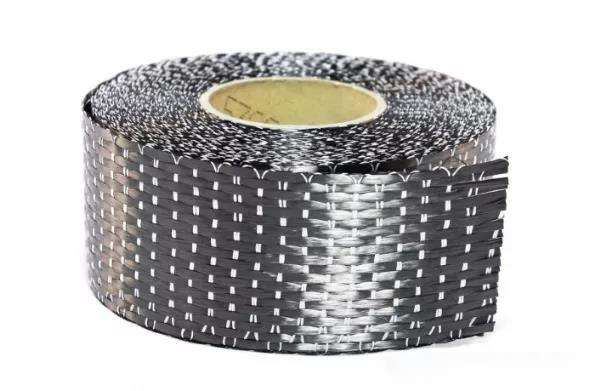
The global Unidirectional Tape (UD) Market is entering a decade of transformation, forecast to reach USD 1132.05 million by 2035, growing at a CAGR of 12.3%. This surge is fueled by industries seeking materials that deliver exceptional strength-to-weight ratios, recyclability, and fuel efficiency. Manufacturers in aerospace, automotive, and wind energy are increasingly turning to UD tapes to meet the evolving performance and sustainability demands of modern production.
As global regulations push for lower emissions and greater energy efficiency, UD tapes—composed of continuous fiber reinforcements aligned in one direction—are redefining how industrial materials are designed and deployed.
Leading Innovators Defining the Market Landscape
Three industry leaders—Solvay, Toray Industries, and Teijin Limited—are steering the UD tape market toward the next generation of composite solutions.
- Solvay is advancing thermoplastic UD tapes designed for aerospace applications, delivering lightweight strength and recyclability.
- Toray Industries dominates with carbon fiber-based UD tapes that enhance durability and performance in automotive and wind energy uses.
- Teijin Limited leads with high-performance composite materials optimized for structural integrity, sustainability, and efficiency.
Together, these companies account for 13% of the global market share, setting the pace for innovation and defining the benchmarks for performance and sustainability across multiple sectors.
Buy Now & Save: Premium Market Report at $5,000 | Discount Details Inside:- https://www.futuremarketinsights.com/reports/sample/rep-gb-20313
Technology and Sustainability: The Core of UD Tape Evolution
Technological advancements are enabling manufacturers to achieve higher mechanical performance and streamlined production.
Key trends shaping the market include:
- Thermoplastic UD Tapes: Offering recyclability and improved durability, ideal for closed-loop manufacturing.
- Advanced Fiber Integration: Combining carbon and glass fibers to achieve superior stiffness and load-bearing capacity.
- Automation-Ready Formats: Designed for automated layup and molding, reducing labor costs and optimizing production cycles.
Sustainability remains at the center of innovation. With global emphasis on energy-efficient manufacturing and circular materials, UD tape producers are integrating recyclable composites and lowering emissions throughout the production process. The result is a material that not only strengthens structures but also aligns with the global transition toward green manufacturing.
Regional Insights: Expanding Horizons for Manufacturers
The UD Tape market exhibits dynamic regional performance, with growth opportunities distributed across major industrial centers:
- North America (35%): Driven by aerospace innovation and stringent fuel efficiency standards.
- Europe (30%): Leading in sustainability regulations and the adoption of recyclable composites.
- Asia-Pacific (25%): Experiencing rapid industrialization and expansion in renewable energy infrastructure.
- Other Regions (10%): Emerging markets in Africa and Latin America are creating new frontiers for lightweight material adoption.
Manufacturers targeting these growth regions can capitalize on the intersection of innovation, regulation, and industrial expansion—positioning themselves as strategic partners in a fast-evolving ecosystem.
Applications: Powering Next-Generation Performance Across Industries
The market’s versatility spans across multiple high-impact sectors:
- Aerospace (40%): Prioritizing lightweight structures that enhance fuel economy and flight efficiency.
- Automotive (30%): Embracing carbon fiber UD tapes for electric vehicle bodies, improving range and safety.
- Wind Energy (20%): Deploying UD tapes for turbine blade reinforcement, enhancing resilience and energy output.
- Other Industries (10%): Applying UD technology to industrial equipment and sports materials, broadening its scope and innovation potential.
Manufacturers adopting UD tape technologies are not only meeting current performance requirements but are also securing a competitive edge in future-ready applications.
Overcoming Challenges: From Cost to Scalability
While high production costs and limited recycling infrastructure remain challenges, ongoing research and automation are rapidly reducing these barriers. The integration of automated tape placement (ATP) and fiber steering technologies is making UD tapes more cost-effective and scalable than ever before.
Competition from metals and traditional composites persists; however, the unmatched combination of lightweight strength, recyclability, and energy efficiency positions UD tapes as the material of choice for next-generation manufacturing.
Strategic Opportunities for Manufacturers and Suppliers
Manufacturers seeking to leverage the UD tape boom should focus on:
- Investing in Recyclable Materials: Prioritize thermoplastic UD tapes to align with sustainability targets.
- Enhancing Fiber Integration: Improve mechanical performance through carbon and glass fiber innovations.
- Targeting Emerging Markets: Expand operations in Asia-Pacific and Latin America where renewable energy and electric vehicle demand are accelerating.
- Automating Production: Adopt automation-ready UD formats to lower costs and increase throughput.
These strategies will not only support market penetration but also strengthen manufacturers’ resilience amid shifting global regulations and competitive pressures.
Click Here to Purchase the Report:- https://www.futuremarketinsights.com/checkout/20313
Future Outlook: Innovation Defining the Decade Ahead
The Unidirectional Tape market is on the cusp of a technological revolution, merging sustainability with high performance. From aerospace lightweighting to automotive electrification and wind energy optimization, UD tapes will play a pivotal role in reshaping industrial manufacturing.
As the market grows toward USD 1132.05 million by 2035, companies investing in advanced fiber composites, recyclable thermoplastic solutions, and automated production technologies will set the standard for innovation and competitiveness.
The future of manufacturing is lighter, stronger, and more sustainable—and the Unidirectional Tape market is leading that transformation.
About Future Market Insights (FMI)
Future Market Insights, Inc. (ESOMAR certified, recipient of the Stevie Award, and a member of the Greater New York Chamber of Commerce) offers profound insights into the driving factors that are boosting demand in the market. FMI stands as the leading global provider of market intelligence, advisory services, consulting, and events for the Packaging, Food and Beverage, Consumer Technology, Healthcare, Industrial, and Chemicals markets. With a vast team of over 400 analystsworldwide, FMI provides global, regional, and local expertise on diverse domains and industry trends across more than 110 countries.
Contact Us:
Future Market Insights Inc.
Christiana Corporate, 200 Continental Drive,
Suite 401, Newark, Delaware – 19713, USA
T: +1-347-918-3531
For Sales Enquiries: sales@futuremarketinsights.com
Website: https://www.futuremarketinsights.com
LinkedIn| Twitter| Blogs | YouTube




