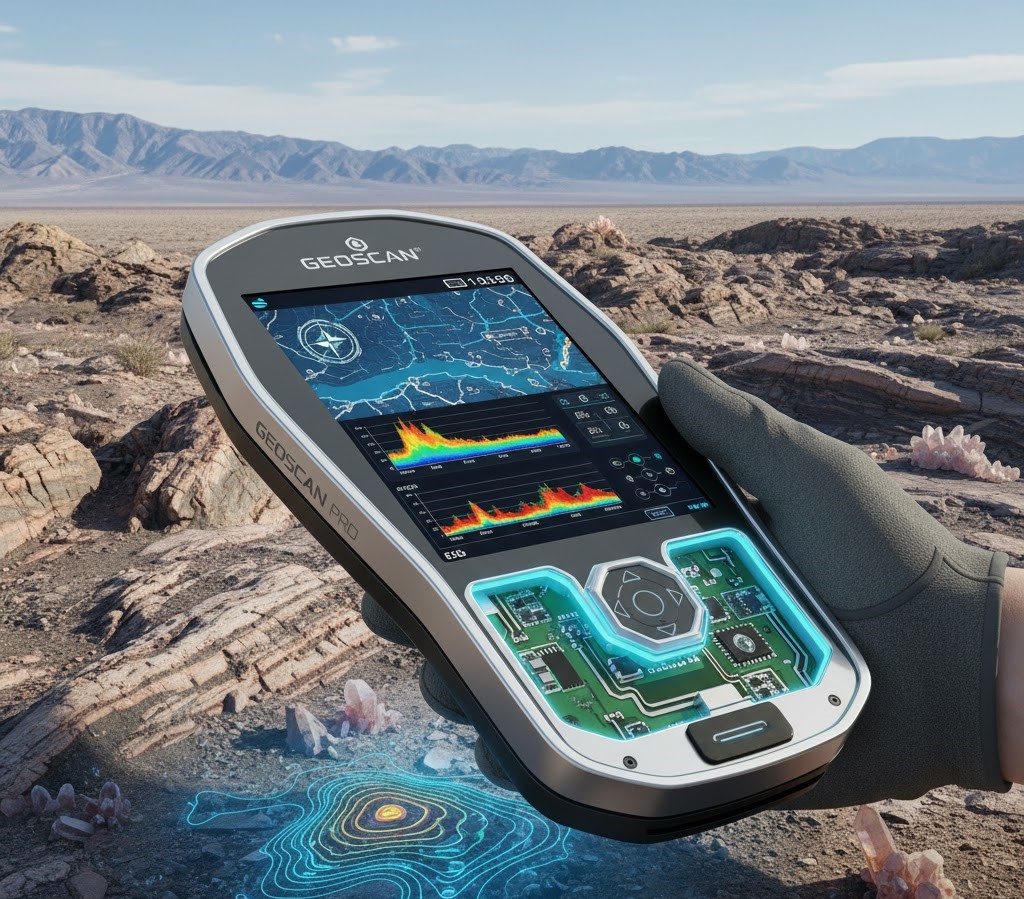
The global Mineral Scanner Market is poised for robust growth, projected to rise from USD 1,575.7 million in 2025 to USD 3,042.2 million by 2035, registering a 6.8% CAGR. This growth trajectory is driven by technological advancements, the rising need for real-time mineral analysis, and the expansion of mining and exploration activities worldwide. As industries shift toward digitalization and sustainability, the integration of AI-powered, portable, and automated scanning systems is transforming mineral detection, mapping, and resource optimization processes.
Report Coverage & Deliverables
This comprehensive research report offers:
- Market valuation and volume forecasts (2025–2035)
- Segmentation by device type, application, and region
- Detailed profiles of leading manufacturers such as Bruker Corporation, Malvern Panalytical, Hitachi High-Tech Analytical Science, Olympus Corporation, SciAps, Inc., and Rigaku Corporation
- Analysis of technological advancements including AI integration, real-time data analytics, and multi-sensor systems
- Country-level insights across 40+ nations including the U.S., China, India, Germany, Brazil, and the U.K.
- Competitive landscape and investment opportunities by market segment
Deliverables include a complete market breakdown by device type (handheld/field scanners and laboratory analyzers), applications (mining, construction, environmental monitoring, and geological research), and regional demand patterns supported by market share data and forecast models.
Key Factors Shaping Market Dynamics
- Technological Advancements
The adoption of AI-integrated scanners and machine learning algorithms enhances mineral identification precision, automates spectral data interpretation, and reduces analysis time. Advanced imaging and 3D geological modeling are revolutionizing exploration decision-making. - Growing Demand for Critical Minerals
Increasing global focus on rare earth elements, lithium, and cobalt for electric vehicles and renewable energy systems is fueling the adoption of specialized mineral scanners capable of identifying strategic materials with higher accuracy. - Rise of Portable and Field-Ready Devices
Handheld and field scanners now account for nearly 68% of the market, offering real-time, on-site mineral analysis and minimizing dependency on laboratory testing. - AI-Enhanced Analysis and Automation
Integration of cloud-based analytics and predictive geological modeling enables intelligent data interpretation and resource forecasting, creating a competitive advantage for tech-driven suppliers. - Environmental and Regulatory Compliance
Expansion into environmental monitoring and green mining applications aligns with ESG frameworks, positioning scanners as critical tools for sustainable resource management.
Key Takeaways
- Mining remains the dominant segment, utilizing scanners for real-time ore detection, grade estimation, and process optimization.
- Geological research (23%) benefits from high-resolution scanners for subsurface analysis.
- Construction and infrastructure (15%) use scanners for soil composition assessment, while environmental monitoring (12%) applies them for contamination detection.
- Technological convergence—combining X-ray, laser, and spectroscopic detection—is enhancing accuracy and reducing analysis time.
- Strategic collaborations among equipment manufacturers, research institutions, and mining firms are fostering customized scanner solutions for diverse geological environments.
Regional Analysis
Asia Pacific leads the global mineral scanner market, with China (9.2% CAGR) and India (8.5% CAGR) showing the fastest expansion.
- China: Growth fueled by government-backed modernization and rare earth mineral exploration in Inner Mongolia and Xinjiang.
- India: Strong adoption across iron ore, coal, and bauxite mining hubs in Odisha, Chhattisgarh, and Jharkhand.
- Europe is projected to expand from USD 366.0 million in 2025 to USD 707.2 million by 2035, with Germany leading due to its robust analytical instrument industry and R&D ecosystem.
- North America—notably the United States (6.5% CAGR)—is witnessing strong adoption driven by automation in mining and environmental compliance standards.
- Latin America, led by Brazil (7.1% CAGR), and Japan (5.1% CAGR) are strengthening adoption through technological modernization in mining and mineral research.
Key Segments of the Market Report
By Device Type:
- Handheld/Field Scanners – 68% market share; portable, rugged devices providing immediate elemental analysis (10–100 ppm detection limit).
- Laboratory Analyzers – High-precision instruments for detailed mineral composition studies and quality assurance.
By Application:
- Mining (78%) – Dominant segment for ore grade control and stockpile monitoring.
- Geological Research (23%) – Utilized for subsurface mineral mapping.
- Construction & Infrastructure (15%) – Applied for soil and foundation analysis.
- Environmental Monitoring (12%) – Used for contamination detection and compliance reporting.
By Region:
- Asia Pacific – Fastest-growing region driven by mining modernization.
- North America & Europe – Mature markets emphasizing automation and ESG compliance.
- Latin America & Middle East & Africa – Emerging opportunities in exploration and infrastructure.
Opportunity Pathways for Investors
- Critical Mineral Specialization: Focused scanners for lithium, cobalt, and rare earth elements could yield USD 400–600 million by 2035.
- AI-Driven Analytics: Machine learning-based mineral mapping offers USD 350–550 million in potential revenue.
- Handheld Innovation: Portable, high-precision scanners could generate USD 300–500 million through next-gen design improvements.
- Cloud Data Services: SaaS platforms for geological data analytics may deliver 60–80% gross margins.
Key Companies Profiled:
Bruker Corporation | Malvern Panalytical (Spectris plc) | Hitachi High-Tech Analytical Science | Olympus Corporation (Evident Scientific) | SciAps, Inc. | Rigaku Corporation | ASD Inc. | KOS Scientific | Skyray Instrument Co., Ltd. | Geosight
Grab This Report Now at Just $5000 | Limited-Time Discount Offer! https://www.futuremarketinsights.com/reports/sample/rep-gb-26626
Checkout Now to Access Industry Insights: https://www.futuremarketinsights.com/checkout/26626
About Future Market Insights (FMI)
Future Market Insights, Inc. (ESOMAR certified, recipient of the Stevie Award, and a member of the Greater New York Chamber of Commerce) offers profound insights into the driving factors that are boosting demand in the market. FMI stands as the leading global provider of market intelligence, advisory services, consulting, and events for the Packaging, Food and Beverage, Consumer Technology, Healthcare, Industrial, and Chemicals markets. With a vast team of over 400 analysts worldwide, FMI provides global, regional, and local expertise on diverse domains and industry trends across more than 110 countries.
Contact Us:
Future Market Insights Inc.
Christiana Corporate, 200 Continental Drive,
Suite 401, Newark, Delaware – 19713, USA
T: +1-347-918-3531
For Sales Enquiries: sales@futuremarketinsights.com
Website: https://www.futuremarketinsights.com
LinkedIn| Twitter| Blogs | YouTube