

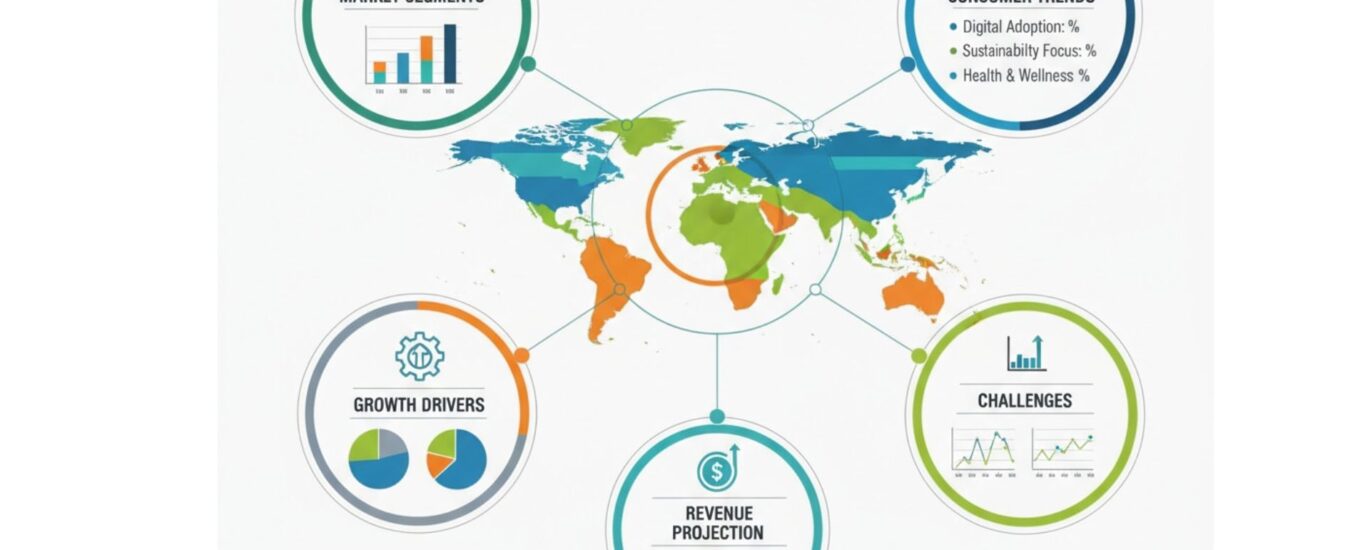
The global high-temperature ceramics industry is entering a phase of remarkable expansion, with sales expected to reach USD 11,549.8 million by 2035, up from USD 5,375.7 million in 2024. This represents a robust compound annual growth rate (CAGR) of 7.2% over the next decade. By 2025, the market is projected to hit USD 5,762.7 million, reflecting a year-on-year growth of 6.8%. Such growth is being driven by increasing demand from sectors that require materials capable of withstanding extreme thermal, chemical, and mechanical stresses, including aerospace, automotive, energy, and electronics.
High-temperature ceramics are engineered to endure these severe conditions, offering key attributes such as excellent heat resistance, low thermal conductivity, chemical inertness, and high mechanical strength. These properties make them indispensable for manufacturers seeking reliability and durability in high-performance industrial applications.
Oxide Ceramics Lead Market Share
Oxide ceramics, including alumina (Al₂O₃) and zirconia (ZrO₂), are expected to dominate the market, holding a 54.1% share in 2025. Their superior thermal stability, corrosion resistance, and cost-effectiveness make them ideal for critical applications across aerospace, energy, and electronics. In aerospace, oxide ceramics are used in heat shields and engine components, ensuring structural integrity under extreme temperatures and oxidative conditions. In energy applications, they enhance efficiency in high-temperature heat exchangers and advanced engine designs, meeting the demand for more sustainable and energy-efficient operations.
Buy Now & Save: Premium Market Report at $5,000 | Discount Details Inside:- https://www.futuremarketinsights.com/reports/sample/rep-gb-179
Aerospace and Defense: A Key Growth Driver
The aerospace and defense sector leads end-use adoption with a 27.8% market share in 2024, reflecting the critical need for materials that maintain performance under intense conditions. High-temperature oxide ceramics are extensively used in jet engine coatings, thermal barrier systems, missile nose cones, and spacecraft components. These materials withstand extreme heat and mechanical stress, contributing to operational safety, improved fuel efficiency, and longer component lifespans. The rise of hypersonic vehicles and atmospheric re-entry systems has further accelerated demand for ultra-high-temperature ceramics with melting points exceeding 3,900°C.
Enabling Advanced Nuclear and Semiconductor Technologies
The expansion of small modular reactors (SMRs) is revolutionizing nuclear energy systems, relying on silicon carbide and boron carbide ceramics for structural integrity under extreme heat and radiation. These materials also enhance safety by acting as diffusion barriers in TRISO-coated fuel particles and providing neutron absorption in critical reactor components.
In the semiconductor sector, the surge in wafer fabrication facilities in Asia and North America is driving the need for alumina ceramics in processing equipment. Their heat resistance, chemical inertness, and structural integrity enable precise manufacturing, protecting delicate silicon wafers during high-temperature operations. The construction of new 200mm and 300mm fabs between 2025 and 2027 underscores the growing reliance on high-performance ceramics for next-generation semiconductor production.
Overcoming Supply Chain Challenges
Despite rapid growth, the high-temperature ceramics industry faces supply chain vulnerabilities due to the concentrated availability of critical raw materials, such as silicon carbide and boron carbide. China produces over 70% of global silicon materials, creating potential risks from geopolitical tensions or trade restrictions. Manufacturers must strategically secure reliable sources to mitigate disruptions and maintain operational continuity while navigating price volatility.
Strategic Opportunities Across Key Regions
China, India, South Korea, Brazil, and the United States are emerging as major growth markets. China leads with a projected CAGR of 7.5% from 2025 to 2035, driven by energy and renewable power investments, including large-scale solar thermal projects that rely on high-performance ceramics for heat transfer and storage. South Korea’s automotive sector, particularly electric and hybrid vehicles, demands alumina and silicon nitride ceramics for battery separators, thermal management systems, and power electronics. In Brazil, the metallurgy sector is driving ceramics use in refractory applications, from furnaces to molds, enhancing operational efficiency and durability in steel and aluminum production.
Click Here to Purchase the Report:- https://www.futuremarketinsights.com/checkout/179
Market Leaders and Industry Innovation
Tier 1 players, including Kyocera Corporation, Saint-Gobain Ceramics, CoorsTek, 3M, and The Dow Chemical Company, account for 35–40% of the market and drive innovation through large-scale production, research, and global reach. Tier 2 companies, such as CeramTec, Morgan Advanced Materials, and Ibiden, focus on customized solutions for regional industries, while Tier 3 players address niche demands with specialized, high-performance ceramics for smaller-scale operations.
Strategic alliances, joint ventures, and geographic expansion are key growth strategies, enabling manufacturers to deliver advanced ceramic solutions tailored to industry-specific requirements. Continuous investment in R&D ensures that high-temperature ceramics remain at the forefront of innovation, supporting operational excellence across critical manufacturing sectors.
Looking Ahead: High-Temperature Ceramics as a Growth Enabler
The high-temperature ceramics industry offers a compelling solution for manufacturers seeking to overcome operational challenges posed by extreme environments. By enabling aerospace breakthroughs, supporting advanced nuclear and semiconductor technologies, and improving efficiency in energy and automotive applications, these materials are set to become integral to the next wave of industrial and technological advancements.
With the market poised to nearly double by 2035, manufacturers investing in high-temperature ceramics can expect to benefit from sustained growth, technological innovation, and expanded opportunities across global industrial sectors. The future of manufacturing in extreme conditions is increasingly ceramic-driven, offering resilience, efficiency, and performance that meet the demands of tomorrow’s high-stakes industries.
About Future Market Insights (FMI)
Future Market Insights, Inc. (ESOMAR certified, recipient of the Stevie Award, and a member of the Greater New York Chamber of Commerce) offers profound insights into the driving factors that are boosting demand in the market. FMI stands as the leading global provider of market intelligence, advisory services, consulting, and events for the Packaging, Food and Beverage, Consumer Technology, Healthcare, Industrial, and Chemicals markets. With a vast team of over 400 analysts worldwide, FMI provides global, regional, and local expertise on diverse domains and industry trends across more than 110 countries.
Contact Us:
Future Market Insights Inc.
Christiana Corporate, 200 Continental Drive,
Suite 401, Newark, Delaware – 19713, USA
T: +1-347-918-3531
For Sales Enquiries: sales@futuremarketinsights.com
Website: https://www.futuremarketinsights.com
LinkedIn| Twitter| Blogs | YouTube




