The Hydrazine Market is projected to witness strong and sustained growth, advancing from USD 575.6 million in 2025 to USD 1,030.8 million by 2035, at a CAGR of 6.0% over the forecast period. The growing utilization of hydrazine as a critical chemical intermediate, reducing agent, and fuel component is propelling demand across industries including aerospace, pharmaceuticals, water treatment, and chemical manufacturing.
Rising Demand Across Key Industries Drives Market Expansion
Hydrazine’s exceptional chemical versatility and reducing capabilities have made it an indispensable compound across high-performance industrial applications. Its demand continues to rise in aerospace for use in rocket propellants and satellite propulsion systems, where reliability and high energy density are vital. Simultaneously, the pharmaceutical sector is increasingly leveraging hydrazine derivatives in the synthesis of active pharmaceutical ingredients (APIs) used in anti-cancer, cardiovascular, and anti-tuberculosis drugs.
In addition to these, chemical synthesis and agrochemical industries continue to rely on hydrazine for producing polymers, foaming agents, pesticides, and corrosion inhibitors. The compound’s wide application scope, combined with ongoing technological advancements and cleaner manufacturing processes, ensures its long-term relevance in both emerging and established markets.
Segmental Insights: Hydrazine Hydrate Leads the Market
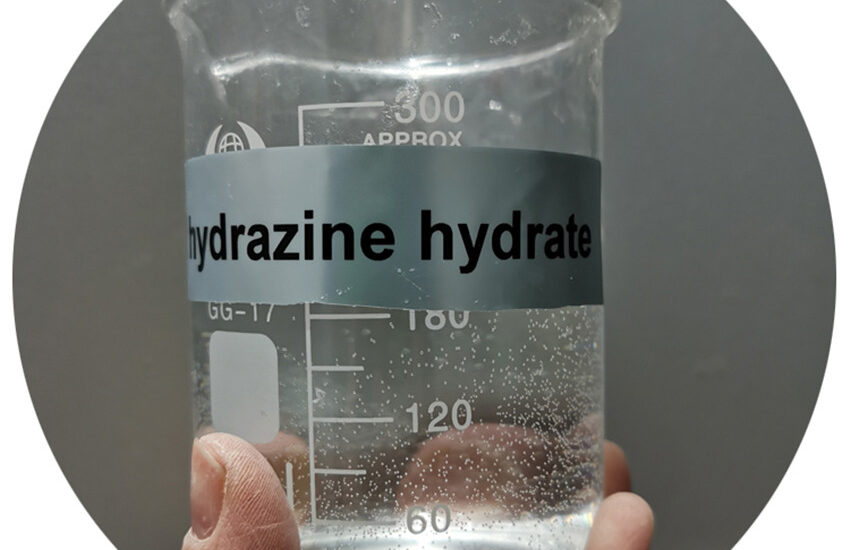
Among the various product types, Hydrazine Hydrate remains the dominant segment, expected to account for 35.2% of total market revenue in 2025. Its broad compatibility, solubility, and role as a reducing agent make it a preferred choice in water treatment, pharmaceuticals, and energy applications.
Continuous investment in improving production efficiency and environmental compliance has further strengthened the segment’s position. Hydrazine hydrate’s role in enhancing performance and reliability in industrial and laboratory processes ensures that it will continue to lead the global market through 2035.
Rocket Fuel Segment Powers Growth in Aerospace Applications
The Rocket Fuel segment is anticipated to contribute around 26.6% of the total market share in 2025, making it one of the most prominent application areas. The surge in satellite launches, space exploration programs, and defense projects is driving substantial demand for hydrazine-based propellants.
These fuels are prized for their controllable combustion, high energy output, and superior reliability in extreme conditions—qualities critical for mission success. As both government and private space agencies ramp up their space exploration initiatives, investments in high-purity hydrazine for propulsion systems are expected to accelerate, ensuring strong growth in the coming decade.
Pharmaceutical Sector Emerges as the Leading End-User
The pharmaceutical industry is projected to dominate hydrazine consumption, capturing 41.7% of the market share in 2025. Hydrazine’s role as a building block in the synthesis of complex organic molecules supports the production of advanced therapeutic drugs.
As global pharmaceutical production expands, driven by rising R&D investments and demand for high-efficacy treatments, hydrazine’s contribution to drug manufacturing continues to grow. Its ability to facilitate precise chemical reactions and maintain product integrity makes it indispensable to modern medicine production.
Regional Growth Trends: Asia-Pacific Leads Global Momentum
Regional insights indicate that Asia-Pacific, led by China and India, will remain the fastest-growing market for hydrazine, registering CAGRs of 8.1% and 7.5%, respectively. These nations are witnessing robust expansion in chemical, pharmaceutical, and aerospace sectors, bolstered by government-led industrialization programs and increasing export demand.
In Europe, countries like Germany (6.9%), France (6.3%), and the UK (5.7%) continue to strengthen their presence through advancements in specialty chemicals and pharmaceutical manufacturing. Meanwhile, the U.S. market is projected to expand from USD 209.9 million in 2025 to USD 345.1 million by 2035, driven by stable demand from the aerospace and defense sectors.
Although Brazil posts a relatively moderate CAGR of 4.5%, its increasing focus on industrial water treatment and chemical processing underscores a steady growth trajectory for hydrazine adoption in Latin America.
Market Dynamics and Industrial Applications
Hydrazine, characterized by its ammonia-like odor and colorless liquid form, remains a vital yet highly reactive compound used across multiple industrial domains. Beyond rocket fuels and pharmaceuticals, it plays a crucial role in polymer manufacturing, effluent treatment, and metal recovery.
Its application in refining precious metals like gold, platinum, and silver enhances purity and recovery efficiency, while in wastewater treatment, it helps remove contaminants and improve productivity. Ongoing innovations in the Raschig and Ketazine processes are improving yield and safety, addressing one of the key challenges in hydrazine production.
Key Players Focusing on Technological Innovation and Global Expansion
The global hydrazine market features both established chemical giants and emerging manufacturers, each striving to enhance production capabilities and innovate sustainable synthesis routes. Leading participants include Acuro Organics Limited, Arkema, Arrow Fine Chemicals, Finetech Industry Limited, Japan Finechem Inc (Mitsubishi Gas Chemical Company Inc.), Lanxess AG, Lonza Group AG, Merck KGaA, Nippon Carbide Industries Co. Inc., Otsuka-MGC Chemical Company Inc (Otsuka Chemical Co. Ltd.), Tokyo Chemical Industry Co. Ltd., and Weifang Yaxing Chemical Co. Ltd.
These companies are focusing on technological modernization, capacity expansion, and strategic partnerships to meet the evolving global demand. Emerging manufacturers, particularly in Asia-Pacific, are investing in cleaner, cost-efficient hydrazine production technologies to strengthen their presence in the competitive landscape.
Get this Report at $5000 | Exclusive Discount Inside! https://www.futuremarketinsights.com/reports/sample/rep-gb-2814
Don’t Miss Out – Buy Now: https://www.futuremarketinsights.com/checkout/2814
Outlook: A Promising Decade for the Hydrazine Industry
As industries worldwide prioritize performance, sustainability, and precision, the hydrazine market is set to experience consistent expansion through 2035. The convergence of space exploration, advanced pharmaceuticals, and environmentally conscious production practices will continue to drive innovation and investment across the global supply chain.
With both established players and new entrants accelerating research and production capabilities, the hydrazine market stands on the brink of a transformative growth phase—one defined by technological evolution, safety enhancements, and global industrial synergy.
About Future Market Insights (FMI)
Future Market Insights, Inc. (ESOMAR certified, recipient of the Stevie Award, and a member of the Greater New York Chamber of Commerce) offers profound insights into the driving factors that are boosting demand in the market. FMI stands as the leading global provider of market intelligence, advisory services, consulting, and events for the Packaging, Food and Beverage, Consumer Technology, Healthcare, Industrial, and Chemicals markets. With a vast team of over 400 analysts worldwide, FMI provides global, regional, and local expertise on diverse domains and industry trends across more than 110 countries.
Contact Us:
Future Market Insights Inc.
Christiana Corporate, 200 Continental Drive,
Suite 401, Newark, Delaware – 19713, USA
T: +1-347-918-3531
For Sales Enquiries: sales@futuremarketinsights.com
Website: https://www.futuremarketinsights.com
LinkedIn| Twitter| Blogs | YouTube