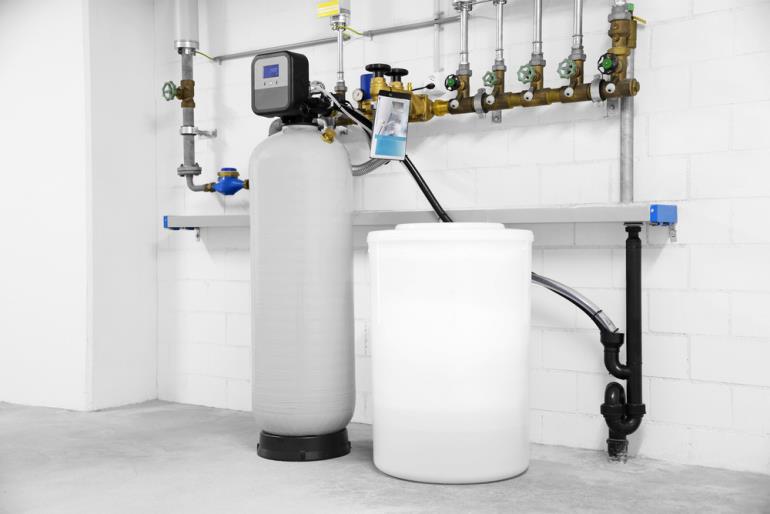
The global water softening systems market is on a steady growth path, valued at USD 13.9 billion in 2025 and projected to reach nearly USD 25.5 billion by 2035, expanding at a CAGR of 6.2%. This expansion is being driven by heightened demand from residential, commercial, and industrial sectors worldwide. With hard water issues continuing to compromise appliance durability, infrastructure efficiency, and household convenience, the need for effective water softening solutions has never been greater.
Hard water remains a particularly persistent challenge in regions such as the United States, India, Mexico, Saudi Arabia, and parts of Australia, where calcium and magnesium levels are naturally high. In these areas, water softening systems are no longer viewed as optional add-ons but as essential tools for maintaining water efficiency and long-term asset protection.
Full Market Report available for delivery. For purchase or customization, please request here: https://www.futuremarketinsights.com/reports/sample/rep-gb-881
Regional Market Trends
In North America, municipalities and developers are playing a major role in market expansion. For instance, Southern California advisories encourage the use of point-of-entry systems to safeguard plumbing and improve energy performance. In Arizona, developers are including softeners as standard in new homes, ensuring household appliances remain protected against scale.
Europe, home to some of the hardest water zones, is witnessing widespread adoption. In the United Kingdom, more than 60% of homes sit in hard water areas, leading to strong demand for household water softeners in cities like London and Birmingham. Germany has seen rising adoption of salt-free technologies in response to ecological regulations, while France and Italy are embedding softener use into building codes for new residential projects.
Asia’s rapid urban growth is another catalyst. Indian cities such as Bangalore and Ahmedabad are adopting large-scale softening systems in textile, laundry, and residential sectors due to groundwater hardness. In China, centralized units are being integrated into municipal infrastructure, aligning with the government’s environmental protection policies. Similarly, Southeast Asian markets are beginning to adopt compact softeners through urban water supply programs.
The Middle East presents a unique case where desalinated water is often still mineral-rich. The United Arab Emirates and Saudi Arabia are deploying advanced softeners to protect high-value infrastructure and hospitality projects.
Emerging markets in Africa and Latin America are also embracing these systems. In Nairobi, Lusaka, and Accra, gated residential communities are increasingly equipped with softeners to improve plumbing performance. Expanding middle-class housing in Lima and Bogotá is further driving growth.
Market by Application
The residential sector is expected to remain the leader in adoption, expanding at a CAGR of 6.5% through 2035. Growing concerns about water hardness in urban regions are turning water softeners into household essentials. Compact and wall-mounted units have become popular in high-density living spaces, while customized mono, multi-tube, and twin-tube systems are being tailored to varying levels of hardness.
Among designs, twin-cylinder systems are poised to dominate, particularly in high-hardness zones such as Northern India, the UK, and the Midwestern United States. Their ability to provide uninterrupted service makes them highly desirable for both households and commercial establishments.
Electric water softening systems are also projected to maintain the largest share, accounting for 65% in 2025. Their automated features, precision controls, and compatibility with smart home technologies continue to drive demand in North America and Europe. However, non-electric models remain important in rural and price-sensitive regions, particularly across Africa and Southeast Asia.
Challenges and Opportunities
The market does face challenges, particularly high installation costs and complex maintenance requirements, which can discourage adoption among small businesses and households. Poorly maintained systems risk operational inefficiency and rising costs, emphasizing the need for manufacturers to deliver modular, affordable, and automated solutions.
Opportunities are emerging from the rising demand for sustainable and intelligent systems. Smart technologies that offer real-time water monitoring, salt efficiency, and automated cycles are gaining momentum. With global emphasis on sustainability, salt-free and eco-friendly technologies are expected to define the next phase of growth.
Request a Draft Report Here: https://www.futuremarketinsights.com/reports/water-softening-systems-market
Country-Level Insights
In the United States, growth is supported by widespread hard water issues, especially in Texas, Arizona, and California. Commercial sectors such as hospitality and healthcare are significant adopters, while IoT-enabled systems are gaining popularity among residential consumers.
The UK continues to lead European adoption due to its challenging water hardness, particularly in London and southern regions. The hospitality sector is another strong driver as hotels and restaurants integrate softeners to enhance efficiency.
The European Union’s strict environmental standards are shaping a shift toward sustainable systems such as template-assisted crystallization (TAC) and electromagnetic softeners.
Japan and South Korea are also key growth markets. While Japan’s demand stems from high-purity requirements in industries such as semiconductors and pharmaceuticals, South Korea’s urbanization and smart home ecosystem are driving demand for central and connected water softening systems.
Leading Companies Driving Innovation
Global manufacturers are competing with both established brands and emerging players to shape the future of the water softening systems market.
Culligan International leads with AI-driven smart technologies, while A.O. Smith emphasizes compact, energy-efficient, and salt-free systems. EcoWater Systems is advancing Wi-Fi-enabled monitoring for sustainability-focused consumers. Kinetico has carved a niche with non-electric, dual-tank designs, while Pentair delivers eco-friendly regeneration systems aligned with smart home compatibility.
Other contributors such as 3M, GE Appliances, Whirlpool, Harvey Water Softeners, and Watts Water Technologies are driving affordability, industrial-scale adoption, and sustainability in water softening innovations. Together, they represent a mix of pioneers and new entrants shaping a competitive marketplace.
Related Reports:
Welding Consumables Market- https://www.futuremarketinsights.com/reports/welding-consumables-market
Process Automation and Instrumentation Market- https://www.futuremarketinsights.com/reports/process-automation-and-instrumentation-market
Gasoline Generator Market- https://www.futuremarketinsights.com/reports/gasoline-generator-market
About Future Market Insights (FMI)
Future Market Insights, Inc. (ESOMAR certified, recipient of the Stevie Award, and a member of the Greater New York Chamber of Commerce) offers profound insights into the driving factors that are boosting demand in the market. FMI stands as the leading global provider of market intelligence, advisory services, consulting, and events for the Packaging, Food and Beverage, Consumer Technology, Healthcare, Industrial, and Chemicals markets. With a vast team of over 400 analysts worldwide, FMI provides global, regional, and local expertise on diverse domains and industry trends across more than 110 countries.
Join us as we commemorate 10 years of delivering trusted market insights. Reflecting on a decade of achievements, we continue to lead with integrity, innovation, and expertise.
Contact Us:
Future Market Insights Inc.
Christiana Corporate, 200 Continental Drive,
Suite 401, Newark, Delaware – 19713, USA
T: +1-347-918-3531
For Sales Enquiries: sales@futuremarketinsights.com
Website: https://www.futuremarketinsights.com
LinkedIn| Twitter| Blogs | YouTube