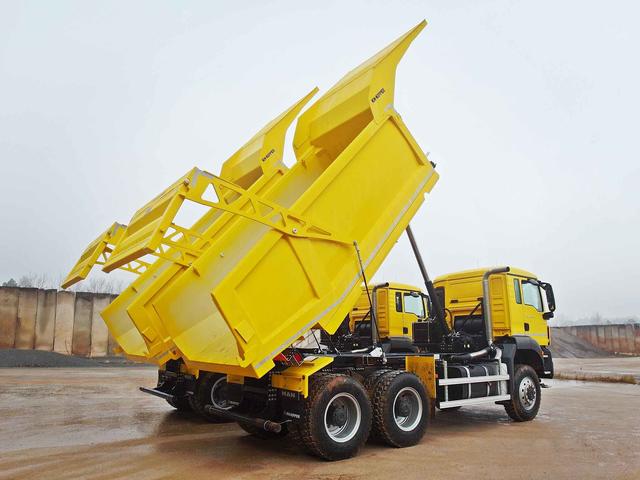
The global tipper body equipment market is entering a decade of transformative growth, with its value expected to nearly double from USD 33.68 billion in 2025 to USD 66.3 billion by 2035. This expansion, representing a steady CAGR of 7%, is being driven by the rise of construction, mining, and waste management operations worldwide. North America and Asia-Pacific are emerging as the most lucrative regions, propelled by large-scale infrastructure investments and the rapid adoption of automated, energy-efficient equipment.
As urbanization accelerates and emission regulations tighten, manufacturers are presented with both challenges and opportunities to redefine the next generation of tipper solutions. Technological integration—including IoT, predictive maintenance, and automation—is increasingly becoming a core differentiator in the market.
Click Here for More Information:- https://www.futuremarketinsights.com/reports/tipper-body-equipment-market
Innovation as a Driver of Efficiency and Sustainability
The push for operational efficiency and sustainability has prompted manufacturers to reimagine traditional tipper designs. Lightweight aluminum frames and advanced hydraulic systems are replacing conventional steel in select applications, offering improved payload efficiency and extended vehicle longevity. Meanwhile, electric and hybrid tipper trucks are moving from concept to reality, driven by government incentives and the global emphasis on low-emission transportation.
Beyond material innovation, AI-powered fleet monitoring and robotic unloading systems are revolutionizing operational workflows. By integrating these solutions, manufacturers can help clients minimize downtime, optimize lifecycle costs, and increase fleet reliability—critical factors in sectors where uptime and precision dictate profitability.
Construction and Mining: The Engines of Market Demand
Construction remains the dominant end-use segment, capturing nearly half of the market share at 48%. Tipper trucks are essential for transporting concrete, aggregates, soil, and debris across diverse job sites, underpinning project timelines and cost-efficiency. Similarly, the mining sector is driving adoption, as high-capacity, durable tipper solutions are indispensable for material extraction and transport in increasingly industrialized regions.
These sectors’ sustained expansion underscores the strategic value of offering customizable, high-performance tipper equipment. Reinforced structures, modular product configurations, and smart hydraulic systems enable manufacturers to meet evolving project requirements while supporting operational scalability.
Addressing Challenges with Smart Solutions
Despite the promising growth trajectory, manufacturers face critical hurdles. High initial investment and ongoing maintenance costs can be prohibitive, particularly for small- to mid-sized operators. To counter these barriers, companies are focusing on cost-efficient production methods, durable materials, and flexible financing options that make adoption more feasible for a wider range of clients.
Regulatory compliance represents another key challenge. As global standards tighten around emissions, safety, and load management, manufacturers are investing in eco-friendly designs, lightweight and recyclable materials, and fuel-efficient systems. These innovations not only ensure compliance but also position companies as leaders in the market for sustainable and smart tipper solutions.
Strategic Opportunities for Market Leaders
The future of tipper body equipment lies in the convergence of automation, smart technologies, and modular manufacturing. IoT-enabled sensors, AI-driven predictive maintenance, and real-time fleet analytics allow operators to reduce risks, enhance efficiency, and achieve operational transparency. Manufacturers embracing these solutions can deliver tangible value, unlocking new revenue streams in fleet-intensive industries such as ports, industrial transport corridors, and mega infrastructure projects.
Government initiatives are further amplifying these opportunities. Incentives for electric vehicle adoption, infrastructure modernization, and smart city development create favorable conditions for the widespread deployment of high-tech tipper solutions. By aligning product offerings with these programs, manufacturers can expand market penetration and strengthen brand positioning in both developed and emerging economies.
Regional Outlook: Where Growth Will Surge
In the United States, the market is projected to grow at a CAGR of 7.2%, supported by infrastructure development, mining expansion, and technological integration in tipper designs. The UK anticipates 6.8% growth, driven by green initiatives and smart city projects. The European Union is forecasted at 7.1%, propelled by sustainable transportation policies and fleet digitalization. Asia’s major players—China and India—are leading with CAGRs of 7.5% and 7.8%, respectively, benefiting from rapid urbanization, megaprojects, and adoption of electric and hybrid vehicles.
Competitive Landscape: Innovation Fuels Market Leadership
Hyva Global dominates the market with a focus on hydraulic tipping systems, payload optimization, and sustainability. Meiller Kipper and Schmitz Cargobull are leading in lightweight, high-strength solutions enhanced with telematics and automation. Crysteel Manufacturing emphasizes customizable, energy-efficient solutions for heavy-duty applications, while Thompsons Group excels in steel tipper bodies with reinforced, wear-resistant designs. Collectively, these companies—and other innovators like Marrel SAS, JOST Werke AG, Fruehauf, Zetterbergs, and Komatsu—are setting new benchmarks for operational efficiency, durability, and intelligent design.
Get Sample Report: – https://www.futuremarketinsights.com/reports/sample/rep-gb-1728
Positioning for a Future of Sustainable, Smart Material Handling
As the tipper body equipment market continues to evolve, manufacturers that prioritize innovation, sustainability, and digital transformation are best positioned to capture growth. From construction to mining, from electric mobility to AI-powered fleet management, the market presents a wealth of opportunities for companies that can combine durability, efficiency, and smart technology into their solutions.
With the market expected to reach USD 66.3 billion by 2035, manufacturers have a clear incentive to invest in advanced materials, modular designs, and intelligent systems. Those who embrace these trends will not only support the growth of global infrastructure and industrial operations but will also define the next generation of high-performance, sustainable tipper body solutions.
About Future Market Insights (FMI)
Future Market Insights, Inc. (ESOMAR certified, recipient of the Stevie Award, and a member of the Greater New York Chamber of Commerce) offers profound insights into the driving factors that are boosting demand in the market. FMI stands as the leading global provider of market intelligence, advisory services, consulting, and events for the Packaging, Food and Beverage, Consumer Technology, Healthcare, Industrial, and Chemicals markets. With a vast team of over 400 analysts worldwide, FMI provides global, regional, and local expertise on diverse domains and industry trends across more than 110 countries.
Contact Us:
Future Market Insights Inc.
Christiana Corporate, 200 Continental Drive,
Suite 401, Newark, Delaware – 19713, USA
T: +1-347-918-3531
For Sales Enquiries: sales@futuremarketinsights.com
Website: https://www.futuremarketinsights.com
LinkedIn| Twitter| Blogs | YouTube