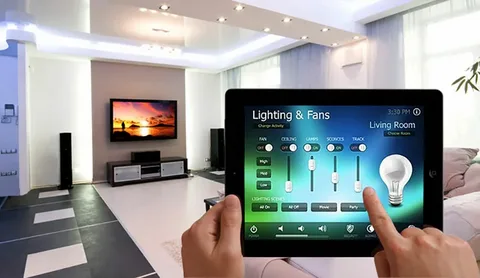
The Wireless Lighting Market is estimated to be valued at USD 146.2 billion in 2025 and is projected to reach USD 205.8 billion by 2035, registering a compound annual growth rate (CAGR) of 3.5% over the forecast period.
The wireless lighting market is gaining traction as the demand for intelligent, energy-efficient, and connected lighting systems continues to grow. Leveraging wireless communication technologies, these solutions enable seamless control, automation, and integration with smart ecosystems. From residential and commercial spaces to industrial facilities and public infrastructure, wireless lighting is transforming how spaces are illuminated, managed, and optimized. Its role in advancing sustainability, convenience, and connected lifestyles underscores its growing significance across industries.
Market Overview
Wireless lighting systems utilize technologies such as Wi-Fi, Bluetooth, Zigbee, and Z-Wave to provide flexible and remote-controlled illumination. These solutions eliminate the need for extensive wiring, offering cost-effective installation and scalable deployment. Users can manage lighting via smartphones, voice assistants, and centralized systems, making it ideal for both individual homes and large-scale smart buildings. With applications spanning smart homes, offices, retail outlets, warehouses, and outdoor lighting, wireless lighting is revolutionizing traditional illumination by blending functionality with intelligence.
Get Ahead with Our Report: Request Your Sample Now!
Key Market Drivers
The rising adoption of smart homes and smart city projects is a key driver for the wireless lighting market. Consumers are increasingly seeking convenient, customizable, and energy-saving solutions that enhance lifestyle and reduce utility costs. In the commercial sector, wireless lighting supports sustainability goals by enabling efficient energy management and adaptive lighting controls. Industrial automation is further boosting demand, as factories and warehouses integrate wireless lighting into smart infrastructure. Additionally, the push toward eco-friendly solutions and compliance with green building standards is propelling market growth.
Emerging Trends
Integration with the Internet of Things (IoT) and artificial intelligence is reshaping wireless lighting solutions. Devices are becoming capable of learning user behavior, adapting brightness, and adjusting color temperatures automatically. The use of advanced sensors for occupancy detection, daylight harvesting, and predictive maintenance is expanding applications. Wireless lighting is also being combined with security, HVAC, and other smart building systems to create unified platforms. Moreover, outdoor wireless lighting integrated with renewable energy sources is gaining momentum in sustainable urban development projects.
Regional Insights
North America remains a major hub for the wireless lighting market, driven by strong adoption of smart home technologies and commercial building automation. Europe is experiencing steady demand, supported by stringent energy efficiency regulations and widespread smart city initiatives. The Asia-Pacific region is emerging as a fast-growing market, fueled by rapid urbanization, expanding middle-class populations, and rising investments in connected infrastructure. Latin America and the Middle East are also witnessing adoption, as governments and enterprises prioritize cost-effective, scalable, and sustainable lighting solutions.
Competitive Landscape
The competitive landscape of the wireless lighting market features lighting manufacturers, smart home solution providers, and IoT technology companies. Vendors are focusing on developing interoperable, user-friendly, and energy-efficient systems that integrate seamlessly with diverse platforms. Partnerships with construction companies, utility providers, and technology firms are expanding adoption across residential, commercial, and industrial segments. Differentiation is achieved through innovations in control interfaces, design flexibility, and integration with broader smart ecosystems. Companies are also investing in expanding product portfolios to cater to both premium and budget-conscious markets.
Catapult Your Strategy: Secure Key Insights with Our Report Checkout!
Future Outlook
The future of the wireless lighting market will be shaped by advancements in connectivity, sustainability, and automation. As consumers and businesses increasingly embrace smart and eco-friendly technologies, wireless lighting will play a central role in enabling efficient energy use and enhancing user experience. Integration with renewable energy, AI-driven automation, and next-generation IoT platforms will expand its applications further. With growing emphasis on intelligent infrastructure and connected living, wireless lighting will continue to illuminate the path toward smarter and more sustainable environments.
About Future Market Insights (FMI)
Future Market Insights, Inc. (ESOMAR certified, recipient of the Stevie Award, and a member of the Greater New York Chamber of Commerce) offers profound insights into the driving factors that are boosting demand in the market. FMI stands as the leading global provider of market intelligence, advisory services, consulting, and events for the Packaging, Food and Beverage, Consumer Technology, Healthcare, Industrial, and Chemicals markets. With a vast team of 400 analysts worldwide, FMI provides global, regional, and local expertise on diverse domains and industry trends across more than 110 countries.
Contact Us:
Future Market Insights Inc.
Christiana Corporate, 200 Continental Drive,
Suite 401, Newark, Delaware – 19713, USA
T: +1-845-579-5705
For Sales Enquiries: sales@futuremarketinsights.com
Website: https://www.futuremarketinsights.com
LinkedIn| Twitter| Blogs | YouTube