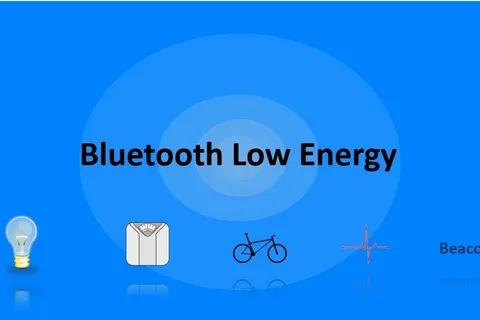
The bluetooth low energy market is expected to experience phenomenal growth at a market size of USD 12.1 billion in 2025 and USD 39.1 billion in 2035. The industry is expected to grow at a CAGR of 12.5% from 2025 to 2035 driven by growing usage of IoT devices, smart home applications, and wearable technology that demand low-power, high-efficiency wireless connectivity.
The Bluetooth Low Energy (BLE) market is gaining strong traction as demand for energy-efficient, reliable, and secure wireless communication continues to grow. Known for its low power consumption and versatility, BLE has become a preferred connectivity standard in consumer electronics, healthcare, automotive, and industrial IoT. With its ability to enable wireless communication while extending battery life, BLE plays a vital role in advancing the connected device ecosystem.
Market Overview
Bluetooth Low Energy is a wireless communication protocol designed to provide efficient data transfer while minimizing energy usage. Unlike traditional Bluetooth, BLE is optimized for intermittent transmission, making it ideal for battery-powered devices. Its cost-effectiveness, low energy requirements, and ability to support multiple device connections have positioned it as a key enabler of the Internet of Things (IoT). From smart wearables and medical monitoring systems to industrial sensors and automotive applications, BLE continues to power innovation across industries.
Get Ahead with Our Report: Request Your Sample Now!
Key Market Drivers
The rapid expansion of IoT devices is one of the strongest drivers for the BLE market. As smart homes, connected healthcare solutions, and wearable technology become more widespread, the demand for energy-efficient connectivity solutions has surged. In the automotive sector, BLE is increasingly used in keyless entry, infotainment systems, and vehicle-to-device communication. Industrial automation also benefits from BLE, enabling wireless sensor networks, predictive maintenance, and real-time monitoring. The growing need for secure, low-latency, and energy-efficient communication protocols is further accelerating adoption.
Emerging Trends
BLE technology is evolving with the introduction of enhanced specifications that support higher data rates, longer ranges, and improved reliability. The integration of BLE with advanced microcontrollers and chipsets is expanding its application scope. Mesh networking capabilities are enabling BLE devices to communicate in large-scale smart environments, such as buildings and factories. Healthcare and fitness wearables are driving innovation in energy-efficient data collection, while smart retail and asset-tracking solutions highlight BLE’s adaptability. Additionally, the convergence of BLE with emerging technologies such as AI, cloud platforms, and 5G is strengthening its role in connected ecosystems.
Regional Insights
North America remains a key market for BLE, supported by high adoption of connected devices, advanced healthcare solutions, and smart home technologies. Europe is experiencing growth driven by automotive innovation, smart manufacturing, and digital healthcare initiatives. The Asia-Pacific region is emerging as a dominant hub, fueled by large-scale production of consumer electronics, rapid urbanization, and increasing demand for affordable smart devices. Latin America and the Middle East are also witnessing adoption as digital transformation accelerates and demand for connected solutions rises.
Competitive Landscape
The BLE market features semiconductor manufacturers, IoT solution providers, and consumer electronics companies working to deliver innovative wireless solutions. Vendors are investing in the development of low-power chipsets, integrated modules, and enhanced security features. Strategic partnerships with healthcare, automotive, and smart home device manufacturers are expanding the reach of BLE-enabled solutions. Companies are focusing on differentiation through scalability, interoperability, and advanced features such as mesh networking and extended range.
Exhaustive Market Report: A Complete Study
Future Outlook
The future of the Bluetooth Low Energy market will be shaped by continued advancements in IoT, healthcare technology, and smart environments. As the number of connected devices grows exponentially, BLE will remain central to enabling efficient, secure, and energy-conscious communication. Emerging use cases in automotive, industrial automation, and next-generation wearables will further drive adoption. With its scalability, low-power design, and evolving capabilities, BLE will continue to be a cornerstone in the evolution of wireless connectivity and the expansion of intelligent, connected ecosystems.
About Future Market Insights (FMI)
Future Market Insights, Inc. (ESOMAR certified, recipient of the Stevie Award, and a member of the Greater New York Chamber of Commerce) offers profound insights into the driving factors that are boosting demand in the market. FMI stands as the leading global provider of market intelligence, advisory services, consulting, and events for the Packaging, Food and Beverage, Consumer Technology, Healthcare, Industrial, and Chemicals markets. With a vast team of 400 analysts worldwide, FMI provides global, regional, and local expertise on diverse domains and industry trends across more than 110 countries.
Contact Us:
Future Market Insights Inc.
Christiana Corporate, 200 Continental Drive,
Suite 401, Newark, Delaware – 19713, USA
T: +1-845-579-5705
For Sales Enquiries: sales@futuremarketinsights.com
Website: https://www.futuremarketinsights.com
LinkedIn| Twitter| Blogs | YouTube