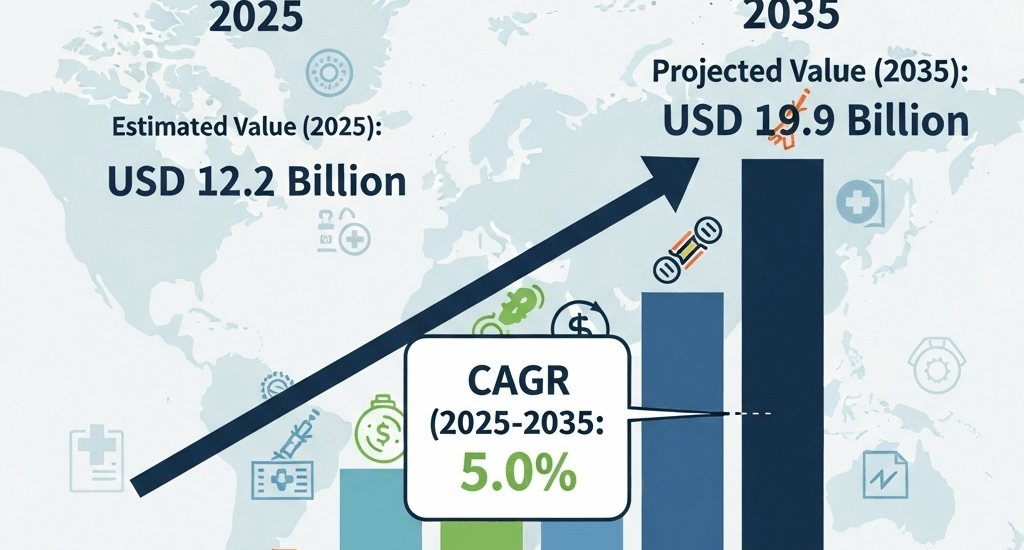
The global Anaplastic Large Cell Lymphoma (ALCL) Therapeutics Market is projected to experience robust growth, expanding from USD 12.2 billion in 2025 to USD 19.9 billion by 2035, reflecting a compound annual growth rate (CAGR) of 5.0%. This growth trajectory underscores the rising demand for innovative therapies, improved diagnostic capabilities, and enhanced cancer care infrastructure worldwide.
Industry Outlook and Growth Drivers
The accelerating adoption of personalized medicine and targeted therapies is reshaping the ALCL treatment landscape. Advances in molecular diagnostics have improved subtype differentiation, enabling clinicians to design precise treatment regimens that boost patient outcomes while minimizing systemic toxicity.
Key factors driving market expansion include:
- Increased early detection rates due to improved screening programs
- Growing prevalence of lymphoproliferative disorders
- Rising healthcare expenditure and access to oncology services in developing economies
- Pipeline developments in immunotherapy, monoclonal antibodies, and novel chemotherapeutic combinations
Furthermore, the integration of advanced treatment options across both pediatric and adult populations signals a paradigm shift toward curative, long-term disease management strategies.
Click Here for More Information:- https://www.futuremarketinsights.com/reports/anaplastic-large-cell-lymphoma-alcl-therapeutics-market
Segmental Analysis: Primary ALCL Dominates
By disease type, Primary ALCL is expected to lead the market, accounting for 55.6% of total revenue by 2025. This dominance stems from the high incidence of primary systemic and cutaneous forms, particularly among pediatric and young adult cohorts. Enhanced clinical awareness and standardized protocols have accelerated the adoption of treatments tailored for primary ALCL.
In terms of treatment type, chemotherapy remains the backbone, projected to contribute 38.9% of market revenue by 2025. Despite breakthroughs in targeted therapies, established chemotherapy regimens—such as CHOP (Cyclophosphamide, Doxorubicin, Vincristine, and Prednisone)—continue to serve as the first-line approach. These regimens are increasingly combined with emerging agents like brentuximab vedotin, enhancing progression-free survival rates.
Pipeline Innovations and Future Therapeutic Landscape
Several promising drugs are under investigation, including Alisertib (MLN8237), Bortezomib (Velcade), Crizotinib (Xalkori), and combinations of brentuximab vedotin with chemotherapy. These developments are expected to revolutionize the ALCL therapeutic paradigm by offering more effective, less toxic treatment options for both ALK-positive and ALK-negative patient populations.
ALK-positive ALCL, often diagnosed in younger patients, typically responds well to chemotherapy but exhibits relapse rates within five years. In contrast, ALK-negative ALCL, prevalent among patients aged 55 and older, often necessitates aggressive strategies like stem cell transplantation following remission. This clinical complexity continues to drive innovation in precision medicine.
Regional Insights: North America Leads, Asia-Pacific Emerges
North America is poised to maintain market leadership due to its strong healthcare infrastructure, high awareness levels, and robust clinical research activity. Meanwhile, Asia-Pacific represents the fastest-growing region, driven by rising cancer incidence, expanding healthcare access, and government initiatives to improve oncology care.
Globally, over 60% of new cancer cases occur in Africa, Asia, and Central and South America, with these regions accounting for 70% of cancer-related deaths. As cancer care capabilities improve in these geographies, significant growth opportunities are emerging for ALCL therapeutic providers.
Competitive Landscape: Key Players and Benchmarking
The ALCL therapeutics market is highly competitive, with leading players focusing on strategic collaborations, clinical trials, and product innovation. Major companies include:
- Takeda Pharmaceutical Company Limited
- Teva Pharmaceutical Industries Ltd.
- Seattle Genetics, Inc.
- Merck Sharp & Dohme Corp.
- Celgene Corporation
- Valeant Pharmaceuticals North America LLC
Takeda and Seattle Genetics continue to dominate through strong portfolios in antibody-drug conjugates and immunotherapies, while Merck and Celgene leverage their expertise in oncology R&D to capture emerging opportunities.
Get Sample Report: – https://www.futuremarketinsights.com/reports/sample/rep-gb-1655
Market Outlook: A Decade of Strong Growth
The next decade promises transformative advancements in ALCL therapeutics, fueled by sustained investments in oncology research, strategic industry collaborations, and the growing incorporation of biomarker-driven treatment strategies. With an expected CAGR of 5.0% through 2035, stakeholders can anticipate a market ripe for innovation and expansion.
About Future Market Insights (FMI)
Future Market Insights, Inc. (ESOMAR certified, recipient of the Stevie Award, and a member of the Greater New York Chamber of Commerce) offers profound insights into the driving factors that are boosting demand in the market. FMI stands as the leading global provider of market intelligence, advisory services, consulting, and events for the Packaging, Food and Beverage, Consumer Technology, Healthcare, Industrial, and Chemicals markets. With a vast team of over 400 analysts worldwide, FMI provides global, regional, and local expertise on diverse domains and industry trends across more than 110 countries.
Contact Us:
Future Market Insights Inc.
Christiana Corporate, 200 Continental Drive,
Suite 401, Newark, Delaware – 19713, USA
T: +1-347-918-3531
For Sales Enquiries: sales@futuremarketinsights.com
Website: https://www.futuremarketinsights.com
LinkedIn| Twitter| Blogs | YouTube