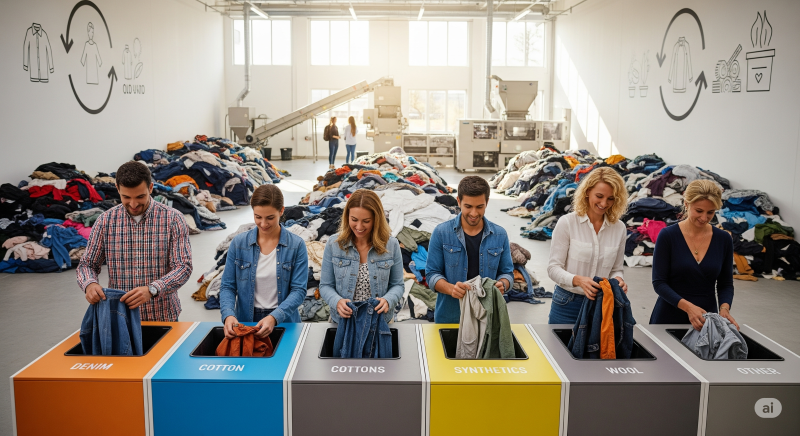
The global push toward sustainability has led to a remarkable shift in industries, with one sector gaining particular attention for its environmental impact: the clothing recycling market. As the world continues to grapple with waste management issues and the growing threat of climate change, clothing recycling has emerged as a crucial component of the circular economy. According to recent industry reports, the clothing recycling market is projected to reach USD 7,983 million by 2025 and an impressive USD 22,062 million by 2035, demonstrating a robust compound annual growth rate (CAGR) of 10.7% over the next decade.
Discover key market opportunities – Request your sample report now! https://www.futuremarketinsights.com/reports/sample/rep-gb-15448
Understanding the Market Dynamics
The growing demand for sustainable fashion, combined with increasing consumer awareness about the environmental impact of fast fashion, has catalyzed the development of the clothing recycling market. The apparel industry is one of the largest contributors to global waste, with millions of tons of textiles being discarded annually. Traditional waste management solutions have proven ineffective in addressing this issue, leading to the rise of clothing recycling as a viable alternative.
Clothing recycling involves the process of recovering fibers from used garments and repurposing them into new materials, either through mechanical or chemical recycling methods. The market for recycled textiles is expanding as fashion companies, governments, and non-profit organizations work to reduce the environmental footprint of textile waste.
Key Drivers of Growth
Several factors are fueling the growth of the clothing recycling market, including:
- Increasing Consumer Awareness: Modern consumers are becoming more conscious of the environmental and social implications of their purchasing habits. As a result, many are turning to sustainable alternatives, such as second-hand clothing and recycled materials. This shift in consumer behavior is pushing brands to adopt circular practices and engage in textile recycling initiatives.
- Government Regulations and Policies: Governments around the world are implementing stricter waste management policies, encouraging recycling efforts across various sectors, including textiles. The European Union, for example, has set ambitious targets for textile recycling, aiming to make all textile waste recyclable by 2030. Similarly, the U.S. has introduced programs that promote the recycling of clothing and textiles to reduce landfill contributions.
- Technological Advancements: Recent breakthroughs in recycling technologies are enhancing the efficiency of textile recycling processes. Innovations such as chemical recycling, which can break down garments to their base materials, are improving the quality of recycled fibers and making them more viable for use in new garments. As technology advances, the cost of recycling decreases, making it a more attractive option for manufacturers.
- Corporate Commitment to Sustainability: Major fashion brands are increasingly integrating sustainability into their business models. Companies like H&M, Patagonia, and Levi’s have implemented clothing recycling programs, encouraging consumers to return used garments for recycling. This not only helps reduce textile waste but also promotes a brand image rooted in environmental responsibility.
- Circular Economy Initiatives: The circular economy model, which emphasizes reducing waste and maximizing the lifespan of products, is being widely adopted across industries. Clothing recycling fits perfectly into this framework, as it promotes the reuse of textile fibers, reducing the need for virgin materials and minimizing environmental damage caused by production.
The Market’s Future Outlook
The clothing recycling market’s projected growth from USD 7,983 million in 2025 to USD 22,062 million by 2035, with a CAGR of 10.7%, suggests a vibrant future for the industry. By 2035, the market will likely witness an increase in both supply and demand for recycled clothing materials, driven by continued advancements in technology and an increasingly supportive regulatory environment.
As the market matures, we can expect a surge in investment from both public and private sectors, particularly in research and development for advanced recycling technologies. The proliferation of recycling infrastructure and the expansion of collection networks will also play a crucial role in ensuring that more textiles are recycled and reused.
Challenges to Overcome
Despite its promising outlook, the clothing recycling market faces several challenges. One of the most significant hurdles is the quality of recycled textiles. Currently, only a small percentage of used garments are recycled into high-quality fibers, and much of the material ends up in landfills. The scalability of recycling technologies is another issue, as existing methods often fail to handle the vast volumes of textile waste generated annually.
Additionally, consumer engagement remains a challenge. While some brands and organizations have made strides in promoting clothing recycling, a large portion of the population still lacks awareness or access to recycling programs. To overcome these barriers, it will be essential to invest in educational campaigns and enhance the accessibility of recycling systems.
Top Segments Studied in the Clothing Recycling Market Research Report
By Type:
- Cotton Recycling
- Nylon Recycling
- Wool Recycling
- Polyester Recycling
- Other Fiber Recycling
By End-use:
- Apparel
- Industrial
- Home Furnishings
- Non-woven
- Other
By Waste Type:
- Pre-consumer
- Post-consumer
By Recycling Type:
- Mechanical Recycling
- Chemical Recycling
By Distribution Channel:
- Online Channel
- Retail & Departmental Store
By Region:
- North America
- Latin America
- Europe
- East Asia
- South Asia
- Oceania
- Middle East and Africa
Access the complete industry report—buy now! https://www.futuremarketinsights.com/checkout/15448
About Future Market Insights (FMI)
Future Market Insights, Inc. (ESOMAR certified, recipient of the Stevie Award, and a member of the Greater New York Chamber of Commerce) offers profound insights into the driving factors that are boosting demand in the market. FMI stands as the leading global provider of market intelligence, advisory services, consulting, and events for the Packaging, Food and Beverage, Consumer Technology, Healthcare, Industrial, and Chemicals markets. With a vast team of over 400 analysts worldwide, FMI provides global, regional, and local expertise on diverse domains and industry trends across more than 110 countries.
Contact Us:
Future Market Insights Inc.
Christiana Corporate, 200 Continental Drive,
Suite 401, Newark, Delaware – 19713, USA
T: +1-347-918-3531
For Sales Enquiries: sales@futuremarketinsights.com
Website: https://www.futuremarketinsights.com
LinkedIn| Twitter| Blogs | YouTube