The global Aerial Imaging market is projected to grow significantly, from USD 4,854.7 Million in 2025 to USD 16,334.3 Million by 2035 an it is reflecting a strong CAGR of 12.9%.
The rising deployment of advanced UAVs and high-resolution imaging technologies presents the opportunities for growth market. The integration of thermal and HD cameras with UAVs help to enhances capabilities in different sectors defense and security to urban planning and disaster management.
The aerial imaging market is undergoing a transformative evolution, fueled by the increasing demand for high-resolution geospatial data across industries. From urban planning and agriculture to insurance and infrastructure, aerial imaging provides a bird’s-eye view that enables faster, smarter, and more informed decisions. With the rise of advanced imaging technologies, unmanned aerial systems, and AI-driven analytics, aerial imaging is reshaping how organizations perceive and interact with the world around them.
Delivering Precision and Context Across Sectors
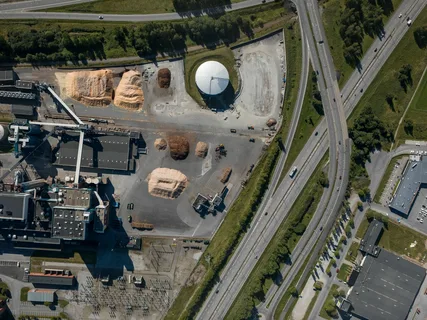
Aerial imaging offers unmatched visual intelligence by capturing high-resolution imagery from aircraft, drones, and satellites. This data provides context-rich insights for land surveying, asset management, disaster response, and environmental monitoring. Whether assessing crop health, detecting structural damage, or planning new developments, aerial imagery enables stakeholders to make data-driven decisions with greater precision and efficiency.
Get Ahead with Our Report: Request Your Sample Now!
Enabling Smarter Urban and Infrastructure Planning
Governments and urban planners increasingly rely on aerial imaging to manage the complexities of urban development. High-quality geospatial data supports zoning analysis, traffic flow optimization, and infrastructure maintenance. With orthophotos and 3D models, planners can visualize terrain, identify growth patterns, and assess environmental impact—helping cities become more resilient, efficient, and sustainable.
Revolutionizing Agriculture and Environmental Monitoring
In the agricultural sector, aerial imaging empowers farmers to monitor crop health, soil variability, and irrigation patterns with pinpoint accuracy. Multispectral and hyperspectral imaging technologies allow early detection of pests, disease, and nutrient deficiencies. Environmental agencies also leverage aerial imagery to track deforestation, monitor water bodies, and assess biodiversity, supporting more proactive environmental stewardship.
Enhancing Emergency Response and Public Safety
Aerial imaging plays a crucial role in disaster preparedness and emergency response. During natural disasters, aerial views provide real-time assessments of damage, helping agencies coordinate rescue efforts and resource allocation. Law enforcement and firefighting teams use aerial footage for surveillance, crowd monitoring, and situational awareness—ensuring safety while minimizing risk on the ground.
Optimizing Asset Management and Insurance Assessments
Utilities and insurance companies use aerial imaging to streamline inspection processes and reduce field deployment costs. From power lines and pipelines to rooftops and roadways, aerial imagery helps identify wear, damage, and anomalies quickly. Insurers also utilize this data for risk assessment, claims verification, and disaster modeling, improving both accuracy and customer satisfaction.
Unlocking New Opportunities Through AI and Data Analytics
Artificial intelligence and machine learning are enhancing the value of aerial imagery by enabling automated image classification, object detection, and change analysis. These technologies transform raw aerial data into actionable insights at scale. AI-powered analytics support predictive maintenance, anomaly detection, and long-term trend forecasting across sectors—from real estate to mining.
Expanding Applications Through Drone Technology
The proliferation of drones has expanded access to aerial imaging for organizations of all sizes. Drones offer flexible, cost-effective solutions for frequent, high-resolution data collection across difficult terrains and remote locations. As drone technology becomes more advanced and autonomous, its integration with aerial imaging platforms opens new possibilities for real-time monitoring and dynamic mapping.
Improving Accessibility Through Cloud-Based Platforms
Cloud computing and software-as-a-service (SaaS) platforms are democratizing access to aerial imagery and analytics. Organizations can now access and analyze aerial data through intuitive interfaces without the need for specialized hardware or deep technical expertise. This shift is accelerating adoption across industries, driving operational efficiency and enhancing decision-making capabilities.
Catapult Your Strategy: Secure Key Insights with Our Report Checkout!
Addressing Privacy, Regulation, and Data Security
With growing adoption comes the responsibility to address privacy concerns and regulatory compliance. Governments are introducing policies to govern aerial data collection and usage. Market players are investing in secure data storage, encryption, and ethical practices to ensure responsible use of aerial imagery while maintaining public trust.
Future Outlook
The aerial imaging market is poised for robust growth as the need for visual intelligence and spatial awareness continues to rise. As imaging technologies become more sophisticated and AI-driven analytics more accessible, aerial imaging will increasingly power the digital transformation of industries. From enabling precision agriculture and smart cities to supporting emergency response and infrastructure resilience, aerial imaging is shaping a future where visual data becomes a strategic asset in every decision.
About Future Market Insights (FMI)
Future Market Insights, Inc. (ESOMAR certified, recipient of the Stevie Award, and a member of the Greater New York Chamber of Commerce) offers profound insights into the driving factors that are boosting demand in the market. FMI stands as the leading global provider of market intelligence, advisory services, consulting, and events for the Packaging, Food and Beverage, Consumer Technology, Healthcare, Industrial, and Chemicals markets. With a vast team of 400 analysts worldwide, FMI provides global, regional, and local expertise on diverse domains and industry trends across more than 110 countries.
Contact Us:
Future Market Insights Inc.
Christiana Corporate, 200 Continental Drive,
Suite 401, Newark, Delaware – 19713, USA
T: +1-845-579-5705
For Sales Enquiries: sales@futuremarketinsights.com
Website: https://www.futuremarketinsights.com
LinkedIn| Twitter| Blogs | YouTube