

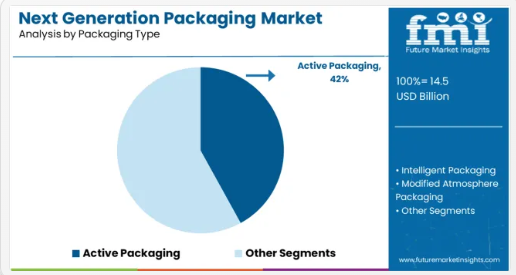
The global next generation packaging market is projected to grow from USD 14.5 billion in 2025 to USD 27 billion by 2035, exhibiting a robust Compound Annual Growth Rate (CAGR) of 6.4%. This rapid expansion is being fueled by the integration of smart technologies, a surge in demand for sustainable materials, and the increasing need for enhanced product protection and traceability across key industries.
Next generation packaging is transforming from a passive protective layer into an active and intelligent component of the supply chain. Solutions equipped with sensors, data chips, and real-time freshness indicators are helping to monitor product quality, improve shelf life, and reduce spoilage, particularly in sensitive sectors like food, beverages, and pharmaceuticals.
Request Your Sample and Stay Ahead with Our Insightful Report! https://www.futuremarketinsights.com/reports/sample/rep-gb-709
Leading Segments and Innovations Driving Growth
- Active Packaging Leads the Charge: Active packaging is the top-performing segment, anticipated to hold a 42% market share by 2025. This category includes advanced technologies such as oxygen scavengers, antimicrobial films, and moisture control systems that interact directly with the package contents to extend shelf life and ensure product safety.
- Food and Beverages is the Largest Application: The food and beverages segment is the largest application, projected to account for 36% of the market in 2025. This growth is driven by consumer demand for freshness, convenience, and safety, which is leading to the widespread adoption of functional packaging designs for ready-to-eat meals, fresh produce, and organic products.
- Smart Labels Transform Cold Chain Logistics: The market is seeing a significant rise in the adoption of smart labels and time-temperature indicators (TTIs). Sales of these labels grew 43% year-over-year, with retailers reporting a 28% drop in spoilage-related returns on meat products using these solutions. The use of NFC and QR-enabled tags is also revolutionizing traceability and anti-counterfeit measures.
- Antimicrobial Films Reduce Waste: The use of antimicrobial films in fresh produce expanded by 39% in 2025. This innovation has led to a 22% extension in shelf life and a 34% drop in post-distribution waste in trial rollouts, demonstrating a clear return on investment for companies focused on reducing waste and improving hygiene.
Regional Dynamics and Strategic Influence
Global growth is being shaped by a mix of technological investment and regulatory mandates across key regions:
- South Korea Leads in Innovation: With a 6.4% CAGR, South Korea is the fastest-growing country. Its market is driven by strong government support for R&D in smart labeling and active packaging, particularly for cold-chain logistics and the rapidly expanding cosmetics and consumer electronics sectors.
- United Kingdom and United States Evolve: The United Kingdom (6.2% CAGR) is seeing a transformation driven by sustainability mandates and a push for intelligent, recyclable packaging. The United States (6.1% CAGR) is expanding its market through increased investment in automation and IoT-integrated packaging for food, healthcare, and e-commerce.
- Japan Adapts to Consumer Needs: Japan’s market is growing at a 5.9% CAGR, with a focus on smart packaging that balances minimalism with embedded intelligence. Convenience store chains are piloting freshness-indicator smart films and traceability systems to cater to consumer demand and optimize logistics.
To Gain More Insights about this Research, Visit! https://www.futuremarketinsights.com/reports/next-generation-packaging-technology-market
Competitive Landscape and Industry Consolidation
The next generation packaging market is moderately consolidated, with innovation-driven leaders shaping the competitive landscape. Amcor plc holds a leading 20% market share and is at the forefront of bio-based and recyclable polymer solutions. Other major players include Avery Dennison and Sealed Air Corporation, which specialize in smart-label and barrier technologies.
Recent industry news highlights a trend toward consolidation to scale operations and innovation. In November 2024, Amcor announced a stock-only merger with Berry Global valued at USD 8.4 billion, a move that is expected to generate significant annual synergies and strengthen its position in consumer, healthcare, and sustainable packaging.
About Future Market Insights (FMI)
Future Market Insights, Inc. (ESOMAR certified, recipient of the Stevie Award, and a member of the Greater New York Chamber of Commerce) offers profound insights into the driving factors that are boosting demand in the market. FMI stands as the leading global provider of market intelligence, advisory services, consulting, and events for the Packaging, Food and Beverage, Consumer Technology, Healthcare, Industrial, and Chemicals markets. With a vast team of over 400 analysts worldwide, FMI provides global, regional, and local expertise on diverse domains and industry trends across more than 110 countries.
Contact Us:
Future Market Insights Inc.
Christiana Corporate, 200 Continental Drive,
Suite 401, Newark, Delaware – 19713, USA
T: +1-347-918-3531
For Sales Enquiries: sales@futuremarketinsights.com
Website: https://www.futuremarketinsights.com
LinkedIn| Twitter| Blogs | YouTube




