The Global Semiconductor Wafer market is projected to grow significantly, from 24,362.2 million in 2025 to 42,987.0 million by 2035, and it is reflecting a strong CAGR of 4.7%.
The semiconductor wafer market is experiencing robust growth as the demand for high-performance, energy-efficient, and miniaturized electronic components continues to accelerate across industries. Semiconductor wafers serve as the foundational substrate for integrated circuits and microchips that power everything from smartphones and vehicles to data centers and industrial automation systems. As technological innovation advances rapidly, semiconductor wafers are playing an increasingly vital role in shaping the future of digital ecosystems.
Fueling Innovation in Consumer Electronics and Computing
With the rising demand for faster, smarter, and more compact devices, semiconductor wafers are essential for manufacturing high-density integrated circuits. These wafers enable the fabrication of processors, memory chips, and system-on-chip (SoC) components that drive innovation in smartphones, tablets, wearables, and computing devices. The shift toward edge computing and AI-driven applications further amplifies the need for powerful yet compact chips produced on advanced wafer technologies.
Get Ahead with Our Report: Request Your Sample Now!
Supporting Automotive Electrification and ADAS Technologies
In the automotive industry, semiconductor wafers are used to produce components for electric vehicles, power management systems, and advanced driver-assistance systems (ADAS). These chips control battery systems, inverters, infotainment units, and safety features, contributing to improved efficiency, intelligence, and autonomy in modern vehicles. As the transition to electric and software-defined vehicles accelerates, demand for automotive-grade wafers continues to rise.
Enabling High-Speed Connectivity and 5G Infrastructure
Next-generation wireless technologies rely on semiconductor wafers to produce RF chips, baseband processors, and networking components that enable high-speed communication. The rollout of 5G networks and the proliferation of connected devices require wafers that can support higher frequencies, faster data processing, and lower power consumption. This trend is driving innovation in compound semiconductors such as gallium arsenide (GaAs) and silicon carbide (SiC).
Advancing Semiconductor Fabrication with Smaller Nodes
As the semiconductor industry pushes the limits of Moore’s Law, wafer manufacturing is evolving to support smaller process nodes. Advanced wafers enable the production of chips with greater transistor density, improved performance, and reduced power usage. Technologies such as extreme ultraviolet (EUV) lithography and wafer thinning are being leveraged to meet the demands of high-end computing and mobile applications.
Strengthening AI, IoT, and Cloud Infrastructure
Semiconductor wafers are critical in supporting the infrastructure behind artificial intelligence, cloud computing, and the Internet of Things (IoT). From GPUs and FPGAs to storage and sensor chips, wafers are the foundation for the intelligent systems that power data centers, smart homes, and industrial automation. The need for real-time data processing and device interconnectivity is expanding the scope of wafer applications across sectors.
Diversifying Material Types and Wafer Sizes
While traditional silicon wafers continue to dominate, alternative materials such as silicon carbide, gallium nitride, and sapphire are gaining traction for specialized applications. These materials offer superior thermal conductivity, breakdown voltage, and switching speed, making them suitable for power electronics and harsh environments. Additionally, the shift toward larger wafer sizes, including 300mm and beyond, is improving yield and manufacturing efficiency.
Enhancing Manufacturing Precision and Yield
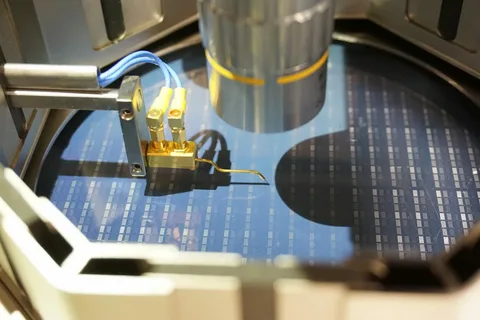
Semiconductor wafer fabrication demands ultra-clean environments, precise patterning, and stringent quality control. Manufacturers are investing in advanced metrology, defect inspection, and process control systems to ensure high yield and consistent quality. As chip complexity grows, maintaining wafer integrity and performance across multiple layers becomes increasingly critical.
Global Supply Chain Optimization and Regional Expansion
The semiconductor wafer industry is witnessing increased investment in regional manufacturing hubs to reduce reliance on global supply chains and enhance production resilience. Governments and private players are collaborating to build new fabs, upgrade existing facilities, and establish local supply ecosystems. These efforts aim to address global chip shortages and ensure long-term industry sustainability.
Environmental Sustainability and Resource Efficiency
As wafer production is resource-intensive, the industry is adopting sustainable practices such as water recycling, energy-efficient equipment, and chemical management. Innovations in wafer reuse, cleaner etching processes, and green materials are helping reduce the environmental impact of semiconductor manufacturing while maintaining high-performance standards.
Power Your Business Growth: Invest in Key Insights with Our Report Checkout!
Future Outlook
The semiconductor wafer market is poised for sustained growth as demand surges across computing, automotive, telecommunications, and industrial sectors. With continued advancements in materials science, lithography, and fabrication technologies, wafers will play an even greater role in enabling the performance, scalability, and intelligence of next-generation electronic systems. As digital transformation deepens worldwide, semiconductor wafers will remain the silent powerhouse at the heart of technological progress.
About Future Market Insights (FMI)
Future Market Insights, Inc. (ESOMAR certified, recipient of the Stevie Award, and a member of the Greater New York Chamber of Commerce) offers profound insights into the driving factors that are boosting demand in the market. FMI stands as the leading global provider of market intelligence, advisory services, consulting, and events for the Packaging, Food and Beverage, Consumer Technology, Healthcare, Industrial, and Chemicals markets. With a vast team of 400 analysts worldwide, FMI provides global, regional, and local expertise on diverse domains and industry trends across more than 110 countries.
Contact Us:
Future Market Insights Inc.
Christiana Corporate, 200 Continental Drive,
Suite 401, Newark, Delaware – 19713, USA
T: +1-845-579-5705
For Sales Enquiries: sales@futuremarketinsights.com
Website: https://www.futuremarketinsights.com
LinkedIn| Twitter| Blogs | YouTube