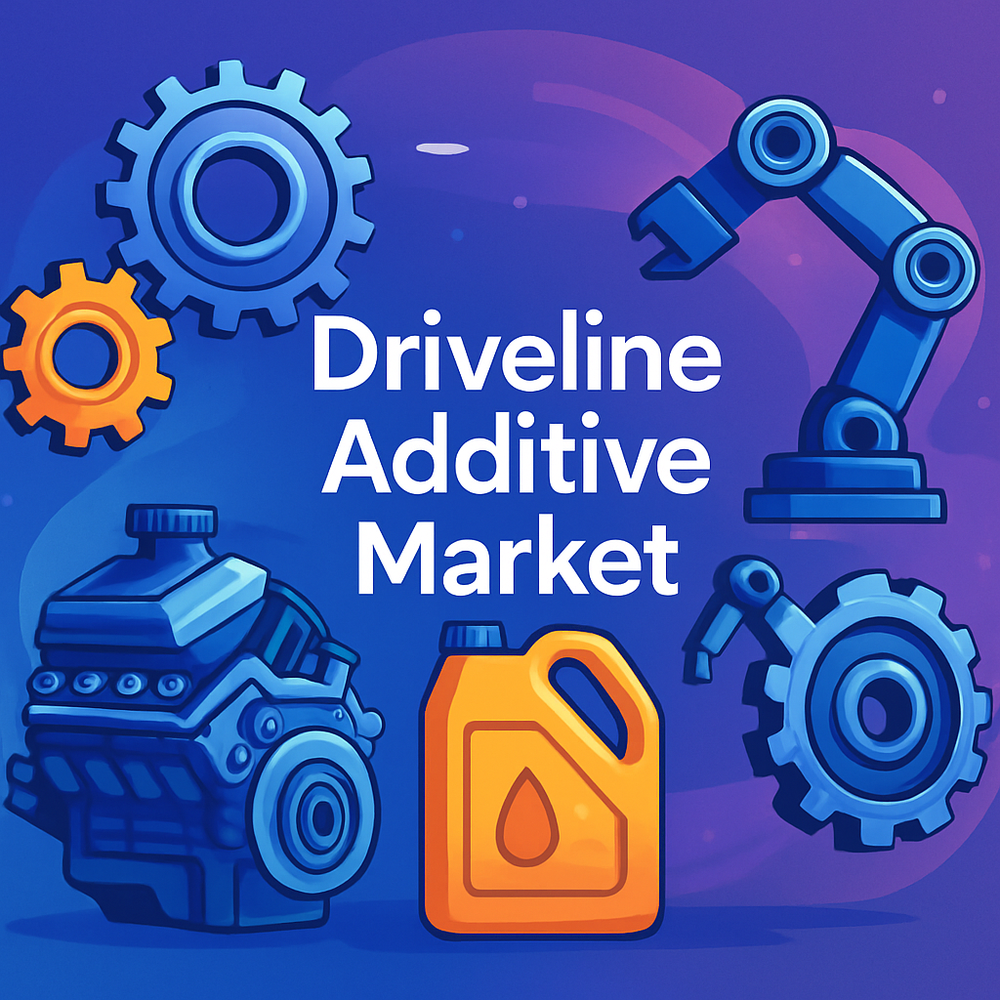
The global driveline additive market is projected to grow from USD 16,789.9 million in 2025 to USD 27,531.8 million by 2035, recording a CAGR of 5.1% over the forecast period. Driven by advances in transmission technologies, stricter fuel economy and emissions regulations, and the rising demand for high-performance lubricants in electric and hybrid vehicles, the market is poised for substantial expansion. Both automotive OEMs and the aftermarket segment are accelerating the adoption of advanced driveline fluids to meet next-generation powertrain requirements.
Uncover Essential Data – Get A Sample Copy https://www.futuremarketinsights.com/reports/sample/rep-gb-700
Advanced Powertrains and Sustainability Fueling Market Momentum
The shift toward electric mobility, hybrid drivetrain technologies, and synthetic lubrication systems is reshaping the global driveline additive landscape. The demand for friction-reducing, wear-resistant, and low-viscosity additives is growing, especially as OEMs develop more compact, high-efficiency powertrains for EVs and premium vehicles. Regulations like Euro 7, the U.S. CHIPS and Science Act, and UK ICE phase-out goals are pushing automakers toward environmentally compliant, high-performance driveline solutions. Industrial machinery and off-highway vehicles are also embracing driveline additives to enhance operational life and reduce mechanical wear in heavy-duty applications.
Market Trends Highlighted
- EV and Hybrid Vehicle Growth: Electrification of vehicles is creating demand for e-axle lubricants and thermal management fluids requiring specialized additive formulations.
- Stringent Emission and Fuel Economy Regulations: Policies across the U.S., EU, UK, and Asia are encouraging the use of synthetic, low-emission driveline fluids.
- Rise in High-Performance Lubricants: Increased vehicle complexity and higher engine loads are boosting the need for additives that enhance wear protection, oxidation resistance, and thermal stability.
- Industrial Automation Impact: Expanding use of robotic and automated systems in manufacturing is driving demand for driveline additives suited for high-precision machinery.
- Bio-Based and Low-VOC Formulations: OEMs and lubricant producers are investing in environmentally friendly additive chemistries to align with global sustainability goals.
Key Takeaways of the Report
- The global driveline additive market will witness steady growth at 5.1% CAGR from 2025 to 2035, reaching a value of USD 27.5 billion by the end of the forecast period.
- Demand will be primarily fueled by EV drivetrain development, aftermarket expansion, and regulatory compliance for emissions and energy efficiency.
- Friction modifiers, viscosity improvers, anti-wear agents, and corrosion inhibitors remain critical components in formulating next-gen driveline fluids.
- The synthetic and semi-synthetic lubricant categories are gaining market share, supported by advanced performance, longer drain intervals, and better fuel economy.
- Leading companies are developing custom additive packages tailored to meet the needs of electric, hybrid, luxury, and industrial vehicles.
Regional Market Outlook
United States
With a CAGR of 4.9%, the U.S. market is fueled by government support under the CHIPS and Science Act, a surge in vehicle production, and growing aftermarket lubricant demand. The EPA’s regulations on fuel economy and carbon emissions are pushing manufacturers toward advanced, efficiency-enhancing additives.
United Kingdom
Growing at 4.7% CAGR, the UK market is driven by EV adoption goals, premium vehicle demand, and low-emission legislation. Innovation in e-driveline fluids is accelerating, especially as the country targets a complete phase-out of ICE vehicles by 2035.
European Union
At a 4.8% CAGR, the EU market is supported by Euro 7 emissions rules, high automotive R&D activity, and increasing hybrid and electric vehicle production. Countries like Germany, France, and Italy are advancing bio-based and synthetic driveline fluid research.
Japan
Japan, with a CAGR of 4.6%, remains a technology hub for friction-reducing, low-viscosity additives, and precision engineering for hybrid and EV drivelines. The rise of automated machinery also contributes to growth in industrial lubricant applications.
South Korea
South Korea leads the regional CAGR charts at 4.9%, bolstered by Hyundai and Kia’s investments in electric powertrains, rapid industrial automation, and innovation in smart lubricants for high-performance EVs, displays, and robotics. Green policies are driving R&D into bio-based and hydroxymethyl-containing synthetic fluids.
Company Profile
- Evonik Industries AG
- Croda International Plc
- BRB International BV
- Wuxi South Petroleum Additives Co., Ltd.
- MidContinental Chemical Company, Inc. (MCC)
- Lanxess AG
- Royal Dutch Shell Plc (Shell Lubricants)
- Sinopec Lubricant Company
- Petro-Canada Lubricants (A HollyFrontier Brand)
- Chevron Corporation (Chevron Lubricants)
Market segmentation
By Product Type:
- Transmission Fluid Additive
- Gear Oil Additive
By Application:
- Passenger Cars
- Commercial Vehicles
- Off-Highway Vehicles
Stay Ahead – Grab the Report: https://www.futuremarketinsights.com/checkout/700
About Future Market Insights (FMI)
Future Market Insights, Inc. (ESOMAR certified, recipient of the Stevie Award, and a member of the Greater New York Chamber of Commerce) offers profound insights into the driving factors that are boosting demand in the market. FMI stands as the leading global provider of market intelligence, advisory services, consulting, and events for the Packaging, Food and Beverage, Consumer Technology, Healthcare, Industrial, and Chemicals markets. With a vast team of over 400 analysts worldwide, FMI provides global, regional, and local expertise on diverse domains and industry trends across more than 110 countries.
Contact Us:
Future Market Insights Inc.
Christiana Corporate, 200 Continental Drive,
Suite 401, Newark, Delaware – 19713, USA
T: +1-347-918-3531
For Sales Enquiries: sales@futuremarketinsights.com
Website: https://www.futuremarketinsights.com
LinkedIn| Twitter| Blogs | YouTube