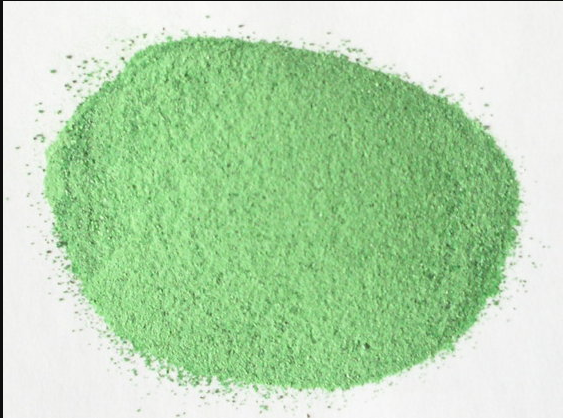
The global nickel carbonate market has long been associated with its foundational role in electroplating, nickel salt production, and battery precursors. However, a less explored yet increasingly consequential dimension of the market is now emerging—one driven by its application in advanced ceramic materials and carbon capture and utilization (CCU) technologies. As industries intensify their pursuit of sustainable solutions and specialty material innovations, nickel carbonate is gaining recognition for attributes that extend well beyond its conventional uses.
Search patterns such as nickel carbonate industrial uses, nickel-based ceramics market, and CO₂ absorption materials containing nickel reveal a growing curiosity from engineers, materials scientists, and sustainability strategists. These trends suggest a structural shift in how nickel carbonate is perceived—no longer just a precursor in metallurgy or nickel oxide production, but a functional material in its own right.
Request Your Sample and Stay Ahead with Our Insightful Report!
The Advanced Ceramics Revolution: A Niche with Big Potential
Ceramics used in electronics, sensors, and high-performance mechanical components are increasingly relying on doped metal carbonates to fine-tune properties such as dielectric strength, thermal stability, and ionic conductivity. Among these, nickel carbonate plays a vital but largely unrecognized role. When thermally decomposed, nickel carbonate yields nickel oxide with controlled particle morphology—critical for achieving uniform sintering in multilayer ceramic capacitors (MLCCs), thermistors, and varistors.
Recent advancements in electronic ceramics—especially those used in 5G telecom devices and electric vehicle (EV) systems—have spotlighted the need for tailored metal oxide intermediates. In 2023, a Japanese ceramics manufacturer announced a new formulation of MLCCs using ultra-fine nickel oxide derived from high-purity nickel carbonate, achieving a 20% improvement in capacitance stability at high frequencies.
These developments are not merely academic. They represent a growing industrial segment in East Asia, particularly in Taiwan and South Korea, where electronics manufacturers are sourcing ultra-pure nickel carbonate as a strategic material. The shift toward locally refining this carbonate, rather than importing processed nickel oxide, suggests that nickel carbonate’s upstream role is becoming more vital in regional supply chain optimization.
Carbon Capture and Utilization: Nickel Carbonate’s Green Chemistry Opportunity
Another underappreciated avenue where nickel carbonate is gaining ground is carbon capture and utilization. In the broader context of climate mitigation, CCU technologies are receiving increasing investment, particularly those that aim to chemically bind CO₂ into useful products. Nickel carbonate has shown promise in catalyzing CO₂ mineralization and sorption reactions, especially when combined with amine-based or alkali-promoted materials.
To Gain More Insights about this Research, Visit!
A 2022 study by the Fraunhofer Institute in Germany demonstrated that nickel carbonate composites could significantly enhance the reactivity of solid sorbents, improving their cyclic CO₂ capture efficiency over 100 regeneration cycles. The study also highlighted that the presence of nickel carbonate improved thermal stability—critical for industrial CO₂ scrubbing applications operating at elevated temperatures.
Although this application is still emerging, pilot projects in the Netherlands and Canada are already incorporating nickel-based materials in flue gas treatment and cement industry emissions management. These use-cases point to a future where nickel carbonate could become a functional material in sustainable industrial design, moving the product out of its traditional chemical niche and into the environmental technology arena.
Regional Demand Trends and Strategic Supply Chain Adjustments
Global production of nickel carbonate is concentrated in a handful of countries, with China remaining the dominant supplier, particularly for battery-grade and electronics-grade carbonate. However, the diversification of applications is encouraging regional industries to develop more localized or specialized production capabilities.
In Europe, the emphasis on low-carbon materials and strategic autonomy is prompting interest in domestic sourcing or recycling-based production of nickel carbonate. The EU’s Critical Raw Materials Act, enacted in 2024, included several nickel compounds in its risk assessment framework. As a result, companies in Germany, Sweden, and France are investing in closed-loop systems that recover nickel carbonate from spent catalysts and electronic waste, feeding into both ceramic and environmental technology markets.
India and Brazil, meanwhile, are exploring nickel carbonate’s use in emerging sectors like ceramic fuel cells and hybrid catalyst systems. These innovations could allow developing economies to integrate nickel carbonate into value-added production chains, rather than exporting raw nickel ores or intermediate salts for external processing.
Reach out to Sales to Secure Your Copy of the Report Now!
Forecasting Long-Term Market Impact
While the global nickel carbonate market is expected to grow at a CAGR of 5.6% from 2025 to 2035, these estimates may require upward revision as niche segments become more mainstream. The intersection of specialty ceramics and green technologies gives nickel carbonate a dual growth lever—one based on high-tech consumer applications, and the other on large-scale industrial sustainability.
As major players like Sumitomo Metal Mining, Umicore, and Jinchuan Group continue to innovate in material sciences, the demand for custom-formulated nickel carbonate precursors will likely increase. Furthermore, startups focused on low-carbon materials are beginning to license nickel-based composite patents, indicating that commercial traction is building beyond traditional sectors.
The market’s long-term success, however, will hinge on addressing issues such as material purity, recycling feasibility, and supply chain resilience. With nickel volatility often linked to battery markets and geopolitical shifts, strategic reserves and localized synthesis capabilities will become key differentiators for companies relying on nickel carbonate for advanced applications.
Nickel Carbonate Market By Category
By Ni Content:
- < 38%
- 38% – 42%
- 42% – 46%
- > 46%
By Application:
- Electroplating
- Catalysts
- Pigments
- Others
By Region:
- North America
- Latin America
- Europe
- East Asia
- South Asia & Pacific
- Middle East & Africa
About Future Market Insights (FMI)
Future Market Insights, Inc. (ESOMAR certified, recipient of the Stevie Award, and a member of the Greater New York Chamber of Commerce) offers profound insights into the driving factors that are boosting demand in the market. FMI stands as the leading global provider of market intelligence, advisory services, consulting, and events for the Packaging, Food and Beverage, Consumer Technology, Healthcare, Industrial, and Chemicals markets. With a vast team of over 400 analysts worldwide, FMI provides global, regional, and local expertise on diverse domains and industry trends across more than 110 countries.
Join us as we commemorate 10 years of delivering trusted market insights. Reflecting on a decade of achievements, we continue to lead with integrity, innovation, and expertise.
Contact Us:
Future Market Insights Inc.
Christiana Corporate, 200 Continental Drive,
Suite 401, Newark, Delaware – 19713, USA
T: +1-347-918-3531
For Sales Enquiries: sales@futuremarketinsights.com
Website: https://www.futuremarketinsights.com
LinkedIn| Twitter| Blogs | YouTube