

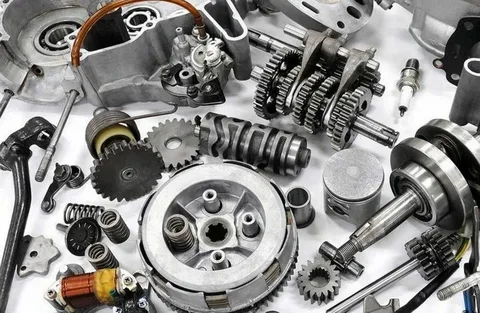
The global Automotive Hardware Market was valued at USD 74.3 billion in 2020 and is projected to reach USD 88.3 billion by 2025. During the 2025 to 2035 period, a compound annual growth rate (CAGR) of 4.0% is anticipated, resulting in a market size of approximately USD 130.7 billion by 2035. This expansion is being fueled by the adoption of modular vehicle architectures and periodic platform refresh cycles that have been widely implemented across OEM product strategies.
The automotive hardware market continues to grow as automakers push toward greater performance, durability, and integration in modern vehicle systems. Automotive hardware encompasses the wide range of mechanical and structural components—such as hinges, fasteners, locks, handles, brackets, and chassis mounts—that are essential for the construction, safety, and functionality of vehicles. As automotive design evolves to accommodate electric vehicles, autonomous technologies, and lightweight materials, demand for innovative, high-performance hardware is intensifying across the global supply chain.
Foundational Components Driving Vehicle Integrity and Performance
Automotive hardware forms the structural backbone of a vehicle, supporting its mechanical functions and enabling key systems to operate reliably. From precision-engineered bolts and clips to robust latches and actuators, these components ensure the stability of vehicle frames, secure the operation of doors, hoods, and trunks, and contribute to overall driving safety. High-quality hardware plays a crucial role in reducing noise, vibration, and harshness (NVH), improving both ride comfort and structural integrity.
Get Ahead with Our Report: Request Your Sample Now!
https://www.futuremarketinsights.com/reports/sample/rep-gb-10873
Broad Application Across Vehicle Segments and Platforms
Automotive hardware is used in a wide variety of vehicle types—including passenger cars, commercial trucks, electric vehicles, and off-highway vehicles—spanning luxury, economy, and utility segments. Each category presents unique performance and durability demands. In passenger vehicles, aesthetics and user experience influence hardware design, while in commercial and heavy-duty vehicles, strength and longevity are critical. The shift toward electric and hybrid vehicles is further reshaping hardware requirements to accommodate new layouts, battery enclosures, and thermal management systems.
Emphasis on Lightweight and High-Strength Materials
To improve fuel efficiency and meet emissions standards, manufacturers are focusing on lightweight yet durable materials in automotive hardware production. Aluminum alloys, advanced plastics, and composite materials are increasingly replacing traditional steel components. These modern materials offer high strength-to-weight ratios, corrosion resistance, and design flexibility, enabling automakers to reduce vehicle weight without sacrificing safety or performance.
Integration with Electronic and Smart Systems
As vehicles become more connected and autonomous, mechanical hardware is being integrated with electronic systems to support enhanced functionality. Smart locking mechanisms, powered hinges, and sensor-embedded fasteners are examples of how hardware is evolving in tandem with automotive electronics. These integrated systems enable features like remote access, keyless entry, collision detection, and automated liftgates—bridging the gap between traditional hardware and advanced vehicle technology.
Customization and Modularity Supporting Design Flexibility
Automotive manufacturers require hardware solutions that can be tailored to specific vehicle models, trim levels, and regional standards. Modular hardware designs support this need by offering standardized components that can be adapted for different applications. Custom finishes, unique geometries, and enhanced functionality allow designers to align mechanical elements with brand aesthetics, ergonomic goals, and manufacturing efficiency.
Supply Chain Expansion and Tiered Manufacturing
The automotive hardware market is supported by a robust network of suppliers ranging from global Tier 1 companies to specialized Tier 2 and Tier 3 component manufacturers. This layered structure allows for cost-effective production, localized supply chains, and rapid prototyping capabilities. OEMs often collaborate with hardware specialists to co-develop components that meet precise specifications, regulatory requirements, and lifecycle expectations.
Focus on Durability, Testing, and Compliance
Given their critical role in vehicle safety and structural performance, automotive hardware components undergo extensive testing and quality control. Fatigue analysis, corrosion resistance testing, impact validation, and environmental exposure assessments are conducted to ensure long-term reliability. Compliance with international standards and automotive quality certifications remains essential for gaining OEM approvals and ensuring market access.
Impact of Electrification and Autonomous Driving Trends
The transition to electric mobility is influencing the design and function of automotive hardware. Battery enclosures, high-voltage cable brackets, and specialized cooling mounts are becoming standard hardware components in EVs. Similarly, autonomous vehicles require hardware that supports LiDAR housings, camera mounts, and sensor calibration mechanisms. These emerging applications are expanding the scope and technical complexity of automotive hardware systems.
Sustainability and Eco-Friendly Manufacturing Practices
Sustainability is gaining traction in automotive hardware production, with manufacturers exploring recyclable materials, low-energy manufacturing techniques, and eco-conscious coatings. Hardware suppliers are adopting green certifications and lifecycle assessments to align with OEM sustainability strategies. These efforts contribute to reducing the environmental footprint of vehicle production while supporting circular economy principles.
Drive Your Business Growth Strategy: Checkout the Report for Key Insights!
https://www.futuremarketinsights.com/checkout/10873
Future Outlook
The automotive hardware market is positioned for continued growth as vehicles become more advanced, modular, and lightweight. Future developments will focus on smart hardware integration, material innovation, and design optimization to meet the evolving needs of electric and autonomous vehicles. As the industry adapts to shifting consumer expectations, regulatory pressures, and technology-driven design, automotive hardware will remain a critical enabler of vehicle performance, safety, and innovation on the road ahead.
About Future Market Insights (FMI)
Future Market Insights, Inc. (ESOMAR certified, recipient of the Stevie Award, and a member of the Greater New York Chamber of Commerce) offers profound insights into the driving factors that are boosting demand in the market. FMI stands as the leading global provider of market intelligence, advisory services, consulting, and events for the Packaging, Food and Beverage, Consumer Technology, Healthcare, Industrial, and Chemicals markets. With a vast team of 400 analysts worldwide, FMI provides global, regional, and local expertise on diverse domains and industry trends across more than 110 countries.
Contact Us:
Future Market Insights Inc.
Christiana Corporate, 200 Continental Drive,
Suite 401, Newark, Delaware – 19713, USA
T: +1-845-579-5705
For Sales Enquiries: sales@futuremarketinsights.com
Website: https://www.futuremarketinsights.com
LinkedIn| Twitter| Blogs | YouTube




