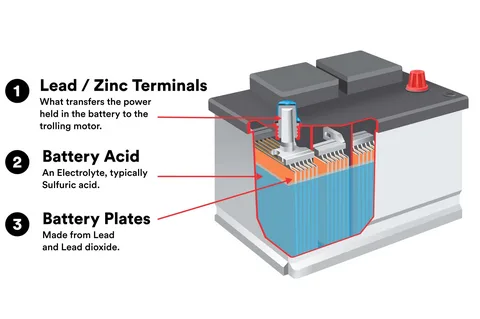
The motorcycle lead acid battery market size is set to grow from USD 5,976.2 Million in 2025 to USD 9,734.6 Million by 2035, at a rate of 5.1% each year during this time. Motorcycle lead acid batteries are key for powering the electric parts, starting, and lights of old ICE motorcycles, and serve as backup power for battery-driven bikes.
The motorcycle lead acid battery market continues to hold a significant position in the global two-wheeler ecosystem, offering a proven and economical energy storage solution for millions of riders. Lead acid batteries, known for their robustness, affordability, and recyclability, remain a dominant power source for motorcycles—particularly in emerging economies where cost-sensitive markets prioritize accessible and dependable components. As motorcycle usage increases across urban and rural regions, the demand for reliable starting and lighting systems ensures the continued relevance of lead acid battery technologies.
Reliable Energy Storage for Everyday Riding Needs
Lead acid batteries are essential for providing the starting power, ignition support, and electrical energy needed to operate lighting, horns, and digital instrument clusters in motorcycles. These batteries are designed to handle repeated charge-discharge cycles, offering dependable performance even under variable riding conditions. Their ability to deliver consistent power makes them suitable for a wide range of motorcycles, including commuter bikes, scooters, cruisers, and off-road models.
Get Ahead with Our Report: Request Your Sample Now!
https://www.futuremarketinsights.com/reports/sample/rep-gb-10908
Strong Adoption in Commuter and Utility Segments
The lead acid battery’s cost-efficiency and straightforward maintenance have made it especially popular in high-volume commuter segments. In regions where motorcycles serve as primary transport for work, delivery, and daily travel, affordability and ease of replacement are key decision factors. Fleet operators, delivery services, and rural users favor lead acid solutions for their low upfront cost and accessible service networks, contributing to their widespread adoption.
Advancements in Battery Design and Maintenance
Modern motorcycle lead acid batteries are benefitting from improvements in design and durability. Enhanced grid alloys, sealed maintenance-free (MF) construction, and improved electrolyte formulations have increased performance and battery lifespan. MF batteries in particular eliminate the need for periodic water topping, reducing maintenance efforts while enhancing user convenience. Enhanced vibration resistance and better heat tolerance are also being integrated into newer designs to match demanding road conditions and extended use cycles.
Dominance in Emerging Economies and Aftermarket Channels
In emerging markets, where motorcycles serve as affordable mobility solutions for millions, lead acid batteries remain the preferred energy source due to their compatibility, availability, and affordability. The replacement market is a key growth driver, with millions of motorcycles requiring periodic battery changes. Aftermarket suppliers offer a variety of lead acid battery options tailored to regional needs, ensuring high penetration and customer retention across dealer and service networks.
Focus on Recyclability and Environmental Responsibility
One of the enduring strengths of lead acid battery technology lies in its high recyclability. The closed-loop recycling process enables the recovery and reuse of lead and plastic components, reducing environmental impact and supporting circular economy initiatives. Manufacturers and distributors are increasingly aligning with environmental regulations and responsible disposal practices to ensure sustainable operations in the battery value chain.
Competitive Landscape with Strong OEM and Aftermarket Participation
The motorcycle lead acid battery market features a mix of global and regional manufacturers supplying both original equipment (OEM) and aftermarket segments. OEMs partner with trusted battery brands to equip new motorcycles with tested and certified power units, while aftermarket suppliers offer a range of replacement options for different vehicle types and price points. Product availability, dealer reach, and brand reputation continue to influence buying decisions in this competitive landscape.
Challenges from Alternative Battery Technologies
Despite its ongoing relevance, the lead acid battery segment faces growing competition from newer technologies such as lithium-ion batteries, particularly in premium motorcycles and electric two-wheelers. These alternatives offer benefits in terms of weight, charge time, and cycle life. However, higher costs and infrastructure limitations mean that lead acid batteries remain the go-to choice for mainstream motorcycles, especially in price-sensitive markets.
Tailored Solutions for Diverse Riding Conditions
Battery manufacturers are developing application-specific lead acid batteries that cater to regional temperature extremes, riding patterns, and terrain types. High-cranking models are available for motorcycles with enhanced electrical loads or frequent cold starts, while compact and lightweight versions are tailored for scooters and low-displacement vehicles. These targeted offerings ensure that riders across geographies and vehicle types can find batteries optimized for their specific use case.
Serviceability and Network Support as Key Differentiators
A widespread service and distribution network remains crucial to the success of lead acid battery brands. Availability of trained technicians, warranty support, and on-the-spot battery replacements are important considerations for both individual riders and commercial fleet owners. Battery providers that can offer a combination of product reliability, affordability, and customer support continue to hold strong positions in regional and global markets.
Drive Your Business Growth Strategy: Checkout the Report for Key Insights!
https://www.futuremarketinsights.com/checkout/10908
Future Outlook
The motorcycle lead acid battery market is expected to maintain a stable trajectory as long as traditional internal combustion engine (ICE) motorcycles continue to dominate global roads. While the shift to electric two-wheelers is underway, the affordability, recyclability, and technological maturity of lead acid batteries ensure their continued relevance in the near term. Innovations in battery construction, expansion into rural markets, and sustainable manufacturing practices will shape the evolution of this segment—ensuring it remains a trusted power source for millions of riders worldwide.
About Future Market Insights (FMI)
Future Market Insights, Inc. (ESOMAR certified, recipient of the Stevie Award, and a member of the Greater New York Chamber of Commerce) offers profound insights into the driving factors that are boosting demand in the market. FMI stands as the leading global provider of market intelligence, advisory services, consulting, and events for the Packaging, Food and Beverage, Consumer Technology, Healthcare, Industrial, and Chemicals markets. With a vast team of 400 analysts worldwide, FMI provides global, regional, and local expertise on diverse domains and industry trends across more than 110 countries.
Contact Us:
Future Market Insights Inc.
Christiana Corporate, 200 Continental Drive,
Suite 401, Newark, Delaware – 19713, USA
T: +1-845-579-5705
For Sales Enquiries: sales@futuremarketinsights.com
Website: https://www.futuremarketinsights.com
LinkedIn| Twitter| Blogs | YouTube