The global automotive control cables market is expected to witness steady growth between 2025 and 2035, driven by increasing vehicle production, advancements in transmission and braking technologies, and growing demand for enhanced vehicle control systems. The market is projected to reach USD 2,901.8 million in 2025 and expand to USD 4,456.3 million by 2035, reflecting a compound annual growth rate (CAGR) of 4.4% during the forecast period.
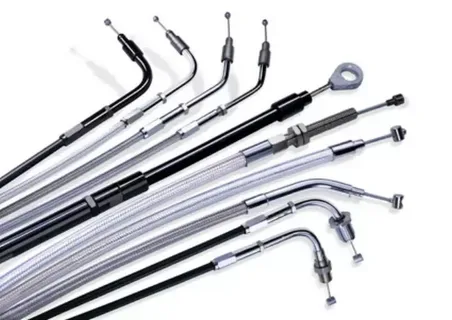
The automotive control cables market continues to grow as modern vehicles demand enhanced mechanical responsiveness, durability, and reliable control systems. Control cables serve as critical components that transmit motion or force within vehicles, playing a vital role in systems such as gear shifting, braking, steering, throttle control, and HVAC mechanisms. As automotive technology evolves across passenger, commercial, and off-road vehicles, control cables are being reengineered for higher performance, smoother operation, and greater integration with vehicle systems.
Delivering Responsive and Accurate Mechanical Control
Control cables are engineered to provide consistent and precise mechanical input to various vehicle systems. Whether transferring force from the accelerator pedal to the throttle or engaging the parking brake, these cables ensure smooth and dependable actuation. High-tensile strength and low-friction performance are key to maintaining reliability over time and minimizing wear. In critical systems such as clutch or transmission control, the responsiveness of these cables directly influences the driving experience.
Get Ahead with Our Report: Request Your Sample Now!
https://www.futuremarketinsights.com/reports/sample/rep-gb-1696
Wide Application Across Vehicle Systems and Types
Automotive control cables are utilized across a broad range of vehicles, including cars, trucks, buses, two-wheelers, and specialized off-road equipment. Their application spans multiple systems—manual transmission cables, hood release cables, seat adjustment cables, fuel cap release cables, and more. From light-duty passenger vehicles to heavy commercial trucks, control cables are tailored to meet the specific load, environment, and motion requirements of each application. Their importance in both OEM production and aftermarket replacement underlines their ubiquity and value.
Material Innovation for Enhanced Durability and Performance
As vehicles are expected to perform in more demanding environments, control cable materials are being upgraded for greater strength, corrosion resistance, and thermal stability. Coated steel wires, polymer-sheathed casings, and low-friction liners enhance durability, reduce noise and vibration, and enable smoother actuation. These innovations are particularly important for cables exposed to the engine bay, undercarriage, or exterior, where temperature fluctuations, moisture, and debris can compromise performance.
Customization and Modular Design for Versatile Integration
Vehicle manufacturers and Tier 1 suppliers increasingly demand control cables that are customizable to vehicle layout and function. Modular designs allow for length adjustments, mounting flexibility, and connector compatibility across platforms. This adaptability simplifies assembly during production and enables easy replacement or upgrades in aftermarket service. Custom-engineered cable solutions also support the growing diversity in vehicle architecture, particularly in electric and hybrid powertrains.
Alignment with Electrification and Lightweighting Trends
As the automotive industry transitions toward electric and hybrid vehicles, control cable systems are being optimized to align with lightweighting initiatives and compact design requirements. Lightweight cable assemblies reduce overall vehicle weight without sacrificing performance. In EVs, which lack traditional mechanical linkages in some areas, control cables remain essential in systems such as battery compartment access, HVAC routing, and auxiliary mechanical functions, demonstrating their ongoing relevance in next-generation vehicles.
Focus on Safety, Ergonomics, and User Experience
The precision and reliability of control cables directly influence vehicle safety and driver ergonomics. Smooth gear changes, responsive braking, and effortless throttle or seat adjustments contribute to a seamless user experience. Safety-critical functions—such as parking brakes and emergency releases—require control cables that meet stringent testing and lifecycle durability standards. Manufacturers are therefore focusing on fail-safe designs, quality assurance protocols, and continuous product improvement.
Aftermarket Demand Driven by Replacement and Retrofitting
Control cables are subject to wear over time, especially in high-use or rugged driving conditions. As a result, the aftermarket segment remains robust, with consistent demand for replacement cables across vehicle models. Aftermarket suppliers offer standardized and custom-fit cable solutions that match OEM specifications, ensuring continued functionality and safety. Retrofitting older vehicles with enhanced control cables is also gaining traction, particularly in regions with extended vehicle lifespans.
Integration with Smart Systems and Digital Interfaces
While control cables are inherently mechanical, they are increasingly coexisting with electronic and digital control systems. In some cases, hybrid cable-electronic assemblies are being developed to bridge mechanical movement with electronic feedback or actuation. This is particularly relevant in advanced driver-assistance systems (ADAS), where redundancy and multi-modal control enhance safety. Cable design is evolving to support compatibility with emerging smart vehicle ecosystems.
Global Expansion and Focus on Cost-Effective Manufacturing
As global vehicle production expands, manufacturers are investing in high-volume, cost-efficient cable manufacturing processes. Automation, quality testing, and localized production strategies help reduce lead times and meet the rising demand from OEMs and Tier 2 suppliers. Emerging markets are also driving growth, where demand for affordable and rugged vehicle components positions control cables as essential infrastructure.
Drive Your Business Growth Strategy: Checkout the Report for Key Insights!
https://www.futuremarketinsights.com/checkout/1696
Future Outlook
The automotive control cables market is set to evolve alongside broader industry shifts toward electrification, modular vehicle platforms, and digital integration. Innovations in materials, manufacturing, and hybrid control systems will shape the next generation of cable solutions. As vehicle complexity increases and the need for reliable mechanical actuation remains constant, control cables will continue to serve as foundational components—ensuring performance, safety, and user satisfaction across global automotive landscape.
About Future Market Insights (FMI)
Future Market Insights, Inc. (ESOMAR certified, recipient of the Stevie Award, and a member of the Greater New York Chamber of Commerce) offers profound insights into the driving factors that are boosting demand in the market. FMI stands as the leading global provider of market intelligence, advisory services, consulting, and events for the Packaging, Food and Beverage, Consumer Technology, Healthcare, Industrial, and Chemicals markets. With a vast team of 400 analysts worldwide, FMI provides global, regional, and local expertise on diverse domains and industry trends across more than 110 countries.
Contact Us:
Future Market Insights Inc.
Christiana Corporate, 200 Continental Drive,
Suite 401, Newark, Delaware – 19713, USA
T: +1-845-579-5705
For Sales Enquiries: sales@futuremarketinsights.com
Website: https://www.futuremarketinsights.com
LinkedIn| Twitter| Blogs | YouTube