The global xenon gas market is poised for significant expansion, with its valuation anticipated to grow from an estimated USD 162.9 million in 2024 to USD 270.5 million by 2034, exhibiting a Compound Annual Growth Rate (CAGR) of 5.2%. This robust growth is primarily driven by the increasing demand for this rare noble gas across critical applications in medical imaging, aerospace propulsion, advanced lighting, and semiconductor manufacturing.
Xenon (Xe) gas, an extremely rare chemical element, is gaining increasing prominence due to its unique properties. Despite its relatively expensive production through fractional distillation of liquid air, its applications in photographic flash lamps, bactericidal lamps, lasers, motion picture projectors, and as a propellant for ion thrusters in spacecraft are rapidly expanding. The gas’s durability is further enhanced by its naturally occurring stable and long-lived radioactive isotopes.
Request Your Sample and Stay Ahead with Our Insightful Report!
Key Drivers and Market Dynamics:
- Medical Imaging Advancements: Xenon gas is rapidly being utilized in medical scans, particularly in Magnetic Resonance Imaging (MRI) machines, where its high atomic number substantially improves imaging quality and enhances the detection and diagnosis of medical conditions. The increasing adoption of hyperpolarized Xe gas in MRI imaging boosts signal strength, producing high-resolution images.
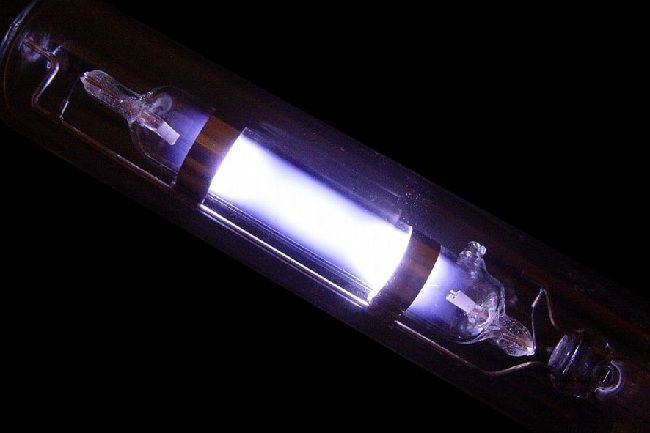
- High-Intensity Discharge (HID) Lamps: The increasing production of high-power lamps employing Xe gas is playing a crucial role in market expansion. These lamps offer superior brightness and energy efficiency compared to traditional lighting, finding widespread use in automotive headlights, projectors, and large-scale building lighting.
- Aerospace Propulsion: Xenon gas has emerged as a critical element in contemporary space technology, especially for ion thrusters used in spacecraft. Its unique qualities, including high atomic mass and reduced reactivity, enable efficient thrust production over extended periods, driving demand for satellite deployments and deep space missions.
- Semiconductor Manufacturing: Xenon plays a key role in lithography processes, enabling the creation of fine features on microchips, which are essential for modern electronics. Its use in etching thin layers and depositing materials during memory chip fabrication further fuels demand.
Challenges and Opportunities:
The market faces challenges primarily related to the expensive nature of Xe gas extraction and purification. The process of collecting and cleansing this noble gas from atmospheric air through energy-intensive fractional distillation and subsequent purification (e.g., cryogenic distillation or adsorption) significantly increases production costs.
However, these challenges also present significant opportunities. The continuous development of next-generation lighting technologies, high-efficiency photovoltaic cells, and advanced semiconductor devices will continue to drive demand for xenon. Stakeholders are focusing on enhancing the operational efficiency of the gas and exploring recycling methods to mitigate environmental impact and cost concerns.
To Gain More Insights about this Research, Visit!
Market Performance and Regional Trends:
The global xenon gas market experienced fluctuations from 2019 to 2023, influenced by global supply chain disruptions (e.g., COVID-19 pandemic) and geopolitical strains, particularly concerning crucial xenon-producing countries like Russia and Ukraine. Despite these challenges, the market is anticipated to rebound and surge at a CAGR of 5.2% from 2024 to 2034.
Regionally, the market exhibits dynamic growth:
- The United States is projected to emerge as a dominant country with an estimated 4.7% CAGR, driven by increasing demand from the automotive and semiconductor industries, particularly for memory chip production.
- China (3.9% CAGR) is propelled by its rapidly growing automotive industry, where Xe is essential for HID headlights, and its advanced manufacturing capabilities.
- India (3.2% CAGR) is expanding rapidly due to increasing development of healthcare facilities and advancements in technology, with collaborations between international firms and local institutes spurring growth.
- Germany (2.7% CAGR) and Japan (2.4% CAGR) also contribute significantly, driven by their respective industrial and technological advancements.
Segmental Dominance:
- By Supply Mode, cylinders are estimated to dominate the industry with a 4.2% CAGR from 2024 to 2034, securing an estimated 43.3% share in 2034. This dominance is attributed to their convenience, reliability, and ability to ensure consistent purity and quality for various industrial and medical applications.
- The aerospace and aircraft segment is projected to emerge as a leading end-use industry with a 3.6% CAGR from 2024 to 2034, indicative of the rising use of xenon gas in advanced technologies for lighting, propulsion, and specialized atmospheric testing.
Reach out to Sales to Secure Your Copy of the Report Now!
Competitive Landscape and Strategic Outlook:
The global xenon gas market is heavily consolidated, with prominent players accounting for a substantial share of the industry. Key players include Air Liquide, Linde plc, Air Products and Chemicals, Inc., and Messer Group. These manufacturers are focusing on research and development to explore new application areas, expanding production capacity, and investing in advanced purification and recycling technologies to improve yield and reduce costs.
Recent industry updates highlight strategic moves:
- In April 2024, Air Liquide commenced construction of a cutting-edge krypton and xenon purification facility in South Korea, scheduled for completion in 2025, to produce ultra-high purity gases for semiconductor and space industry applications.
- In February 2024, Air Liquide deployed 62 additional small gas production units, enhancing its capability to meet increasing customer requirements and contribute to lowering carbon emissions.
- In February 2024, Messer emerged as a significant bidder for Federal Helium Assets, strengthening its commitment to supplying critical resources.
The xenon gas market is poised for robust and sustained growth, driven by its pivotal role in several emerging technologies and industries. Companies that prioritize innovation, expand production capabilities, and focus on sustainable practices will be well-positioned for long-term success in this vital sector.
About Future Market Insights (FMI)
Future Market Insights, Inc. (ESOMAR certified, recipient of the Stevie Award, and a member of the Greater New York Chamber of Commerce) offers profound insights into the driving factors that are boosting demand in the market. FMI stands as the leading global provider of market intelligence, advisory services, consulting, and events for the Packaging, Food and Beverage, Consumer Technology, Healthcare, Industrial, and Chemicals markets. With a vast team of over 400 analysts worldwide, FMI provides global, regional, and local expertise on diverse domains and industry trends across more than 110 countries.
Join us as we commemorate 10 years of delivering trusted market insights. Reflecting on a decade of achievements, we continue to lead with integrity, innovation, and expertise.
Contact Us:
Future Market Insights Inc.
Christiana Corporate, 200 Continental Drive,
Suite 401, Newark, Delaware – 19713, USA
T: +1-347-918-3531
For Sales Enquiries: sales@futuremarketinsights.com
Website: https://www.futuremarketinsights.com
LinkedIn| Twitter| Blogs | YouTube