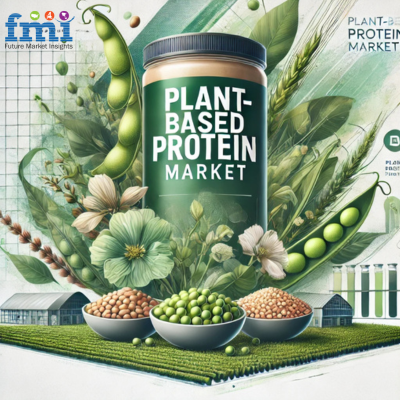
The global plant-based protein market is poised for exceptional growth, projected to expand from USD 20.3 billion in 2025 to a staggering USD 46 billion by 2035, demonstrating a robust Compound Annual Growth Rate (CAGR) of 8.5%. This significant surge is primarily fueled by a worldwide shift towards sustainable, ethical, and clean-label dietary choices, driven by increasing consumer awareness of environmental impact, animal welfare, and health benefits.
This comprehensive market outlook reveals that plant-based proteins are rapidly integrating across diverse sectors, including food & beverage, sports nutrition, and convenience foods. Currently, plant-based proteins hold a notable 1.9% share of the global food & beverage market and a substantial 23.4% of the broader protein ingredients market. Their influence extends to 11.8% of the functional food sector and 7.0% of the burgeoning meat alternatives market. In sports nutrition, they account for 9%, while representing 6.3% of the global dietary supplements market. Within the vegan food category, plant-based proteins are a cornerstone, capturing over 30% of formulations, and their presence in the clean-label ingredients space is steadily growing at around 4.5%.
Get a Sneak Peek into the Market – Download a Free Sample: https://www.futuremarketinsights.com/reports/sample/rep-gb-11442
Key Market Dynamics and Competitive Landscape
The market’s expansion is not only driven by consumer demand but also by evolving regulatory standards that favor non-GMO, organic, and clean-label certifications. Governments in key regions like the USA, EU, and India are actively promoting plant-based food innovation through supportive agricultural policies, sustainability initiatives, and health-focused food guidelines. Furthermore, an industry-wide commitment to ESG (Environmental, Social, and Governance) frameworks, transparent supply chains, and low-carbon processing is profoundly influencing product development and marketing strategies, enhancing the credibility and appeal of plant-based proteins.
“The trajectory of the plant-based protein market underscores a fundamental shift in global dietary preferences,” states a lead analyst involved in the market study. “Consumers are actively seeking options that align with their values of health, sustainability, and ethical production. This pervasive demand, coupled with supportive regulatory environments and continuous innovation, is creating an unprecedented growth opportunity for the industry.”
Segment Spotlights and Regional Growth Hotspots
Form Leader: Isolates are set to dominate the form segment, commanding a 41.2% market share in 2025. Their high protein concentration and functional versatility make them ideal for sports nutrition, infant formulas, and functional beverages. Manufacturers are prioritizing isolates for clean-label, high-performance products.
Nature Segment: Conventional plant-based proteins will maintain their leadership with a commanding 78.3% share in 2025. This dominance is attributed to their broader availability and cost-effectiveness compared to organic alternatives, coupled with established supply chains and mature processing technologies.
Product Type Dominance: Soy protein is projected to lead the product type segment, holding a 36.4% market share in 2025. Its widespread use in meat and dairy alternatives, coupled with its complete amino acid profile, solidifies its position. Major players like ADM and Cargill continue to expand their soy-based offerings.
End-Use Growth: Nutritional products are anticipated to lead the end-use segment with a 19.8% market share in 2025, driven by strong demand from health-conscious consumers for protein powders, bars, and dietary supplements.
Japan: The Fastest-Growing Market: East Asia is identified as a key growth region, with Japan emerging as the fastest-growing market, projected to register an impressive CAGR of 9.1% from 2025 to 2035. This growth is propelled by technological innovation in food processing and escalating consumer demand for functional foods. Germany and France also show strong growth potential with CAGRs of 7.4% and 6.9% respectively, supported by demand for clean-label products and a robust vegetarian consumer base. The USA and UK markets are expected to grow steadily at 6.1% and 6.3% respectively.
Competitive Landscape and Strategic Innovations
The market features a moderately consolidated competitive landscape, with established global ingredient giants and specialized protein innovators driving the industry forward. Leading suppliers such as Glanbia Plc, Archer-Daniels-Midland Co., Cargill Inc., and Kerry Inc. are expanding their market footprint through extensive product portfolios, robust distribution networks, and advanced R&D. These Tier-1 players are investing heavily in sustainable protein extraction technologies and developing customized formulations for functional foods, beverages, sports nutrition, and meat alternatives.
Strategic initiatives include diversifying plant sources (e.g., chickpea, lentil, fava), introducing clean-label formulations, and expanding into high-growth markets like Asia and Latin America. Companies like Burcon NutraScience Corporation and E.I. du Pont de Nemours & Co. are at the forefront of precision fermentation and protein texturization technologies, crucial for creating next-generation meat and dairy alternatives. Roquette Frères, Cosucra Groupe Warcoing, and Royal Avebe UA are solidifying their presence in Europe through locally sourced non-GMO proteins and clean processing standards.
Recent collaborations, such as Ingredion and Lantmännen’s partnership to supply pea protein isolates to the European market, highlight the industry’s focus on collaborative innovation and supply chain optimization. BENEO’s showcase of scalable solutions using Meatless® texturates and faba bean protein further exemplifies the industry’s commitment to simplifying processing while enhancing taste, texture, and cost-efficiency.
Purchase the Complete Market Report Today: https://www.futuremarketinsights.com/checkout/11442
Challenges and Future Outlook
Despite the optimistic outlook, the market faces challenges such as price volatility of raw materials due to climate change and geopolitical instability. Digestibility issues and allergenicity in certain protein types (e.g., soy and wheat) also pose formulation hurdles. However, ongoing advancements in protein extraction and fermentation technologies are continually improving functional profiles and mitigating off-notes, paving the way for even broader adoption.
The global plant-based protein market is set for an era of unprecedented expansion, driven by a convergence of consumer preference, technological innovation, and a collective push towards a more sustainable food system. The next decade promises a dynamic landscape of new product developments, strategic partnerships, and increasing market penetration across diverse applications worldwide.
About Future Market Insights (FMI)
Future Market Insights, Inc. (ESOMAR certified, recipient of the Stevie Award, and a member of the Greater New York Chamber of Commerce) offers profound insights into the driving factors that are boosting demand in the market. FMI stands as the leading global provider of market intelligence, advisory services, consulting, and events for the Packaging, Food and Beverage, Consumer Technology, Healthcare, Industrial, and Chemicals markets. With a vast team of over 400 analysts worldwide, FMI provides global, regional, and local expertise on diverse domains and industry trends across more than 110 countries.
Contact Us:
Future Market Insights Inc.
Christiana Corporate, 200 Continental Drive,
Suite 401, Newark, Delaware – 19713, USA
T: +1-347-918-3531
For Sales Enquiries: sales@futuremarketinsights.com
Website: https://www.futuremarketinsights.com
LinkedIn| Twitter| Blogs | YouTube