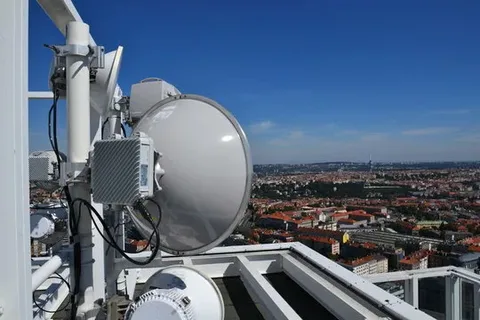
The point-to-point microwave antenna market is growing with a rapid pace with an estimated industry size of USD 4.9 billion in 2025. The industry is projected to reach USD 12 billion by the year 2035, thereby demonstrating a remarkable CAGR of 8.9% throughout the period of projection. The driving force of expansion in the industry is the rising need for high-speed data transmission, dependable interconnectivity, and effective wireless communication systems.
The point-to-point microwave antenna market is advancing rapidly as demand for high-speed, reliable, and cost-effective wireless communication continues to escalate. These antennas, designed for direct line-of-sight data transmission between two fixed locations, are integral to the performance of modern networks across telecommunications, enterprise, and industrial sectors.
Get Ahead with Our Report: Request Your Sample Now!
Delivering Robust Backhaul and Network Infrastructure
Point-to-point microwave antennas serve as a critical component in wireless backhaul infrastructure, especially in regions where fiber deployment is challenging or economically unfeasible. They facilitate high-capacity transmission over long distances, supporting everything from mobile network expansion to broadband delivery in remote and underserved areas. Their flexibility and rapid deployment capabilities make them indispensable for network operators seeking to scale quickly.
High-Speed Data Transmission with Minimal Latency
One of the key advantages of point-to-point microwave systems is their ability to transmit large volumes of data with low latency and minimal signal interference. These antennas operate in licensed and unlicensed frequency bands and can be tuned to meet specific bandwidth, throughput, and coverage requirements. This performance makes them ideal for latency-sensitive applications such as video surveillance, VoIP, and real-time data transfer.
Widespread Adoption Across Industries
Beyond telecommunications, industries such as energy, transportation, defense, and public safety are leveraging point-to-point microwave antennas to establish secure, dedicated communication links. Utility companies use them for SCADA systems and grid monitoring, while government agencies deploy them for mission-critical communication in disaster response and national defense operations.
Enabling 5G and Next-Generation Networks
With the rollout of 5G and the increasing densification of cellular networks, point-to-point microwave antennas are gaining renewed relevance. They offer a viable solution for connecting small cells and base stations, particularly in urban environments where fiber access is limited. Their ability to support high-frequency millimeter-wave bands also aligns with the speed and bandwidth demands of next-generation mobile services.
Exhaustive Market Report: A Complete Study
Compact Design and Easy Deployment
Modern point-to-point microwave antennas are designed with compact form factors, rugged enclosures, and weatherproof capabilities, allowing for flexible installation on rooftops, towers, poles, and other infrastructure. The ease of deployment, combined with relatively low operational costs, supports quick rollouts in both urban and rural environments, enhancing network resilience and scalability.
Technology Advancements Driving Performance
Ongoing innovations in antenna technology—such as dual-polarized feeds, adaptive modulation, and beamforming—are improving the efficiency, reliability, and spectral utilization of microwave systems. These enhancements not only boost link performance under challenging environmental conditions but also enable better interference management in densely populated network environments.
Support for Temporary and Emergency Communications
Point-to-point microwave antennas are also being used in temporary or mobile communication setups, such as event venues, construction sites, and emergency response scenarios. Their ability to establish fast, secure, and independent connectivity without relying on terrestrial infrastructure makes them ideal for short-term or mission-critical applications.
Cost-Efficiency and ROI Benefits
Compared to fiber optics, microwave antennas offer a more cost-effective alternative for medium to long-distance data transmission, especially where terrain, regulation, or installation costs are prohibitive. Their low maintenance requirements and long operational lifespan contribute to favorable return on investment for service providers and enterprises alike.
Future Outlook
As digital transformation accelerates across sectors and the global appetite for bandwidth continues to surge, the point-to-point microwave antenna market is set to remain an essential element of modern connectivity strategies. Continued advancements in frequency utilization, energy efficiency, and intelligent network management will further solidify the role of microwave antennas in building agile, high-performance communication infrastructures.
Power Your Business Growth: Invest in Key Insights with Our Report Checkout!
About Future Market Insights (FMI)
Future Market Insights, Inc. (ESOMAR certified, recipient of the Stevie Award, and a member of the Greater New York Chamber of Commerce) offers profound insights into the driving factors that are boosting demand in the market. FMI stands as the leading global provider of market intelligence, advisory services, consulting, and events for the Packaging, Food and Beverage, Consumer Technology, Healthcare, Industrial, and Chemicals markets. With a vast team of 400 analysts worldwide, FMI provides global, regional, and local expertise on diverse domains and industry trends across more than 110 countries.
Contact Us:
Future Market Insights Inc.
Christiana Corporate, 200 Continental Drive,
Suite 401, Newark, Delaware – 19713, USA
T: +1-845-579-5705
For Sales Enquiries: sales@futuremarketinsights.com
Website: https://www.futuremarketinsights.com
LinkedIn| Twitter| Blogs | YouTube