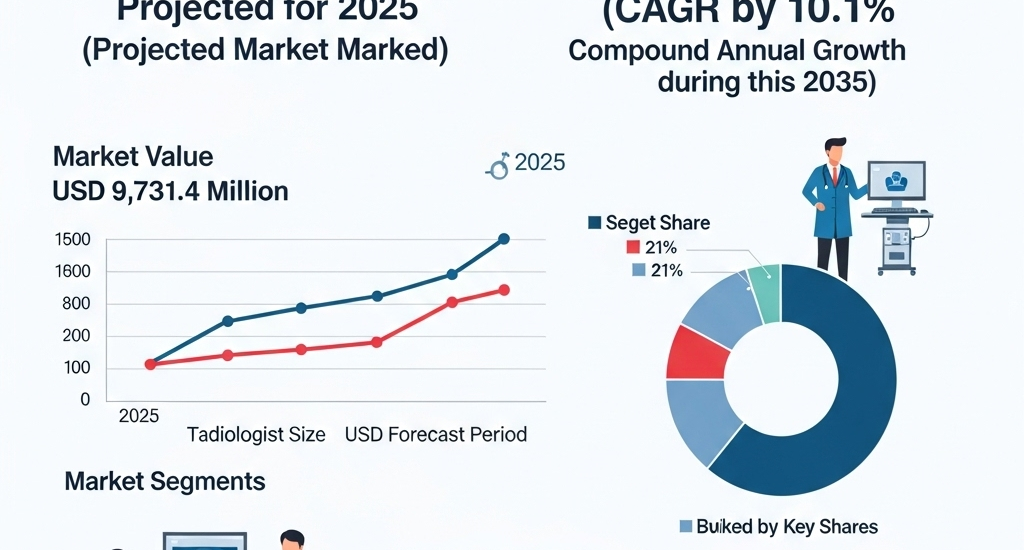
The global market for Teleradiology Services is expected to achieve USD 9,731.4 million by 2025, rising at 10.1% CAGR to reach USD 25,362.3 million by 2035. Teleradiology services brought in around USD 8,894.3 million in 2024.
In recent years, the healthcare industry has witnessed a significant transformation driven by technological advancements, among which teleradiology stands out as a revolutionary innovation. Teleradiology services involve the electronic transmission of radiological images such as X-rays, CT scans, and MRIs from one location to another for interpretation and diagnosis. This technology bridges the gap between healthcare providers and radiologists, enabling efficient, timely, and cost-effective patient care. As we look ahead from 2025 to 2035, the teleradiology services market is poised for remarkable growth, underpinned by increasing demand, technological evolution, and shifting healthcare dynamics globally.
Get Sample Report: – https://www.futuremarketinsights.com/reports/sample/rep-gb-2100
Meaning and Overview of Teleradiology Services
At its core, teleradiology services allow radiological images to be transmitted electronically from hospitals or diagnostic centers to radiologists who may be located anywhere in the world. This remote consultation model helps overcome geographical barriers, shortages of specialized radiologists, and the need for rapid diagnostics—especially in emergency cases.
The service encompasses several critical components: image acquisition, data transfer, image interpretation, and reporting. Advanced software tools and communication technologies ensure secure and high-quality image transmission. The rise of cloud computing, AI integration, and enhanced cybersecurity protocols have further solidified teleradiology’s role in modern healthcare ecosystems.
Market Outlook
The outlook for teleradiology services between 2025 and 2035 is overwhelmingly positive. This period is expected to witness continued expansion in market adoption, fueled by several key factors:
- Rising Healthcare Demand: Growing global populations and increased prevalence of chronic diseases such as cancer and cardiovascular conditions necessitate timely and accurate radiological diagnoses. Teleradiology services meet this demand by providing access to specialized radiology expertise, especially in underserved or remote regions.
- Technological Advancements: Innovations in imaging technology, AI-assisted diagnostic tools, and enhanced telecommunication networks improve service quality and reduce turnaround times. Artificial intelligence, in particular, plays a vital role in automating image analysis, prioritizing urgent cases, and enhancing diagnostic accuracy.
- Healthcare Digitization: The ongoing shift towards digital health infrastructure encourages the integration of teleradiology into hospital information systems and electronic health records. This seamless connectivity streamlines workflows and facilitates multi-disciplinary collaboration.
- Cost Efficiency and Resource Optimization: By leveraging remote radiology expertise, healthcare providers can reduce operational costs and optimize radiologist utilization. This is particularly valuable in regions facing radiologist shortages or budget constraints.
Growth Drivers
Several key drivers will propel the growth of the teleradiology services market over the next decade:
- Expanding Imaging Procedures: The increased use of diagnostic imaging as a frontline tool for various medical conditions is a significant catalyst. From preventive health checks to emergency diagnostics, imaging volumes continue to rise, boosting demand for teleradiology.
- Shortage of Radiologists: Many countries face an imbalance between the demand for radiology services and the supply of qualified radiologists. Teleradiology addresses this gap by enabling radiologists to serve multiple locations remotely.
- Emergency and Critical Care Applications: Rapid interpretation of imaging studies in emergencies such as stroke, trauma, or cardiac events is critical for patient outcomes. Teleradiology facilitates 24/7 radiology coverage, supporting immediate diagnosis and treatment decisions.
- Rural and Remote Healthcare Access: Teleradiology significantly enhances access to quality healthcare in rural and remote areas where onsite radiologists may be unavailable. This improves diagnostic services and patient outcomes in these underserved regions.
- Regulatory Support and Reimbursement Policies: Increasing recognition of telehealth by regulatory bodies and favorable reimbursement frameworks promote wider adoption of teleradiology services.
Download Brochure PDF:- https://www.futuremarketinsights.com/reports/brochure/rep-gb-2100
Market Demand and Trends
The demand for teleradiology services is evolving alongside broader healthcare trends:
- Integration of AI and Machine Learning: AI-powered tools aid radiologists by pre-analyzing images, detecting anomalies, and prioritizing critical cases. This not only speeds up the diagnostic process but also reduces human error.
- Cloud-Based Solutions: Cloud computing enables secure storage and real-time access to large volumes of imaging data, making collaboration among healthcare providers more efficient.
- Mobile and Remote Access: Advances in mobile technology facilitate remote access to radiological images, allowing radiologists to work flexibly from any location.
- Cross-Border Services: Teleradiology breaks down geographical barriers, enabling international service provision. Radiologists in developed countries can support healthcare systems in developing regions through remote interpretation.
- Focus on Data Security: As sensitive patient data is transmitted electronically, ensuring robust cybersecurity measures remains a paramount concern, driving innovation in data encryption and secure networks.
Competitive Landscape
The competitive landscape of the teleradiology services market is diverse, encompassing specialized service providers, technology innovators, and large healthcare IT companies. Key players are focusing on expanding their service portfolios, enhancing AI capabilities, and forging strategic partnerships to capture greater market share.
- Service Providers: These companies offer outsourced radiology interpretation services, often providing 24/7 coverage. They differentiate themselves through the breadth of subspecialties covered, speed of reporting, and quality assurance.
- Technology Vendors: Providers of teleradiology software platforms and imaging solutions play a critical role by supplying the technological backbone. Innovations in AI, cloud infrastructure, and workflow management tools are central to maintaining a competitive edge.
- Hospitals and Healthcare Networks: Many healthcare organizations are integrating teleradiology services in-house or collaborating with external providers to enhance their diagnostic capabilities.
- Startups and Emerging Players: A wave of startups is focusing on niche areas such as AI diagnostics, mobile imaging solutions, and telehealth integration, driving market disruption and innovation.
The competitive dynamics encourage continuous improvement in service quality, turnaround times, and cost-effectiveness, ultimately benefiting healthcare providers and patients alike.
Challenges and Opportunities
Despite its promising outlook, the teleradiology market faces certain challenges:
- Regulatory Compliance: Navigating differing regulations and licensing requirements across countries can complicate service delivery, particularly for cross-border teleradiology.
- Data Privacy Concerns: Ensuring compliance with stringent data protection laws such as HIPAA or GDPR requires ongoing investment in cybersecurity infrastructure.
- Quality Assurance: Maintaining consistent diagnostic accuracy and reliability is crucial to building trust among healthcare providers and patients.
Click Here to Purchase the Report:- https://www.futuremarketinsights.com/checkout/2100
About Future Market Insights (FMI)
Future Market Insights, Inc. (ESOMAR certified, recipient of the Stevie Award, and a member of the Greater New York Chamber of Commerce) offers profound insights into the driving factors that are boosting demand in the market. FMI stands as the leading global provider of market intelligence, advisory services, consulting, and events for the Packaging, Food and Beverage, Consumer Technology, Healthcare, Industrial, and Chemicals markets. With a vast team of over 400 analystsworldwide, FMI provides global, regional, and local expertise on diverse domains and industry trends across more than 110 countries.
Contact Us:
Future Market Insights Inc.
Christiana Corporate, 200 Continental Drive,
Suite 401, Newark, Delaware – 19713, USA
T: +1-347-918-3531
For Sales Enquiries: sales@futuremarketinsights.com
Website: https://www.futuremarketinsights.com
LinkedIn| Twitter| Blogs | YouTube