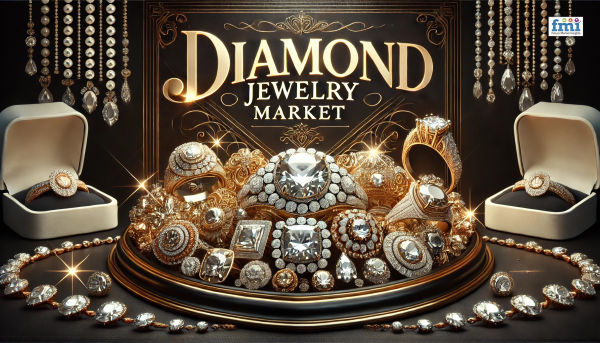
For centuries, diamonds have captured the imagination of cultures across the globe—signifiers of love, wealth, and permanence. Today, that tradition endures with remarkable vigor. According to recent industry data, the global diamond jewelry market is set to expand from USD 389.5 billion in 2025 to a staggering USD 622.5 billion by 2035, charting a steady CAGR of 4.8% over the decade.
This growth reflects more than just a luxury trend—it is a window into shifting global wealth, cultural change, digital transformation, and the complex challenges facing the luxury goods ecosystem.
Discover Insights into the Market Request Your Sample Report! https://www.futuremarketinsights.com/reports/sample/rep-gb-16894
The Shifting Contours of Consumer Demand
Traditionally, diamond jewelry was tethered to major life events: engagements, weddings, anniversaries. But the modern consumer—especially Gen Z and millennials—is rewriting the rulebook. Today, diamond jewelry is increasingly viewed as a form of self-expression and investment, not merely a ceremonial accessory.
Moreover, emerging markets are leading the charge. While the U.S. continues to dominate in overall consumption, the lion’s share of future growth is expected from Asia-Pacific, particularly India and China, where a burgeoning middle class is redefining aspirational spending.
Global Growth Drivers
- Emerging Market Demand: Rising incomes and urbanization in countries like India, China, and across Africa are fueling increased spending on diamond jewelry, particularly for weddings and cultural celebrations.
- Lab-Grown Diamonds: Affordable, sustainable, and visually identical to natural stones, lab-grown diamonds are gaining mainstream popularity, especially among younger buyers.
- Sustainability Focus: Consumers are demanding ethically sourced, eco-conscious products. Brands are responding with traceable supply chains, conflict-free certifications, and low-impact production.
- Digital Transformation: E-commerce, AR tools, and virtual try-ons are reshaping how consumers discover and purchase diamond jewelry, making luxury more accessible globally.
- Investment Appeal: Diamonds are increasingly being seen as alternative investments, driving interest among collectors and high-net-worth individuals seeking portfolio diversification.
Key Challenges Facing the Diamond Jewelry Industry
- Ethical Sourcing Issues: Conflict diamonds remain a concern despite certification efforts. Consumers are demanding greater transparency and ethical practices throughout the supply chain.
- Environmental Impact: Natural diamond mining harms ecosystems, while lab-grown diamonds, though marketed as sustainable, require high energy consumption. Brands must address environmental concerns more openly.
- Economic Volatility: Inflation, currency fluctuations, and global political instability can impact consumer spending on luxury goods, making the market vulnerable to external shocks.
- Changing Consumer Preferences: Modern buyers—especially millennials and Gen Z—value sustainability, personalization, and purpose-driven purchases over traditional luxury and status symbols.
- Growing Competition from Lab-Grown Diamonds: Lab-created diamonds are reshaping the market by offering affordable, ethical alternatives. This challenges traditional pricing and brand positioning strategies.
Key Players
- Tiffany & Co.
- Bulgari S.p.A.
- Cartier
- Signet Jewelers
- De Beers plc
- Pandora Jewellery, LLC
- Chow Tai Fook Jewellery Group Limited
- Swarovski AG
- Petra Diamonds Limited
- Trans Hex Group
Key Segments
By Product Type:
By product type, Market is divided into Rings, Necklaces, Earrings, Bracelets, Pendants, and Others.
By Sales Channel:
By sales channel, the market includes Jewelry Stores, Online, Specialty Stores, Departmental Stores, and Others.
By End-User:
In terms of end users, the market is divided between Women, Men, and Unisex.
By Region:
Region wise, the market is divided into North America, Latin America, Europe, South Asia, East Asia, Oceania, and the Middle East & Africa (MEA).
Purchase the in-depth market report now! https://www.futuremarketinsights.com/checkout/16894
About Future Market Insights (FMI)
Future Market Insights, Inc. (ESOMAR certified, recipient of the Stevie Award, and a member of the Greater New York Chamber of Commerce) offers profound insights into the driving factors that are boosting demand in the market. FMI stands as the leading global provider of market intelligence, advisory services, consulting, and events for the Packaging, Food and Beverage, Consumer Technology, Healthcare, Industrial, and Chemicals markets. With a vast team of over 400 analysts worldwide, FMI provides global, regional, and local expertise on diverse domains and industry trends across more than 110 countries.
Contact Us:
Future Market Insights Inc.
Christiana Corporate, 200 Continental Drive,
Suite 401, Newark, Delaware – 19713, USA
T: +1-347-918-3531
For Sales Enquiries: sales@futuremarketinsights.com
Website: https://www.futuremarketinsights.com
LinkedIn| Twitter| Blogs | YouTube