

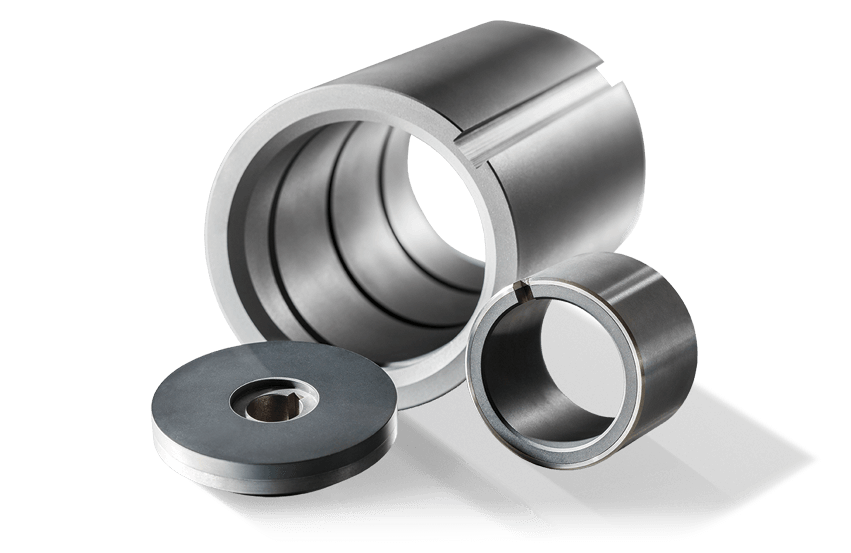
ing bearing market, while rarely in the spotlight, is gaining serious traction. According to recent analysis by Future Market Insights (FMI), the global market is projected to grow from USD 1.12 billion in 2025 to USD 2.5 billion by 2035, registering a compound annual growth rate (CAGR) of 8.3%. That’s not just healthy growth—it’s a sign of how central these components have become in high-load, high-performance environments across industries like automotive, aerospace, construction, energy, and heavy machinery.
Get Insights into Market Movements: Request a Sample Report! https://www.futuremarketinsights.com/reports/sample/rep-gb-17925
Bearings, Not Buzzwords
In an age of big promises from tech companies and startup culture, the value of durable, tested mechanical design can’t be overstated. Sliding bearings offer low-friction, load-bearing capabilities without the complexity and maintenance requirements of rolling bearings. They’re simple. They’re reliable. And in an industrial economy that’s pushing equipment harder and longer than ever before, they’re more important than they’ve been in decades.
This surge in demand isn’t about novelty—it’s about necessity. As equipment lifespans stretch and downtime becomes unacceptable, industries are looking for proven ways to reduce wear and extend operational life. Self-lubricating and corrosion-resistant sliding bearings are rising to the challenge.
The Real Drivers Behind the Market Boom
Several megatrends are pushing the market forward:
- Industrial automation is increasing, and with it comes the need for durable, low-maintenance components that can operate continuously under harsh conditions.
- Construction and infrastructure development—especially in emerging economies—requires reliable components for heavy-duty equipment.
- The automotive sector, particularly electric vehicle (EV) manufacturing, is leaning into lightweight, high-performance bearing solutions for engines, chassis systems, and thermal management systems.
- The energy sector, including renewables, is turning to sliding bearings in wind turbines and hydropower installations, where maintenance access is limited and durability is key.
According to FMI, this growth is not isolated to one region or industry—it’s global, and it’s accelerating.
Small Part, Big Impact
The beauty of sliding bearings is that they often work without being noticed. They reduce friction, absorb shock, and keep systems running smoothly. But that very invisibility is part of the problem—they’re easy to overlook in strategic conversations about performance, efficiency, and innovation.
Yet if a bearing fails, entire machines can collapse. Equipment downtime leads to production losses, safety risks, and serious repair costs. More manufacturers are realizing this and investing in higher-grade materials, improved sealing systems, and more precise manufacturing tolerances for these components.
This attention to detail is paying off. Sliding bearings are now being used in more demanding environments—extreme temperatures, corrosive atmospheres, and high-speed machinery. They’re not just keeping up—they’re evolving.
A Word of Caution
With increased demand comes increased complexity. Supply chains for the raw materials that go into premium sliding bearings—especially specialized alloys and polymers—are tightening. As the market grows, so does the pressure on manufacturers to maintain quality while scaling production.
There’s also the growing need for sustainable and environmentally conscious design. Bearings are being redesigned for longer life cycles, less lubrication, and compatibility with eco-friendly machines.
The companies that get this balance right—engineering excellence plus sustainable performance—will lead the market. Those who treat bearings as an afterthought? They’ll get left behind.
The Decade Ahead
Between 2025 and 2035, the sliding bearing market won’t just grow—it will mature. Expect more customization by application, more integration into smart systems, and more demand for predictive maintenance compatibility.
We’re moving into a world where machines communicate and optimize themselves. But no matter how intelligent the system, it still needs physical parts to function. Sliding bearings may not be flashy, but they’re foundational. Their rising importance is not just a market story—it’s an industrial reality.
The lesson here? Never underestimate the power of quiet, reliable engineering. It’s what the future is built on.
Key Company Insights
- SKF Group
- NSK Ltd.
- Schaeffler AG
- RBC Bearings Incorporated
- GGB Bearing Technology
- Daido Metal Co., Ltd.
- Timken Company
- Saint-Gobain Performance Plastics
- Federal-Mogul LLC (Tenneco Inc.)
- INA (Part of Schaeffler Group)
- ISB Industries
- Boston Gear (Regal Rexnord Corporation)
Top Segments Studied in the Sliding Bearing Market
By Load Direction:
- Radial
- Axial
- Combination
By Lubrication Method:
- Hydrodynamic
- Hydrostatic
- Boundary Lubricated
- Self-lubricating
By Material Type:
- Metallic
- Composite
- Polymeric
- Ceramic
By Application:
- Automotive
- Aviation
- Marine
- Industrial Machinery
- Civil Structures
- Tools
- Others
By Dynamic Load Rating (Mpa):
- Upto 5 MPa
- 5-10 MPa
- 10-25 MPa
- 25-50 MPa
- 50-75 MPa
- 75-100 MPa
- Above 100 MPa
By Region:
- North America
- Latin America
- Western Europe
- Eastern Europe
- East Asia
- South Asia & Pacific
- Middle East & Africa
Buy Now : https://www.futuremarketinsights.com/checkout/17925
About Future Market Insights (FMI)
Future Market Insights, Inc. (ESOMAR certified, recipient of the Stevie Award, and a member of the Greater New York Chamber of Commerce) offers profound insights into the driving factors that are boosting demand in the market. FMI stands as the leading global provider of market intelligence, advisory services, consulting, and events for the Packaging, Food and Beverage, Consumer Technology, Healthcare, Industrial, and Chemicals markets. With a vast team of over 400 analysts worldwide, FMI provides global, regional, and local expertise on diverse domains and industry trends across more than 110 countries. Join us as we commemorate 10 years of delivering trusted market insights. Reflecting on a decade of achievements, we continue to lead with integrity, innovation, and expertise.
Contact Us:
Future Market Insights Inc.
Christiana Corporate, 200 Continental Drive,
Suite 401, Newark, Delaware – 19713, USA
T: +1-347-918-3531
For Sales Enquiries: sales@futuremarketinsights.com
Website: https://www.futuremarketinsights.com
LinkedIn| Twitter| Blogs | YouTube




