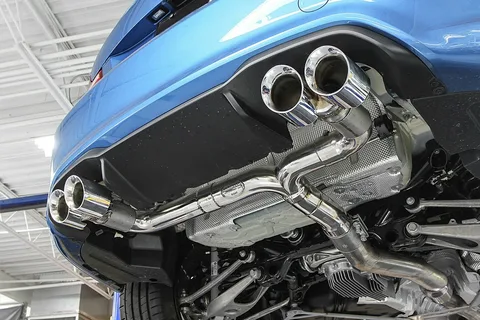
The automotive exhaust systems market is projected to grow from USD 126,816.6 million in 2025 to USD 229,260.9 million by 2035, expanding at a CAGR of 6.1%during the forecast period. This growth is driven by increasingly stringent emission regulations, rising vehicle production across developing and developed economies, and sustained demand for aftermarket upgrades and replacements.
As the global automotive industry transitions toward more sustainable and efficient mobility, exhaust systems are undergoing a quiet but critical transformation. Once viewed simply as mechanisms for directing engine emissions, modern exhaust systems are now advanced assemblies that play a central role in reducing pollutants, improving fuel efficiency, and meeting increasingly stringent regulatory standards.
From combustion vehicles to hybrid models, exhaust systems remain essential to powertrain performance—adapting not only to environmental goals but also to the digital and engineering complexities of next-generation vehicles.
Get Ahead with Our Report: Request Your Sample Now!
Beyond Emission Control: The New Role of Exhaust Systems
Today’s exhaust systems are more than just tailpipes. They integrate catalytic converters, diesel particulate filters, NOx traps, mufflers, and sensors—all working together to optimize combustion byproducts and reduce noise, heat, and emissions.
Their contribution extends to engine efficiency and vehicle aerodynamics, with manufacturers refining system layouts and materials to reduce weight, minimize back pressure, and ensure precise thermal management. These innovations support overall powertrain performance while helping meet global emission benchmarks.
Diversifying Across Powertrain Types
While the rise of electric vehicles is reshaping the auto landscape, internal combustion engines—both traditional and hybrid—continue to dominate in many global markets. As a result, exhaust systems are evolving across multiple powertrain categories:
Gasoline and Diesel Vehicles: Require robust after-treatment solutions to meet evolving emission norms, particularly in urban areas with air quality mandates.
Hybrid Vehicles: Use compact, high-efficiency exhaust components that activate quickly in start-stop cycles and operate alongside regenerative braking systems.
Performance and Commercial Vehicles: Demand durable, heat-resistant materials and tuned acoustics for higher output engines, often integrating advanced noise-reduction technologies.
This variety is prompting the development of modular exhaust platforms that can be adapted to different vehicle types, fuel sources, and regional regulations.
Regulatory Pressures Driving Innovation
Governments worldwide are tightening regulations on emissions, pushing automakers and suppliers to invest in next-generation exhaust technologies. Stricter limits on nitrogen oxides, carbon monoxide, hydrocarbons, and particulate matter are accelerating the adoption of advanced catalytic converters, selective catalytic reduction (SCR) systems, and gas sensors.
Compliance with standards such as Euro 7, US EPA Tier 3, and equivalent mandates in Asia and Latin America is becoming a key design driver—one that demands constant R&D and collaboration across the automotive value chain.
Exhaustive Market Report: A Complete Study
Lightweight Materials and Smart Components
To meet efficiency and sustainability goals, exhaust system manufacturers are increasingly adopting lightweight materials such as stainless steel alloys, aluminum, and high-temperature composites. These materials not only reduce vehicle mass but also withstand the thermal stress of high-efficiency engines.
Simultaneously, the integration of smart components—such as temperature, oxygen, and pressure sensors—is enabling real-time monitoring of exhaust conditions. This data feeds into engine control units, helping optimize combustion, fuel injection, and emissions in real time.
Noise Reduction and Acoustic Engineering
Modern vehicles are expected to provide a quieter, more refined driving experience. Advanced mufflers and resonators are being designed not just to meet noise regulations but to enhance cabin comfort and brand identity through controlled sound design.
In performance vehicles, active exhaust systems are being used to deliver customizable acoustics—allowing drivers to toggle between quiet and sporty engine sounds depending on driving mode or preference.
Aftermarket and Replacement Opportunities
As vehicles remain on the road longer, demand for replacement exhaust components continues to rise. The aftermarket segment is a vital part of the exhaust systems market, especially in regions with large aging vehicle populations or limited EV adoption.
Independent garages and authorized service centers require high-quality, regulation-compliant exhaust parts—creating opportunities for OEMs and third-party suppliers to expand their reach with value-driven solutions and digital parts catalogs.
Challenges in Thermal Management and Cost Control
Despite technological advances, the exhaust systems industry faces ongoing challenges. Managing high temperatures in downsized, turbocharged engines requires durable and often expensive materials. Balancing cost, weight, and durability remains a key engineering puzzle.
Additionally, the integration of sensors and electronics into exhaust systems adds complexity and requires close coordination with broader vehicle electronics and diagnostics.
An Essential System for a Transitional Era
As the automotive industry navigates a mixed powertrain future, exhaust systems remain essential to balancing performance, compliance, and sustainability. Whether supporting cleaner combustion engines, enhancing hybrid efficiency, or improving vehicle acoustics, these systems are foundational to the evolving mobility ecosystem.
With innovation at its core, the exhaust systems market is helping vehicles go further, emit less, and drive smarter—paving the way for cleaner roads and a more efficient automotive future.
Power Your Business Growth: Invest in Key Insights with Our Report Checkout!
About Future Market Insights (FMI)
Future Market Insights, Inc. (ESOMAR certified, recipient of the Stevie Award, and a member of the Greater New York Chamber of Commerce) offers profound insights into the driving factors that are boosting demand in the market. FMI stands as the leading global provider of market intelligence, advisory services, consulting, and events for the Packaging, Food and Beverage, Consumer Technology, Healthcare, Industrial, and Chemicals markets. With a vast team of 400 analysts worldwide, FMI provides global, regional, and local expertise on diverse domains and industry trends across more than 110 countries.
Contact Us:
Future Market Insights Inc.
Christiana Corporate, 200 Continental Drive,
Suite 401, Newark, Delaware – 19713, USA
T: +1-845-579-5705
For Sales Enquiries: sales@futuremarketinsights.com
Website: https://www.futuremarketinsights.com
LinkedIn| Twitter| Blogs | YouTube