As sugar becomes public enemy number one in the war on chronic disease, food manufacturers are doubling down on the next best thing: polyol sweeteners. These sugar alcohols—like erythritol, xylitol, and sorbitol—are quickly becoming staples in everything from “guilt-free” chocolates to keto protein bars. But while the labels boast “sugar-free,” the truth behind this booming market is far less straightforward.
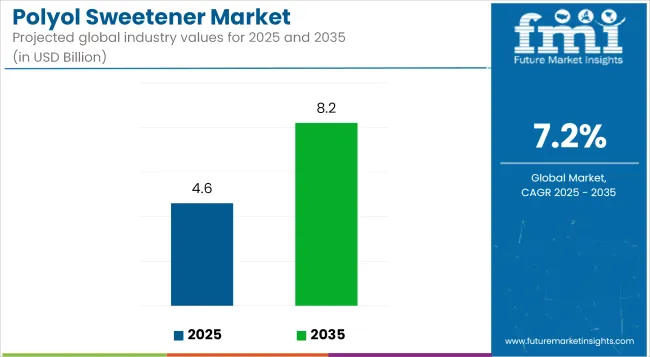
According to Future Market Insights, the polyol sweeteners market is expected to grow from USD 4.6 billion in 2025 to USD 8.2 billion by 2035, with a projected compound annual growth rate (CAGR) of 7.19%. That’s robust expansion, driven by the global demand for low-calorie, diabetic-friendly, and “clean-label” alternatives.
But here’s the catch: while the numbers soar, consumers remain largely in the dark about what polyols are—and what they’re not.
Get Insights into Market Movements: Request a Sample Report: https://www.futuremarketinsights.com/reports/sample/rep-gb-11312
The Sugar-Free Mirage
Polyol sweeteners are marketed as a healthier substitute for sugar because they’re low in calories and don’t cause rapid spikes in blood sugar. That’s the pitch. But unlike whole foods or natural sweeteners like honey or dates, polyols are highly processed, often derived from corn or other starches through industrial fermentation and hydrogenation.
The result? A market built not on nutritional consensus, but on consumer confusion.
Labels may say “no sugar,” but that doesn’t mean no health impact. The growing popularity of these ingredients in so-called wellness products is a symptom of the larger issue: food companies responding to fear of sugar by replacing it with ingredients the average shopper barely understands.
Surge in Market Demand: Explore Comprehensive Trends and Analysis in Our Full Report: https://www.futuremarketinsights.com/reports/polyol-sweeteners-market
Demand Fueled by Doubt
What’s driving this market isn’t just innovation—it’s anxiety. Polyols are thriving because consumers are desperate for alternatives, and manufacturers are eager to exploit that urgency with clever branding. Sugar has become so vilified that anything labeled “sugar-free” is automatically assumed to be healthy, even when the science is far from settled.
The polyol boom, as outlined by Future Market Insights, is being powered by shifting dietary habits, the rise of keto and low-carb lifestyles, and growing rates of diabetes and obesity—especially in urban populations across North America, Europe, and Asia-Pacific.
But how many of those consumers actually know what a polyol is? How many understand its digestive effects, or that “low-calorie” doesn’t necessarily mean “beneficial”?
A Global Trend With Local Consequences
What begins as a Western wellness trend rarely stays that way. The polyol sweeteners market is expanding globally, as major food and beverage corporations push these ingredients into emerging markets under the promise of better health. But if the messaging isn’t clear—and the science isn’t transparent—the result could be just another round of misplaced trust in “functional” foods that aren’t all that functional.
Final Word: Progress or Marketing Masquerade?
The numbers don’t lie—Future Market Insights makes a compelling case for rapid growth in the polyol space. But growth alone doesn’t mean progress. As the global market heads toward USD 8.2 billion by 2035, it’s worth asking: are we solving the sugar problem, or just rebranding it?
Until consumers have better information and clearer labeling, the polyol boom may feel more like a sweet distraction than a meaningful dietary evolution.
Key Companies in the Polyol Sweeteners Market
- Cargill, Inc.
- Sweeteners plus, LLC
- Fooding Group
- Zibo Shuohui Chemical Co Ltd
- Splenda
- Truvia
- Stevi0cal
- Sweet sante
- B Food Science Co., Ltd.
- Gulshan Polyols Ltd.
- Ingredion Inc.
- Roquette Frères
- PT. Ecogreen Oleochemicals
- Mitsubishi Corporation Life Sciences Ltd.
- Tereos
- SPI Pharma
- HYET Sweet
- Jungbunzlauer Suisse AG
- DFI Corp.
- Sukhjit Starch & Chemicals Ltd.
- Zhejiang Huakang Pharmaceutical Co., Ltd.
- Shandong Futaste Co.
- Dancheng Caixin Sugar Industry Co. Ltd.
- Shijiazhuang Huaxu Pharmaceutical Co., Ltd.
- DuPont Nutrition & Health (Danisco)
- zuChem
- Zibo Shunda Biotech Co., Ltd.
- Hylen Co., Ltd.
- BENEO GmbH
- Foodchem International Corp.
 Explore Flavors & Sweeteners Industry Analysis: https://www.futuremarketinsights.com/industry-analysis/flavors-and-sweeteners
Key Segmentation
By Type:
- Sorbitol
- Erythritol
- Maltitol
- Mannitol
- Isomalt
- Xylitol
- Others
By Form:
- Powder
- Crystal
- Liquid
- Syrup
By Application:
- Bakery
- Confectionery
- Beverages
- Dairy
- Oral Care
- Pharmaceuticals
- Others
By Region:
- North America
- Europe
- Asia Pacific
- Latin America
- The Middle East & Africa