The food industry is on a tear—adding prebiotics here, gut-friendly claims there, and sprinkling fiber into everything from sodas to snack bars. Yet, despite this so-called “healthification” of the global food supply, the average consumer is still missing the mark on one of the most essential nutrients: fiber.
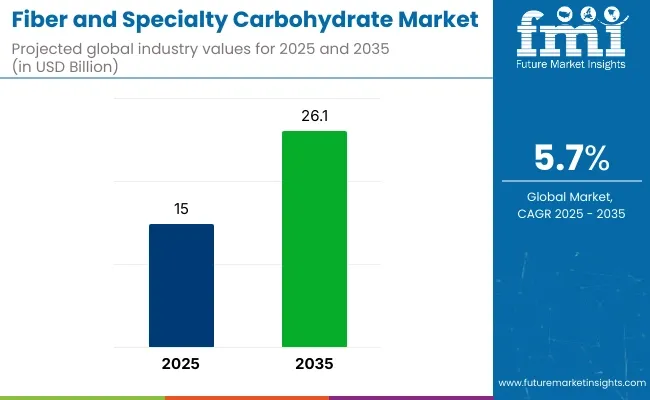
According to Future Market Insights, the global fiber and specialty carbohydrate market is expected to grow from USD 15 billion in 2025 to USD 26.1 billion by 2035, expanding at a compound annual growth rate (CAGR) of 5.7% (Future Market Insights).
The numbers are impressive. The results on human health? Far less so.
Keep Up with Market Trends: Access Your Sample Report: https://www.futuremarketinsights.com/reports/sample/rep-gb-11224
Fiber Is Having a Financial Moment—But Not a Nutritional One
We’re decades into knowing that fiber is vital—for digestion, heart health, metabolism, and even mental wellbeing. And yet, most people still fall dramatically short of the recommended daily intake. Instead of solving that problem with more whole foods, the global food industry has largely responded with formulated fixes: synthetic fibers, isolated compounds, and lab-made carbs meant to mimic nature.
These “specialty carbohydrates” are often added to products that otherwise wouldn’t be considered healthy—ultra-processed foods dressed up with claims of improved glycemic control or digestive health. It’s a quiet bait-and-switch, turning real nutrition into a branding exercise.
Increased Market Demand: Get In-Depth Analysis and Insights with Our Complete Report: https://www.futuremarketinsights.com/reports/fibers-and-specialty-carbohydrates-market
A Global Surge with Uneven Benefits
The projected $26.1 billion market size by 2035 tells us one thing: the world is paying for fiber—but not necessarily getting it where it’s needed most. In wealthier nations, these ingredients are used to offset the damage of diets heavy in sugar, salt, and fat. But in many parts of the world, fiber deficiency is tied to food insecurity, lack of access to fresh produce, and overdependence on low-cost, nutrient-poor staples.
So while this market grows, so does the divide between functional food innovation and foundational nutrition access.
Over-Engineered Carbs, Underwhelming Outcomes
There’s no doubt that some specialty carbohydrates have clinical merit. But let’s not pretend they’re a substitute for real food. The fiber in a bag of chips fortified with polydextrose is not the same as the fiber in a bowl of lentils. One may tweak blood sugar levels; the other fuels a healthy microbiome and supports lifelong health.
As we race toward the next big fiber trend—whether it’s resistant starches, soluble corn fiber, or exotic oligosaccharides—it’s worth asking: are we feeding people, or are we feeding markets?
Final Take
The global fiber and specialty carbohydrate market is surging for all the right reasons—and all the wrong ones. Yes, we need more fiber. But we need it delivered through real food, not processed patches. The numbers may show growth. But the real metric of success is public health.
If the industry doesn’t pivot from profits to purpose, we’ll end up with another generation of “functional foods” that function better for shareholders than for humans.
Key Fiber and Specialty Carbohydrate Market Players
- Ajinomoto Inc.
- Archer Daniels Midland Company
- Cargill Incorporated
- DSM N.V.
- I. Du Pont De Nemours and Company
- FMC Corporation
- Ingredion Incorporated
- Rettenmaier & Söhne GmbH & Co. Kg
- Roquette Freres
- Südzucker AG Company
- SunOpta Inc.
 Explore Functional Food Ingredients Industry Analysis: https://www.futuremarketinsights.com/industry-analysis/functional-food-ingredients
Key Segments
By Type:
- Fibers
- Specialty Carbohydrates
By Application:
- Functional Foods
- Functional Beverage
- Dietary Supplements
- Animal Nutrition
- Personal Care
By Source:
- Grains
- Vegetable
- Fruits
- Dairy Products
- Legumes and Pulses
- Nuts and Seeds
By Fiber:
- Soluble
- Non Soluble
By Region:
- North America
- Latin America
- Western Europe
- Eastern Europe
- South Asia and Pacific
- East Asia
- The Middle East and Africa