

The global pet food industry is evolving fast—and wet pet food is leading the charge. No longer confined to dented cans on the bottom shelf, these moist, meat-rich meals are now a symbol of premium pet care. But the rapid rise of this segment raises some serious questions: Is wet food really healthier, or is it just cleverly packaged marketing?
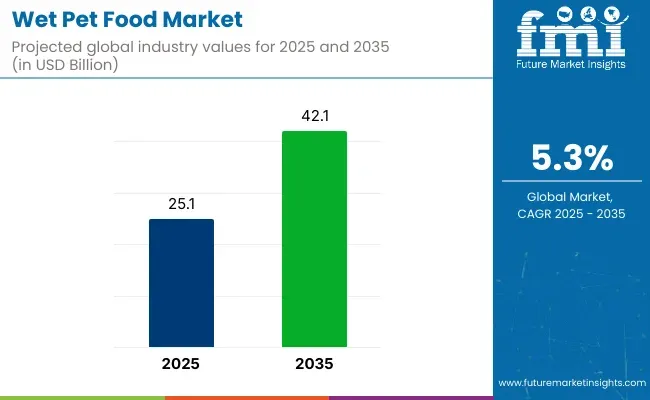
According to Future Market Insights, the wet pet food market is projected to be valued at USD 25.1 billion in 2025, and is expected to grow to USD 42.1 billion by 2035, registering a compound annual growth rate (CAGR) of 5.3% over the forecast period (Future Market Insights).
That’s not just growth—it’s a transformation. But is it one that puts pets first?
Track Evolving Market Trends: Request Your Sample Report: https://www.futuremarketinsights.com/reports/sample/rep-gb-12081
Is It Healthier—or Just Easier?
One of the biggest selling points of wet pet food is its supposed nutritional edge: more moisture, higher palatability, better digestion. But dig deeper into many labels, and you’ll still find meat by-products, artificial flavors, and starchy thickeners. And because wet food is heavily processed—albeit in a different way than kibble—the benefits often sound better than they truly are.
What’s really driving this market isn’t a revolution in pet health, but human perception. Pet parents, especially in urban centers, are seeking products that look, smell, and even sound like “real food.” They want to feel like they’re treating their animals the way they treat themselves.
Wet food delivers on that emotion—but not always on substance.
Increased Market Demand: Get In-Depth Analysis and Insights with Our Complete Report: https://www.futuremarketinsights.com/reports/wet-pet-food-market
A Global Trend with Local Questions
The growth isn’t confined to the U.S. Pet owners around the world are trading up for single-serve trays, resealable pouches, and “gourmet” labels. Dog food still dominates, but the cat segment is catching up quickly—partly due to the convenience of portioned wet meals.
And yet, for all this innovation in packaging and marketing, transparency around ingredients and sourcing remains inconsistent. Regulatory oversight varies wildly from country to country, and many consumers are still in the dark about what “complete and balanced” actually means in pet nutrition.
Spoilage, Waste, and Sustainability
Then there’s the matter of waste. Wet pet food typically comes in non-recyclable pouches or metal cans, and its shorter shelf life once opened means more food is discarded. It also has a higher carbon footprint compared to dry food due to water content, packaging weight, and refrigeration needs—issues the industry rarely addresses.
For an industry poised to top $42 billion, sustainability should not be an afterthought.
Final Take
The wet pet food boom is real—and it’s not slowing down. But the question we should be asking isn’t just how much it will grow. It’s why.
Are we seeing innovation in true pet health, or simply in branding? Is this about nutritional quality—or emotional marketing to pet parents?
For a market sprinting toward $42.1 billion by 2035, the answers matter more than ever. Because in the end, the ones eating the food can’t speak for themselves—and it’s up to us to demand better.
Company Profile
-
- Mars, Incorporated
- Nestlé Purina PetCare
- Hill’s Pet Nutrition
- General Mills (Blue Buffalo)
- Spectrum Brands
- Wellness Pet Company (WellPet)
- The Honest Kitchen
- Freshpet, Inc.
- Nature’s Logic
- Ziwipeak
 Explore Pet Care/ Pet Food/ Pet Nutrition Industry Analysis: https://www.futuremarketinsights.com/industry-analysis/pet-care-pet-food-pet-nutrition
Wet Pet Food Market Segmentation
By Pet Type:
- Cat
- Kitten
- Senior
- Dog
- Puppy
- Adult
- Senior
- Others
By Nature:
- Organic
- Conventional
- By Source:
- Animal Derived
- Plant Derived
- Insect Derived
By Sales Channel:
- Offline Sales Channel
- Supermarkets/Hypermarkets
- Pet Stores
- Convenience Store
- Other Sales Channel
- Online Sales Channel
- Company Website
- E-commerce Platform
By Region:
- North America
- Latin America
- Western Europe
- Eastern Europe
- East Asia
- South Asia Pacific
- Middle East and Africa




